
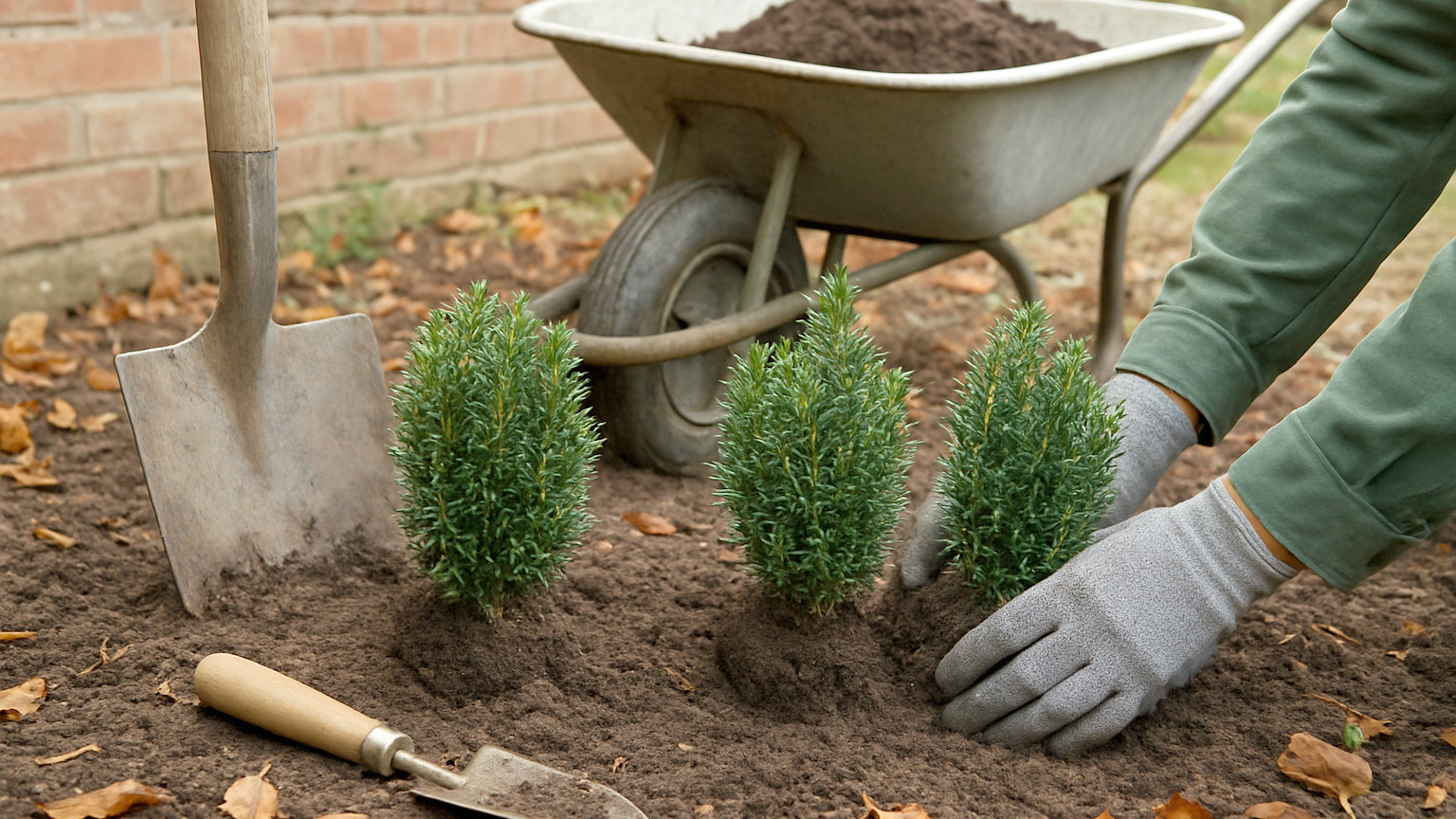
A border that looks wonderful in July and like bare earth in November is missing evergreens. They are what holds a garden together through the six months when the herbaceous planting is underground, and most gardens are short of them.
How many you need
A useful working figure is that around a third of a border's planting should be evergreen if you want it to read as a garden in winter. Place them first, spaced through the bed rather than lined up at the back, and let the perennials fill in around them.
Repeating the same evergreen at intervals along a border ties the whole thing together and is more effective than a collection of different ones. Repetition is what makes planting look designed rather than accumulated.
For sun and reasonable drainage
- Choisya - glossy aromatic foliage, scented white flowers in spring and often again in autumn. Sundance has yellow leaves that light a dull corner
- Pittosporum - small wavy leaves on dark stems, elegant and good for cutting. Slightly tender in cold areas
- Rosemary and lavender - grey foliage, drought tolerant, need sharp drainage and never cut into old wood
- Hebe - neat domes in the smaller-leaved forms, long flowering, reliable in mild areas
- Phormium - strong strappy architecture where you need a full stop
For shade
- Sarcococca - the winter box, modest looking and powerfully scented in January. Plant it by a door
- Mahonia - architectural spiny leaves and yellow winter flowers that feed early bumblebees
- Viburnum tinus - tough, dense, flowers through winter, tolerates almost anything
- Skimmia - compact, with red winter buds. Needs acid soil, and most varieties need a male and a female plant for berries
- Aucuba - the spotted laurel, unfashionable and unbeatable in deep dry shade
For formal shape
Yew is the best hedging and topiary plant available in this country: dense, long-lived, tolerant of hard renovation and happy in sun or shade. It is slower than the alternatives and worth the wait.
Box is no longer a safe choice. Box blight and box tree caterpillar have made it a liability in most of the UK. For low clipped hedging and balls, use small-leaved holly, Japanese holly, or a compact euonymus instead, all of which give a similar effect without the risk.
Size matters more than the label admits
Check the eventual height and spread before buying, and take it seriously. Nursery labels often give the size after ten years rather than the mature size, and a great many gardens contain a laurel or a viburnum planted as a neat shrub that is now three metres across and shading everything around it.
In a small garden, look for compact named varieties rather than the species, and be willing to prune annually to keep something at the size you want.
Berries and winter value
Several evergreens earn their place twice by producing berries that feed birds. Holly, pyracantha, cotoneaster and viburnum all do this, and pyracantha additionally makes an effective security hedge under a vulnerable window.
Remember that holly and skimmia are usually dioecious, meaning you need a male plant nearby for a female one to berry. Buying one holly and wondering why it never produces berries is a common disappointment.
Placing them well
Put scented winter evergreens where you will pass them: sarcococca and daphne beside a path or door earn their keep in January in a way they never do at the back of a border.
Use variegated and gold-leaved forms sparingly. One or two lift a dark area; several together look restless. Dark green foliage is the better backdrop for flowers, and it is what makes pale perennials show up.
Planting and care
Plant evergreens in early autumn or mid-spring rather than midwinter, since they continue to lose water through their leaves all year and struggle to replace it from cold or frozen soil.
Water thoroughly through the first two years, particularly in winter dry spells and cold winds, which scorch foliage on plants that cannot draw water up. Mulch after planting.
Most evergreens need little pruning beyond light shaping after they have flowered. Do not cut lavender, rosemary or most conifers back into old bare wood, since they will not reshoot from it, which is the commonest way people kill an established evergreen.


