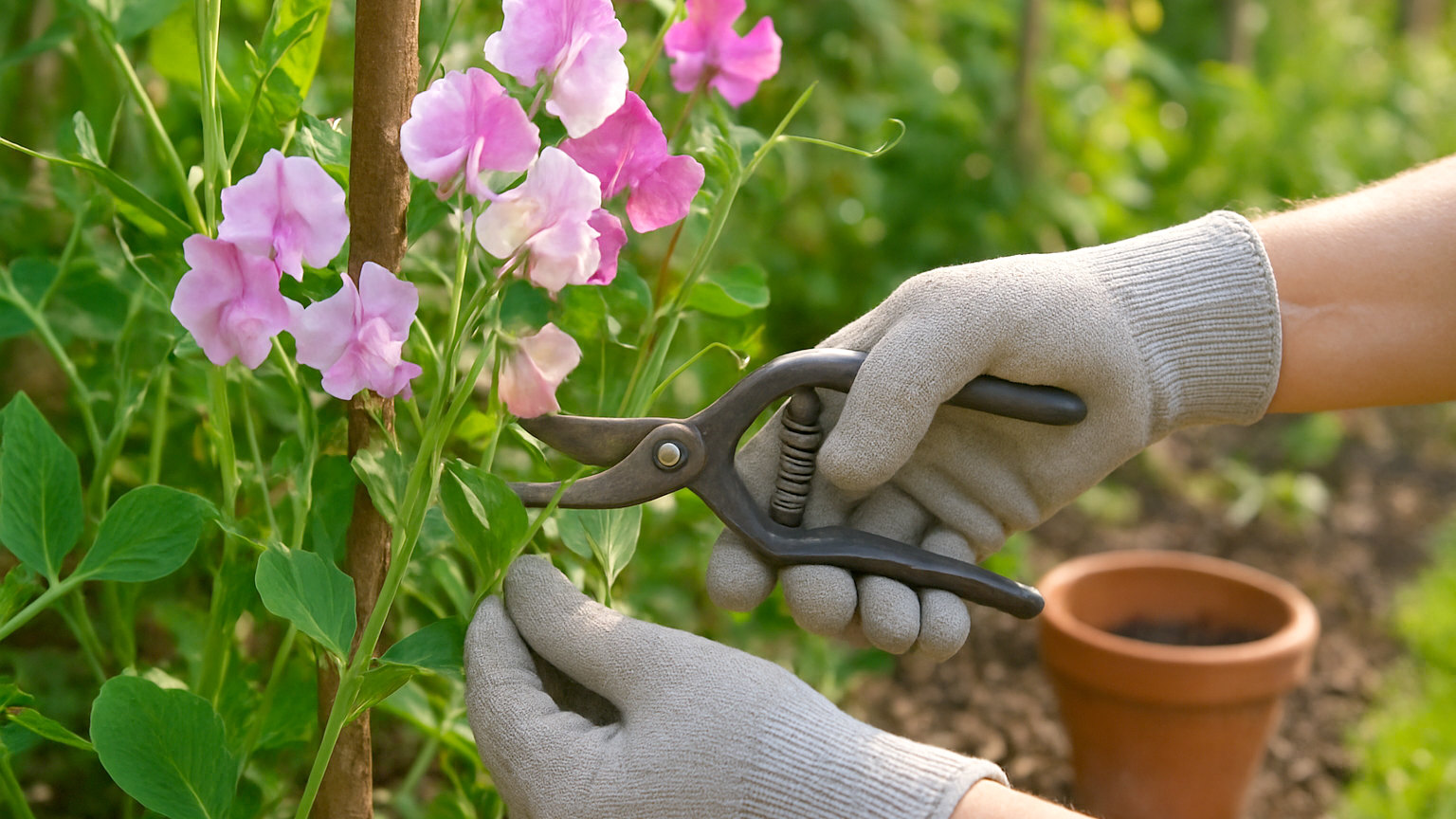
The traditional autumn tidy, in which every border is cut to the ground in October and left bare until spring, is being steadily reconsidered. Some plants genuinely benefit from being cut now. A great many are better left standing until late winter, and the reasons are practical rather than sentimental.
Why leaving stems standing helps
Hollow stems are where a large number of insects overwinter, including solitary bees and the larvae of hoverflies and ladybirds, all of which spend the following summer eating aphids in your garden. Cut and compost those stems in October and you remove that population.
Seedheads feed birds through the leanest months. Goldfinches on teasel and sunflower heads, and tits working over sedum, are a direct result of not tidying.
The old top growth also protects the crown of the plant beneath it from hard frost, and it looks considerably better than bare soil in January. Frost on the seedheads of grasses, sedum, echinacea and rudbeckia is one of the few genuine pleasures of a midwinter garden.
What to cut back now
Some things should not be left, and these are the ones to deal with in autumn.
- Anything diseased - mildewed phlox or asters, rust-affected foliage, blackspot on roses. Remove and bin rather than compost.
- Slug magnets - hosta foliage collapsing into a slimy mass shelters slugs and their eggs over winter
- Anything flopping across a path or smothering a neighbouring plant
- Plants that self-seed too freely if you do not want hundreds of seedlings, such as alchemilla and some poppies
- Bearded irises, whose leaves are cut back to a fan to prevent rot and remove leaf spot
- Peonies, cut to the ground in autumn to reduce peony wilt
What to leave until late winter
Almost everything else. Grasses, sedum, echinacea, rudbeckia, teasel, achillea, eryngium, verbena bonariensis, astilbe and phlomis all have structural stems or seedheads worth keeping, and all shelter insects.
Evergreen and semi-evergreen perennials such as hellebores, epimedium and bergenia are not cut back wholesale at all. Hellebore leaves are removed individually in late winter, just as the flower buds appear, which both shows off the flowers and removes hellebore leaf spot.
Tender and borderline plants must keep their top growth. Penstemon, salvias, fuchsias and agapanthus rely on old stems and foliage to protect the crown, and cutting them in autumn frequently kills them. Leave them until spring growth is clearly visible, usually April, then cut back to the new shoots.
When to do the rest
Late February into early March, before the new growth gets far enough to be damaged by your secateurs. Cut old stems down to just above ground level, or to the base of emerging shoots where you can see them.
Doing it in one go at that point is quicker than autumn tidying anyway, since the stems are dry and brittle and come away easily.
A compromise that works
If a bare border through winter looks unacceptable and a completely uncut one looks untidy, cut the front third of the border and leave the back two thirds standing. You get a defined edge and the appearance of order, and the plants behind still do their job.
Alternatively, cut stems into forty-centimetre lengths and stack them in a quiet corner or tuck them under a hedge. The insects inside survive and the border looks tidy.
Mulching afterwards
Whenever you cut back, follow it with a mulch of compost or well-rotted manure over the soil surface, keeping it clear of plant crowns.
Autumn mulching protects roots and lets worms work it in over winter. Spring mulching locks in moisture ahead of summer. Either is worthwhile, and doing it every year is the single most useful thing for a herbaceous border.
Grasses need a different rule
Deciduous grasses such as miscanthus and calamagrostis are cut to the ground in late winter, and their winter form is among the best reasons to leave a border standing. Evergreen grasses such as stipa and carex are never cut back at all; instead comb through them with gloved fingers in spring to pull out the dead material, which takes moments and keeps the plant alive.
Do not compost the wrong things
Diseased material, seedheads of anything invasive, and perennial weed roots should all go in the council green bin rather than a home compost heap, which rarely gets hot enough to deal with them reliably.