
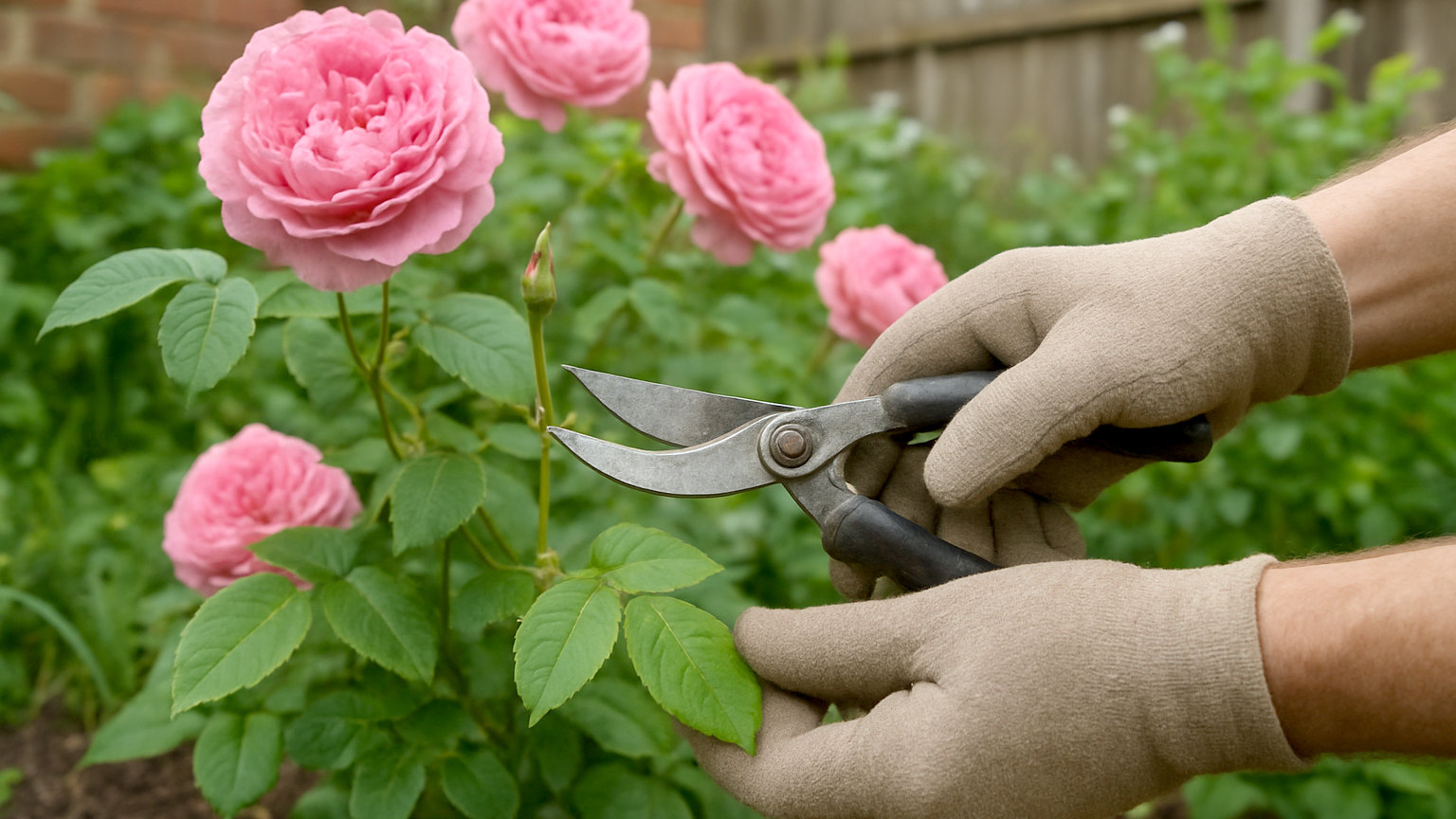
Shrub roses are the most useful group for a modern garden. They have a relaxed natural shape that sits comfortably among perennials, unlike hybrid teas which really need a bed of their own, and the best of them combine old-rose character with repeat flowering.
What counts as a shrub rose
A broad category covering species roses, old garden roses, modern shrub roses and English roses. What they share is a shrubby habit rather than the stiff upright form of a hybrid tea.
English roses, bred by David Austin, are the group most people mean. They were developed by crossing old garden roses with modern varieties to combine the flower form and scent of the former with the repeat flowering and colour range of the latter.
The old garden rose groups
Worth knowing, since the names appear constantly and mean specific things.
- Gallica - the oldest, compact, once flowering, richly coloured and very hardy
- Damask - once flowering, exceptional scent, arching habit
- Alba - grey-green foliage, white and pale pink, notably tolerant of shade and poor conditions
- Centifolia - the cabbage rose, many-petalled and heavily scented
- Moss - centifolia sports with resinous mossy growth on the buds
- Bourbon and Portland - among the first repeat-flowering old roses
- Rugosa - extremely tough, disease resistant, excellent hips, good hedging
Most old garden roses flower once, in June, which is worth establishing before buying rather than after. The exceptions are the Bourbons, Portlands and hybrid perpetuals, which repeat to varying degrees.
Using them in a border
Shrub roses combine well with perennials in a way that bedding roses do not, and this is where they earn their place.
Plant them as you would any shrub, spaced through the border rather than in a block, and let perennials come up around the base. Hardy geraniums, nepeta, alchemilla, salvias and alliums are the traditional companions and they also disguise the bare lower stems.
Space most shrub roses at about a metre to a metre and a half apart, and check the eventual size, which varies from sixty centimetres to well over two metres.
Planting three of one variety together, rather than one each of three, produces a far better effect and is standard advice from the breeders themselves.
Pruning
Far lighter than a hybrid tea, and this is the main practical difference.
In late winter, reduce the whole plant by about a third, cutting to outward-facing buds and following the natural shape rather than imposing one.
Remove dead, damaged and crossing wood, and take out one or two of the oldest stems at the base each year to encourage renewal from below.
Once-flowering old roses are better pruned lightly straight after they flower in summer, since a winter prune removes the display.
Over-pruning a shrub rose spoils its natural habit and gives you something that looks like a badly cut hybrid tea, which is the opposite of the point.
Choosing
Buy from a specialist rose nursery rather than a garden centre, where the choice is wider, the descriptions are honest about size and disease resistance, and bare-root plants are available in winter at lower cost.
Check three things: eventual height and spread, whether it repeats, and disease resistance. Scent varies enormously and is not predictable from appearance, so read the description or smell one in flower.
Feeding and care
The same regime as any rose. Feed in early spring and again after the first flush, mulch generously with well-rotted manure, water in dry spells and deadhead repeat-flowering varieties.
Stop feeding by mid-August and stop deadheading in early October, letting hips form on varieties that produce them.
Hips
Many shrub roses, particularly rugosas and species roses, produce excellent hips. Rosa rugosa gives large tomato-like hips and Rosa moyesii long flask-shaped ones.
These extend the season into winter and feed birds through the leanest months, and they are a good reason to grow a once-flowering variety rather than dismissing it out of hand.
Roses as hedging
Rugosas in particular make an excellent informal hedge: dense, thorny, disease resistant, tolerant of poor soil and salt-laden wind, and flowering over a long period with heavy hips afterwards.
Plant at about sixty centimetres apart for a hedge and trim lightly rather than clipping formally, since a sheared rose hedge loses both the flowers and the shape.


