
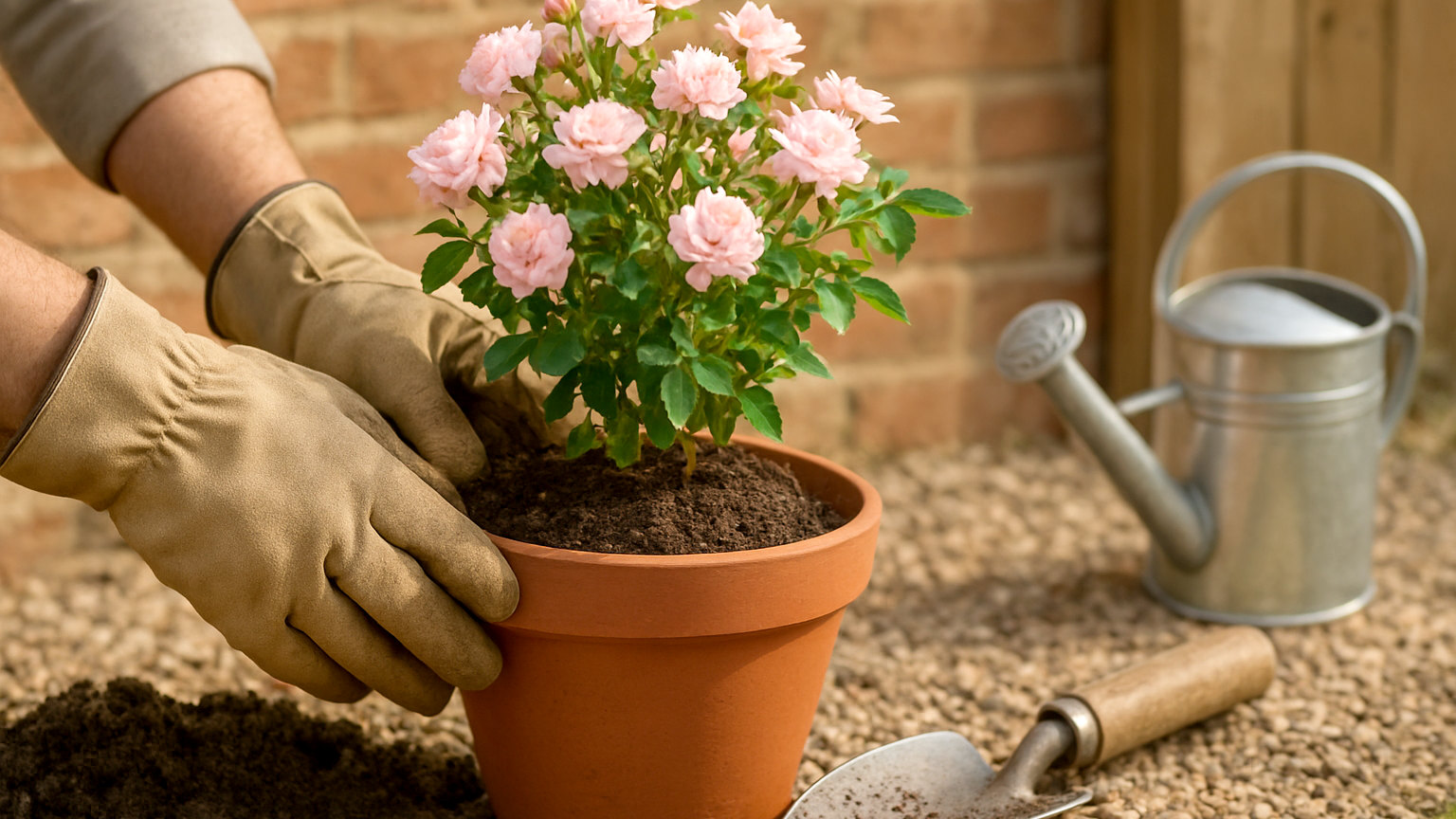
Almost every rose problem in a small garden comes from the same source: a plant that grows to three times the size the buyer expected. Checking eventual height and spread before anything else solves most of it.
Check the size first
Rose labels in general retail are frequently vague, and the same variety name can cover plants of very different vigour depending on rootstock and growing conditions.
Buy from a specialist nursery, where the eventual size is stated honestly, and be particularly careful with anything described as vigorous, or as a rambler.
Ramblers are the most common mistake. A vigorous rambler will reach eight metres or more and swallow a small garden within three years.
Patio and miniature roses
Bred specifically for small spaces, typically forty-five to sixty centimetres, flowering repeatedly through the season.
They suit containers, the front of a border and low edging. Modern varieties are considerably better than the miniatures of thirty years ago, with better disease resistance and a longer season.
Prune them like small floribundas, reducing by about a third in late winter.
Compact shrub and English roses
Several English and modern shrub roses stay under about a metre and combine old-rose flower form and scent with repeat flowering.
These are the most useful roses for a small mixed border, since they sit comfortably among perennials rather than needing a bed of their own.
Ask specifically for compact varieties when buying, since the same breeder's range includes plants reaching well over two metres.
Use the walls
In a small garden the ground is limited and the vertical surfaces usually are not.
A climber on a wall or fence takes almost no floor area and gives several square metres of flower. Choose a moderate climber of around two and a half to three metres rather than a vigorous one, and train the stems horizontally so it flowers along its whole length.
An obelisk or a pillar in a border gives height without spread, and a climber spiralled around it occupies a very small footprint.
Ground cover roses
Low spreading varieties that cover ground densely, flower for months and need almost no pruning.
They suit a bank, the front of a border or the edge of a path, and are among the lowest-maintenance roses available. Trim to shape in late winter and remove dead wood; that is the whole regime.
Containers
Growing in pots lets you have roses on a patio or over paving, and lets you move them into view when flowering.
Use a pot of at least forty-five centimetres for a shrub rose, filled with a soil-based compost, and accept the daily watering commitment in summer.
Standards
A standard rose is a bush or shrub grafted onto a tall stem, giving flowers at head height and leaving the ground beneath free for underplanting.
They suit small formal gardens and containers, and a pair either side of a door or a path is a traditional and effective arrangement.
They need permanent staking, since the head is heavy and the stem is not self-supporting, and they are more exposed to frost than a bush rose.
Making them earn their place
In a small garden every plant needs to work hard, so favour roses that repeat flower, have good disease resistance, and offer scent or hips as well as flowers.
A once-flowering variety giving a fortnight in June is a considerable investment of space unless it is exceptional.
Underplant with perennials that hide the bare lower stems and extend the season: hardy geraniums, nepeta, alliums and low grasses all work.
Spacing
Resist crowding. Roses planted too closely suffer badly from blackspot and mildew because air cannot move between them, which in a sheltered small garden is already a risk.
Give each plant its stated spread, and fill the gaps with perennials rather than with more roses.
Scent earns its space
In a small garden you are close to every plant, so fragrance matters more than it does across a large border. A strongly scented rose beside a path or a door does more work than a larger unscented one further away.
Buy in flower where you can, since scent is not predictable from a photograph or a description.


