
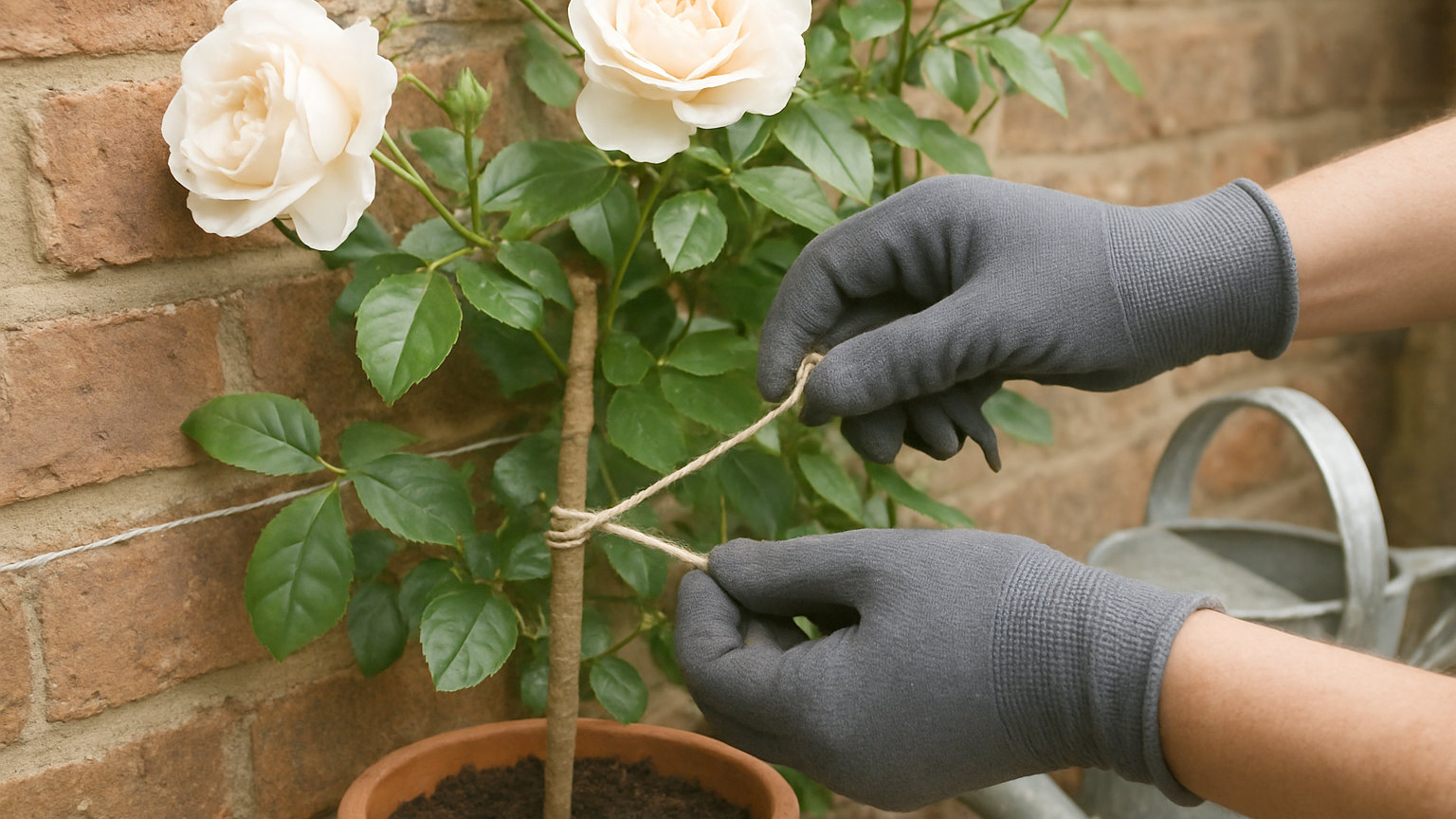
Roses are sun-loving plants and most need at least six hours of direct sun to flower well. A short and specific list tolerates considerably less, and a north-facing wall need not go unplanted.
Be realistic about what shade means
A north-facing wall in an open position still receives a good deal of indirect light and some direct sun at the ends of the day in summer. That is quite different from deep shade under a tree, where no rose will succeed.
The distinction matters. Roses tolerate a shaded aspect far better than they tolerate overhead shade combined with root competition from established trees.
Before choosing, spend a day noting how much direct sun the position actually gets in June. Many walls described as shaded receive two or three hours in high summer, which is enough for the tolerant varieties.
Expect any rose in shade to flower somewhat less freely and a little later than the same variety in sun, and to be more prone to mildew because of the still, damper air.
Climbers for a north wall
Madame Alfred Carrière is the classic choice: vigorous, creamy white, strongly scented, repeat flowering, and genuinely reliable on a shaded wall. It reaches five metres or more.
Zéphirine Drouhin is thornless, deep pink and scented, which makes it useful beside a path or a doorway. It is prone to mildew and blackspot, so airflow and watering matter.
New Dawn is pale pink, repeat flowering, healthy and one of the most tolerant climbers of imperfect conditions.
Gloire de Dijon is an old buff-apricot climber with good scent, traditionally grown on cooler walls.
Danse du Feu and Golden Showers both cope with less light, the latter being a manageable size for a small wall.
Shrub roses for part shade
Alba roses are the most shade-tolerant group of old garden roses, with grey-green foliage and pale flowers. Alba Semiplena and Maiden's Blush both perform in part shade, though they flower once.
Rugosas tolerate poor conditions generally, including some shade, and remain healthy.
Some English roses are described as suitable for part shade, and specialist nurseries will advise. In practice most need more light than a shaded wall provides.
The extra care they need
A rose against a north wall faces two additional problems beyond the light.
The ground at the base of any wall is dry, because the eaves shed rain away from it and the masonry draws moisture. This is often a bigger limitation than the shade itself.
Plant at least forty-five centimetres out from the wall, leaning the plant inwards, and improve the ground generously with compost before planting.
Water thoroughly through the first two years and in every dry spell afterwards. A shaded rose that is also drought-stressed will mildew badly and flower very little.
Airflow
Still air in a shaded corner encourages mildew and blackspot.
Hold support wires at least ten centimetres clear of the wall so air can circulate behind the plant, prune to keep the framework open rather than congested, and space plants generously.
Clear fallen leaves from the base each autumn, since they harbour blackspot and matter more where conditions already favour it.
Feeding
Feed as normal in spring and after the first flush, but avoid overfeeding with nitrogen, which produces soft growth that mildews readily in low light.
Mulch generously each spring, which addresses the dryness at the base of the wall more effectively than watering alone.
What not to attempt
Deep shade under a dense tree canopy, a narrow passage between buildings receiving no direct light, or a position with heavy root competition from established trees.
In those situations a rose will survive without thriving, and something genuinely shade-loving is a far better use of the space: a climbing hydrangea, an ivy, a Japanese quince, or a Morello cherry if you want fruit from the wall.
Managing expectations
A well-chosen rose on a north wall will flower, will scent the area and will look well. It will not match the same variety on a south wall, and it is worth planting one knowing that in advance.
Give it a year or two longer than usual to establish, since everything happens more slowly in lower light, and judge it in its third season rather than its first.


