
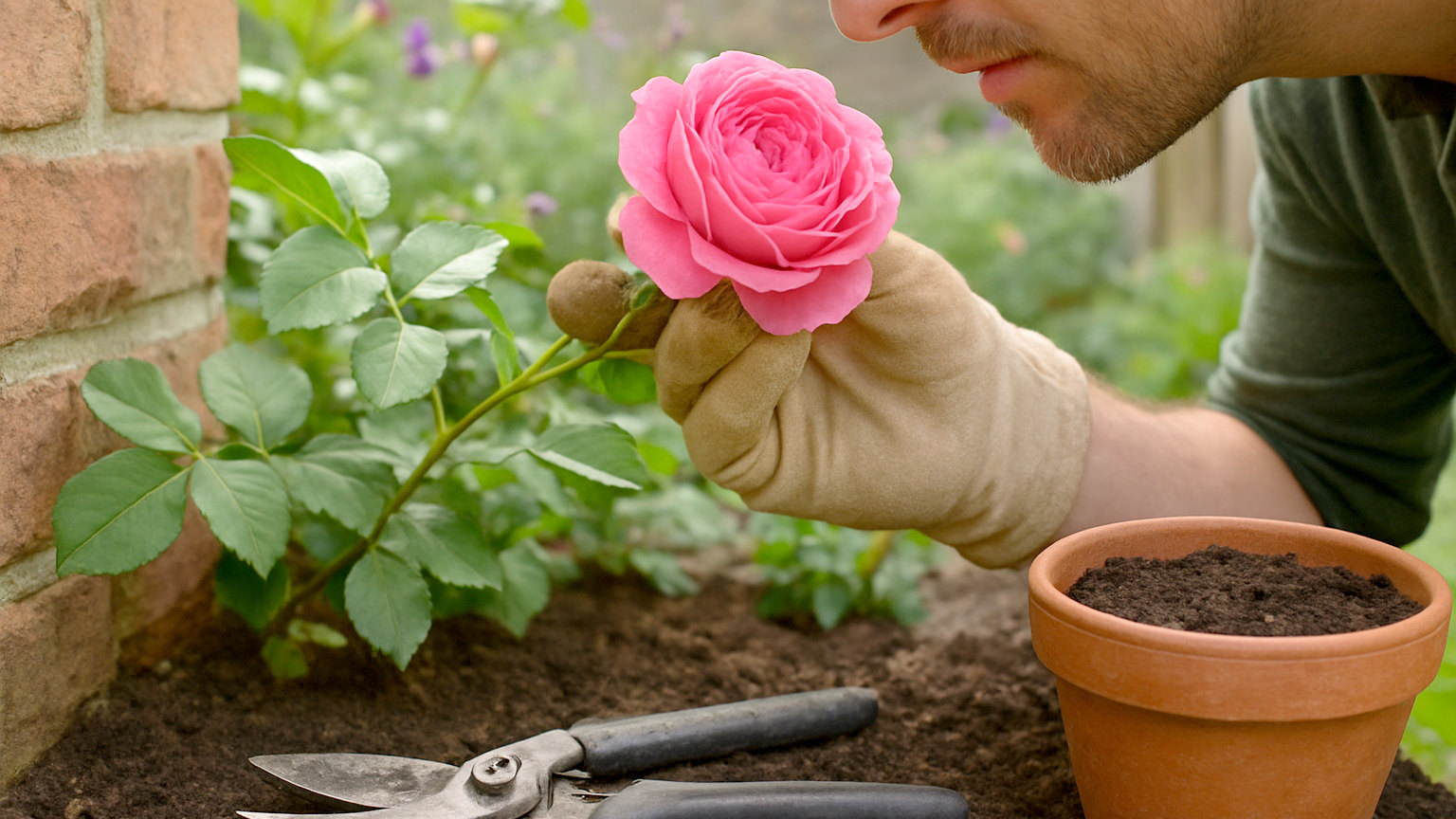
Scent is the main reason many people grow roses and the aspect most often disappointing, because a great many modern varieties bred for colour, form and disease resistance have very little of it.
Buy in flower if you can
Fragrance is not predictable from appearance, colour or catalogue photograph. Two roses that look almost identical can differ completely.
The only reliable method is to smell one. Visit a rose garden or a specialist nursery in June, or buy a plant in flower in a container, even though bare-root planting in winter is otherwise better and cheaper.
Failing that, buy from a specialist nursery whose descriptions distinguish between strong, medium and light fragrance rather than describing everything as fragrant.
The fragrance groups
Rose scents fall into recognisable families, and knowing which you prefer narrows the choice considerably.
Old rose is the classic deep sweet rose fragrance, found in damasks, gallicas and many English roses.
Tea is lighter and more delicate, sometimes described as fresh or like a newly opened packet of tea.
Myrrh is distinctive, sweet and aniseed-like, characteristic of a number of English roses and either loved or disliked.
Fruity notes of lemon, apple, raspberry or apricot appear in many modern varieties.
Musk is carried on the air rather than needing the nose close to the flower, which makes musk roses particularly valuable near a seating area.
Where to plant them
Scent is wasted at the bottom of a garden. Plant fragrant roses where people pass and pause.
Beside a path, by a door, under a window that opens, around a seating area, over an arch you walk through, or against a wall near where you sit in the evening.
Height matters. A climber or a standard brings flowers to nose height, whereas a low bedding rose requires stooping. Roses on an arch or a pergola scent the air you walk through.
When scent is strongest
Warm, still, humid conditions carry fragrance best. A warm morning after dew, or a still evening, is when a rose garden smells strongest.
Wind disperses scent immediately, which is a further argument for a sheltered position.
Individual flowers are usually most fragrant just as they open fully, and the scent declines as they age.
Varieties with a reputation for scent
Among English roses, Gertrude Jekyll, Munstead Wood, Lady Emma Hamilton, Boscobel and Olivia Rose Austin are all noted for fragrance.
Among climbers, Madame Alfred Carrière, Gloire de Dijon, Zéphirine Drouhin and Constance Spry are strongly scented.
Among old roses, the damasks and gallicas are the traditional source, and Rosa gallica officinalis and Madame Hardy remain outstanding.
Rugosa roses have a clean strong fragrance and the additional advantages of good health and heavy hips.
Among modern bush roses, look specifically for varieties awarded fragrance prizes, since these are trialled and assessed rather than described by a marketing department.
Conditions affect it
The same variety smells stronger in some gardens than others. Warm sheltered positions, reasonable soil moisture and a well-fed plant all produce better scent.
A drought-stressed or underfed rose produces less fragrance, as does one in cold windy conditions.
Scent and disease resistance
There has historically been some tension between the two in rose breeding, with the most fragrant older varieties often the most disease-prone.
Modern breeding has narrowed that gap considerably, and several recent introductions combine strong fragrance with genuinely good health. It is worth asking specifically for both when buying rather than assuming you must choose.
Bringing it indoors
Cut scented roses in the early morning when fragrance is at its strongest, and choose flowers that have just opened rather than tight buds, which may never develop full scent in water.
Strip the leaves below the waterline, recut the stems and change the water every couple of days. A scented rose in a warm room fills it, which is one of the better arguments for growing them at all.
Petals and other uses
Strongly scented petals can be dried for pot pourri, and the old damask and gallica roses are the traditional sources. Pick in the morning once the dew has dried, spread the petals in a single layer somewhere warm and airy, and store them airtight once fully crisp.
Only use petals from plants you have grown yourself and not treated with anything, and rinse them before any culinary use.


