
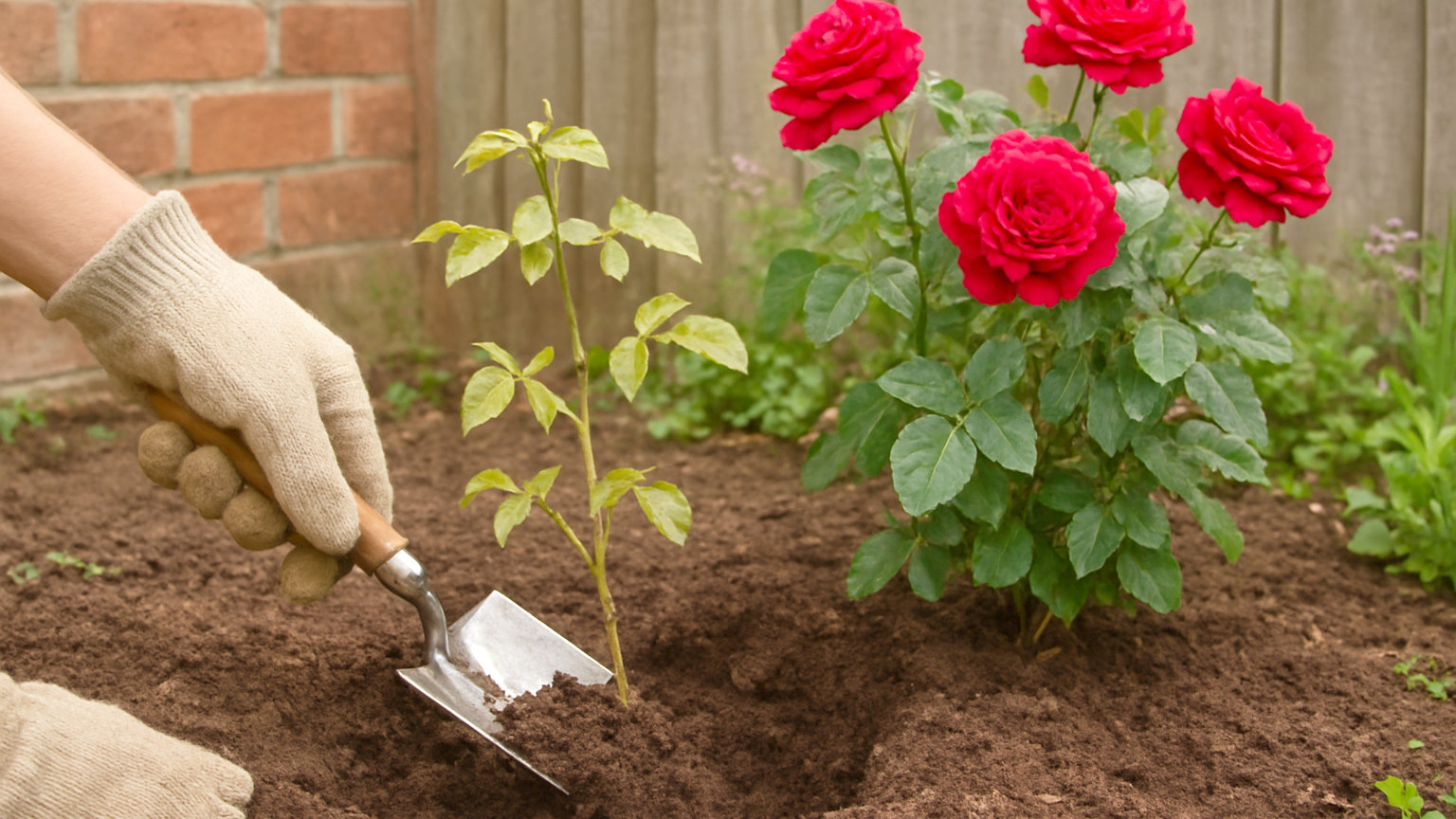
Rose replant disease, also called rose sickness or specific replant disease, is the phenomenon where a new rose planted into soil that has grown roses before performs poorly or fails, while established roses in the same bed are entirely unaffected.
What it looks like
A newly planted rose that never establishes properly. Weak growth, few flowers, small pale leaves, and a root system that has barely developed beyond the original rootball when you dig it up.
It rarely kills the plant outright. More often the rose simply sits there for years, never getting away, and is eventually removed as a disappointment.
The key diagnostic is that neighbouring established roses are perfectly healthy. This is not a soil deficiency or a general problem, and feeding does not correct it.
What causes it
The precise cause is not fully settled. The consensus view involves a build-up of soil-borne organisms, probably including nematodes and fungi, specific to roses and accumulated over years by the previous plant.
An established rose has grown up alongside them and coexists. A new plant with a small root system meets the accumulated population immediately and cannot establish against it.
It affects other members of the rose family too, so the same problem can arise replanting apples, pears, cherries and strawberries where the same crop grew before.
The simplest answer
Plant the new rose somewhere else. If you have anywhere at all in the garden that has not grown roses, use it.
This is by far the easiest solution and it is worth considering seriously before committing to any of the alternatives.
Replacing the soil
Where the position matters, exchange the soil.
Dig out a hole at least forty-five centimetres across and forty-five deep, and preferably sixty, removing all the old soil.
Fill it with soil taken from a part of the garden that has not grown roses, ideally from a vegetable bed or a lawn edge. Mix in some well-rotted manure.
Do not simply add compost to the existing soil. The problem is the organisms in it, not its fertility, and improving it does not help.
The cardboard box method
An established trick that works and is far less effort than a full soil exchange.
Line the planting hole with a large cardboard box, open at top and bottom, and plant the rose inside it in imported soil.
The cardboard rots away within a season, by which time the rose has built a root system large enough to cope with the surrounding soil. It buys the plant the establishment period it needs.
Mycorrhizal fungi
Products containing mycorrhizal fungi are widely sold and specifically recommended for rose planting, on the basis that they help the roots establish and compete.
The evidence is mixed. Some trials show a benefit on replant sites and others show very little, and results appear to vary considerably with soil type and conditions.
They do no harm and are inexpensive. They should be applied directly onto the roots at planting so there is contact, since scattering them in the hole does nothing. Treat them as worth trying alongside soil exchange rather than instead of it.
Other measures
Leaving the ground fallow for a period is often suggested and appears to have limited effect, since the organisms persist.
Growing a different crop in the position for several years is more reliable, and grasses in particular are sometimes recommended.
Buying a large, well-grown plant rather than a small one gives it more root system to establish with, which improves the odds.
Planting a bed of new roses
If you are replacing a whole rose bed, the practical approach is to replace the top thirty to forty-five centimetres of soil across the bed, or to move the bed to fresh ground entirely.
Where neither is possible, use the box method for each plant and accept that some will establish better than others.
It is not the same as a tired old bed
A whole bed of established roses declining together is a different problem, usually exhausted soil, congestion, drought or accumulated disease. Replant disease specifically affects new plants going into old rose ground.
The remedy for a tired bed is feeding, mulching, renovation pruning and clearing debris, none of which addresses replant disease.


