
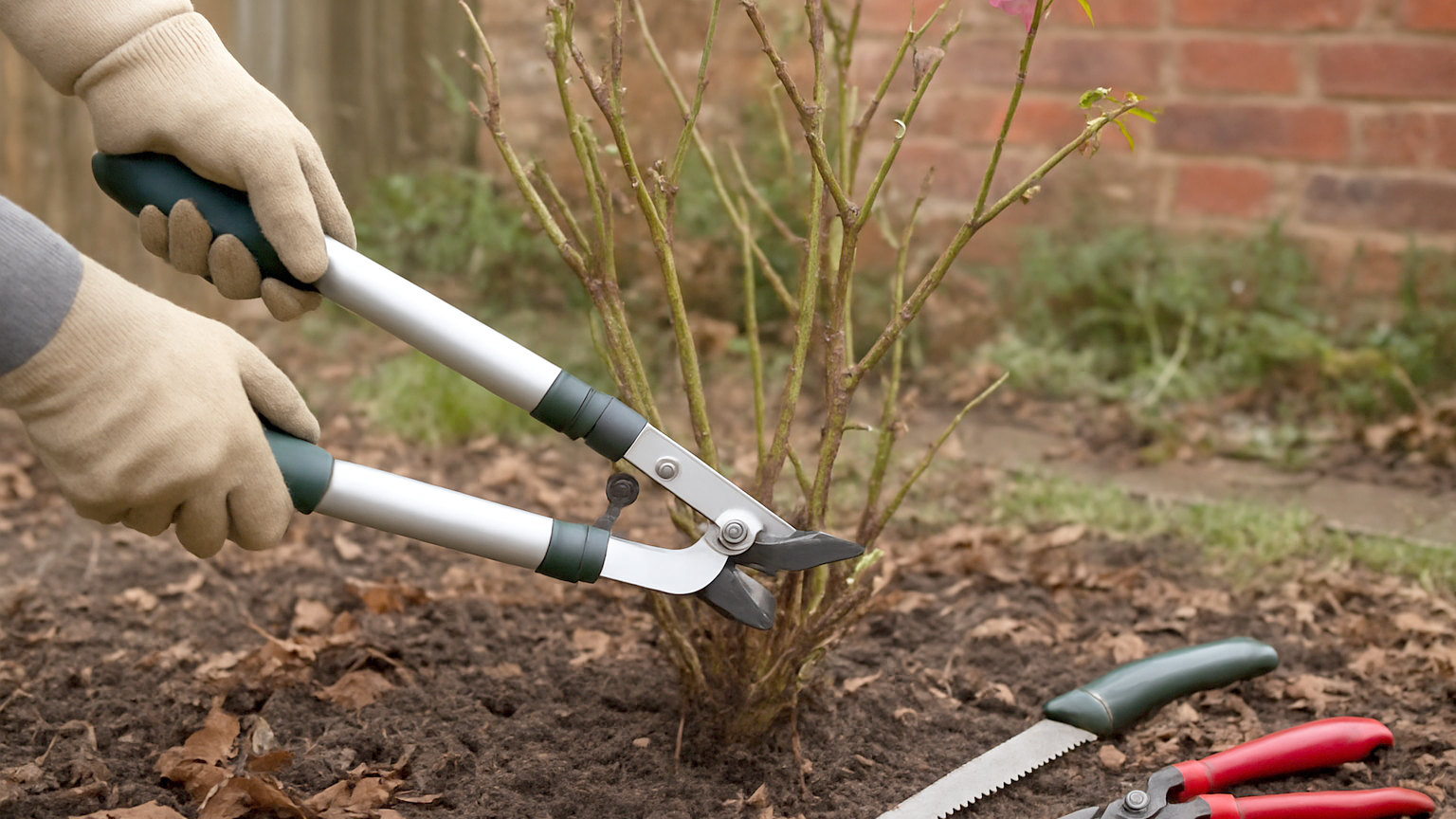
Roses are extremely tolerant plants and a neglected one can usually be brought back. Before starting, though, it is worth deciding honestly whether the plant is worth the two or three years the job takes.
Is it worth saving
Look for signs of life at the base. Healthy plump buds low on the main stems, or new shoots coming from the base, mean the plant has the capacity to regenerate.
Check for canker, which shows as sunken cracked patches on the wood, and for extensive dieback. A little is normal on an old plant; widespread canker on the main stems is not.
Consider what it is. A treasured old variety, a rose with sentimental value, or an established climber that would take five years to replace is worth the effort. A common bedding rose in poor health is usually not.
A rose that has been repeatedly defoliated by blackspot for years, with thin weak growth and no basal shoots, is generally better replaced with a disease-resistant variety.
Renovate over two or three years
Taking everything at once is possible on many roses and it produces a mass of vigorous unproductive growth and no flowers for a season or two.
The staged approach is more reliable. Each winter, remove about a third of the oldest stems entirely, cutting them right down to the base, while shortening the remainder moderately.
Over three years the whole plant is renewed and you keep some flowering throughout.
The first winter
Work in late winter, February or early March, for bush and shrub roses. For ramblers, work in late summer after flowering instead.
Start by removing everything dead, diseased or damaged, cutting back into clean wood where the pith is white rather than brown.
Take out crossing and rubbing stems, and anything thinner than a pencil, which will not support flowers.
Then remove a third of the oldest, thickest, most exhausted stems at the base with a pruning saw. Old wood is dark, thick and often flaking; young wood is smooth and green or reddish.
Shorten what remains by about a third to a half, cutting to outward-facing buds.
Feed and mulch afterwards
A renovated rose has to produce a great deal of new growth and needs support.
Apply a rose fertiliser in early spring and again after the first flush, and mulch generously with well-rotted manure, keeping it clear of the stems.
Water thoroughly through the first summer. This is the part most often neglected, and it makes the difference between a plant that regenerates strongly and one that struggles.
Clear around the base
Old roses are frequently smothered by whatever has grown up around them over the years.
Clear grass, weeds and encroaching shrubs from a circle at least a metre across, then mulch it. Competition at the base is a common reason a neglected rose is weak.
Check for suckers from the rootstock, identifiable by different foliage often with seven leaflets. Trace them back to the root and pull them off rather than cutting, which encourages more.
Renovating a climber
An overgrown climber flowering only at the top is a common case.
Untie the main stems, remove the oldest one or two entirely at the base, and retie the remainder as horizontally as the structure allows. Shorten the side shoots to two or three buds.
Bringing stems down towards the horizontal breaks apical dominance and produces flowering shoots along their length within a season, which often transforms the plant without drastic cutting.
What to expect
Expect reduced flowering in the first year and a good recovery by the second or third.
Vigorous water shoots appearing from the base after hard pruning are a good sign. Tie them in on a climber, and on a bush rose shorten them the following winter to encourage branching.
If after two years there is still no strong basal growth, the plant is probably at the end of its life. Replace it, remembering to change the soil because of rose replant disease.
Tools
Renovation needs a pruning saw and loppers as well as secateurs, since old rose wood is hard and thick. Forcing secateurs through something too large ruins both the cut and the tool.
Wear gauntlets and eye protection. Old roses are thornier than they look and the stems spring back when cut.


