
Roses are far tougher than their reputation suggests and will grow for decades with modest attention. Most disappointments come from choosing the wrong type for the position, or from one specific planting mistake that is easy to avoid once you know about it.
Match the type to the job
Decide what the rose has to do before looking at colour.
- Hybrid tea - one large bloom per stem, for cutting. Formal, needs a bed rather than mixed planting
- Floribunda - clusters of flowers over a long season, good for general garden display
- Shrub and English roses - relaxed shape, often strongly scented, sit well in a mixed border
- Climber - repeat flowering on a framework, for a wall, fence or pillar, typically three to five metres
- Rambler - one spectacular early summer flush, very vigorous, for a large structure or through a tree. Too big for most fences
- Ground cover and patio - low, spreading or compact, for edges and containers
The commonest error is putting a rambler on a small fence. A vigorous rambler can reach eight metres and will overwhelm anything modest within three years.
Position
Roses want at least four to six hours of direct sun, ideally morning sun which dries the foliage early and reduces blackspot. Some shrub and climbing varieties tolerate a north-facing wall, and the label will say so.
They dislike strong wind, deep shade, and competition from tree roots. They will grow on most soils, preferring a heavy loam, and they do particularly well on clay once it has been improved.
Scent varies enormously and is not indicated by appearance, so buy from a specialist nursery where it is described, or smell one in flower before choosing.
Disease resistance is worth more than colour
Blackspot, mildew and rust are the three problems, and varieties differ hugely in how badly they suffer. A resistant variety saves years of spraying and disappointment, and modern breeding has improved this substantially.
Check the description for resistance, and be more sceptical of older varieties in a wet part of the country.
Bare root or container grown
Bare-root roses are lifted while dormant and sold from November to March. They are cheaper, the choice is far wider, and they establish better because the roots go straight into your soil rather than sitting in a pot-shaped rootball.
Container-grown roses can be planted any time the ground is workable, and are the only option in summer.
If a bare-root rose arrives and you cannot plant at once, heel it into spare ground or a bucket of damp compost. Never let the roots dry out, even briefly.
The one mistake to avoid
Never plant a rose where a rose has grown before. Rose replant disease, also called rose sickness, means a new rose planted into soil that held an old one grows poorly and often fails, while an established plant in the same soil is unaffected.
If you have no alternative position, dig out a hole at least forty-five centimetres across and deep and replace the soil entirely with soil from elsewhere in the garden. A cardboard box lining the hole, filled with fresh soil, is an established trick that gives the roots time to get away before meeting the old soil.
Planting
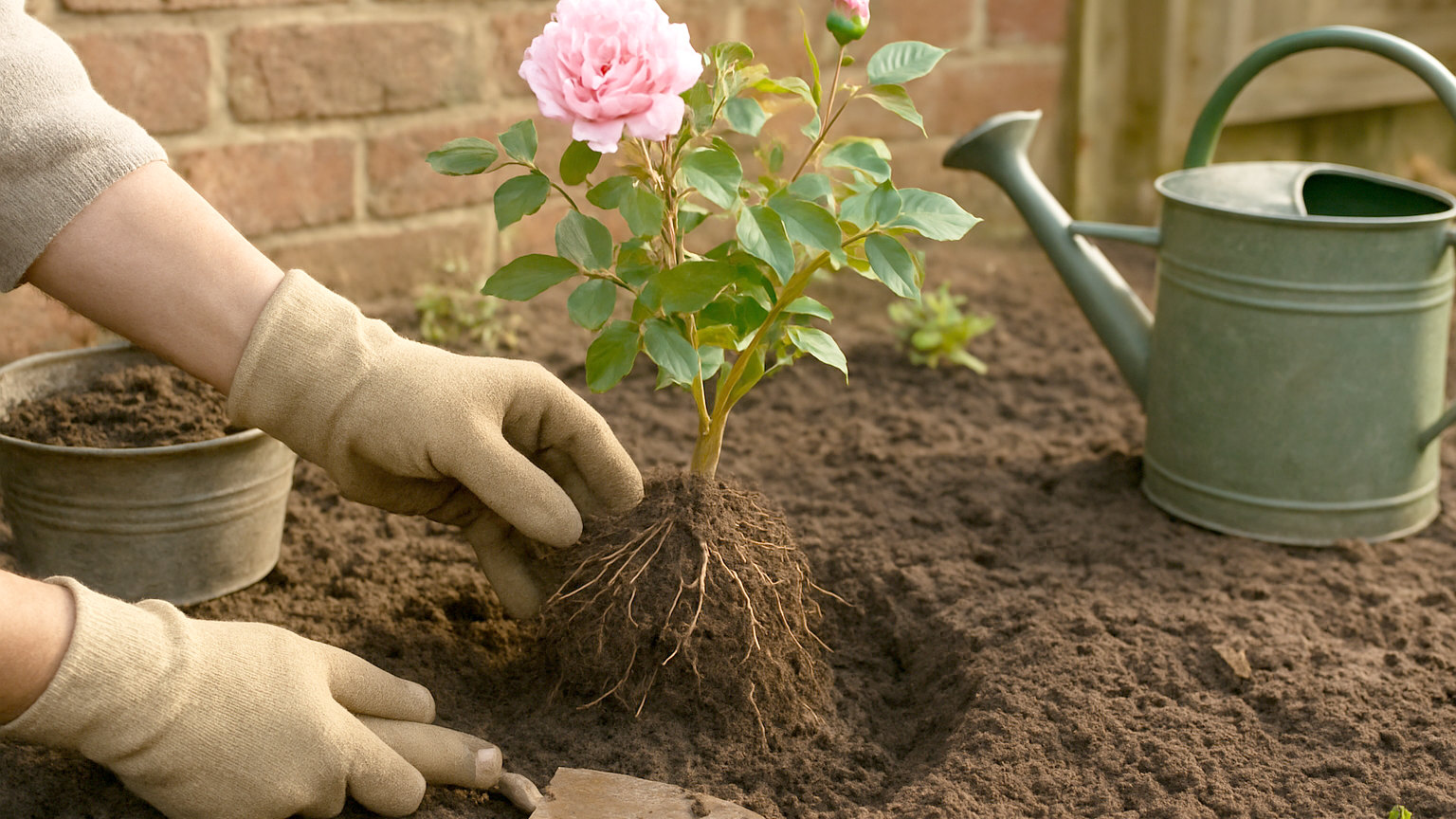
Dig a hole wider than deep, about forty-five centimetres across, and fork the base to relieve compaction. Mix a little well-rotted manure or compost into the base and into the soil you removed, but do not fill the hole with pure compost.
Planting depth is the detail that matters. In the UK, set the plant so the graft union, the knobbly join at the base of the stems, sits about five centimetres below the finished soil level. This is the opposite of the advice given in warmer countries. Burying it protects the union from frost and reduces wind rock and suckering.
Spread the roots out, backfill in stages, firm gently with your heel and water in thoroughly, even in winter.
The first year
Water generously through the first two growing seasons, giving a good soak weekly rather than a daily sprinkle. Mulch with well-rotted manure in spring, keeping it clear of the stems.
Feed with a rose fertiliser in spring as growth begins and again after the first flush. Deadhead through summer to keep repeat-flowering varieties producing, cutting back to a strong outward-facing bud rather than just removing the head.


