
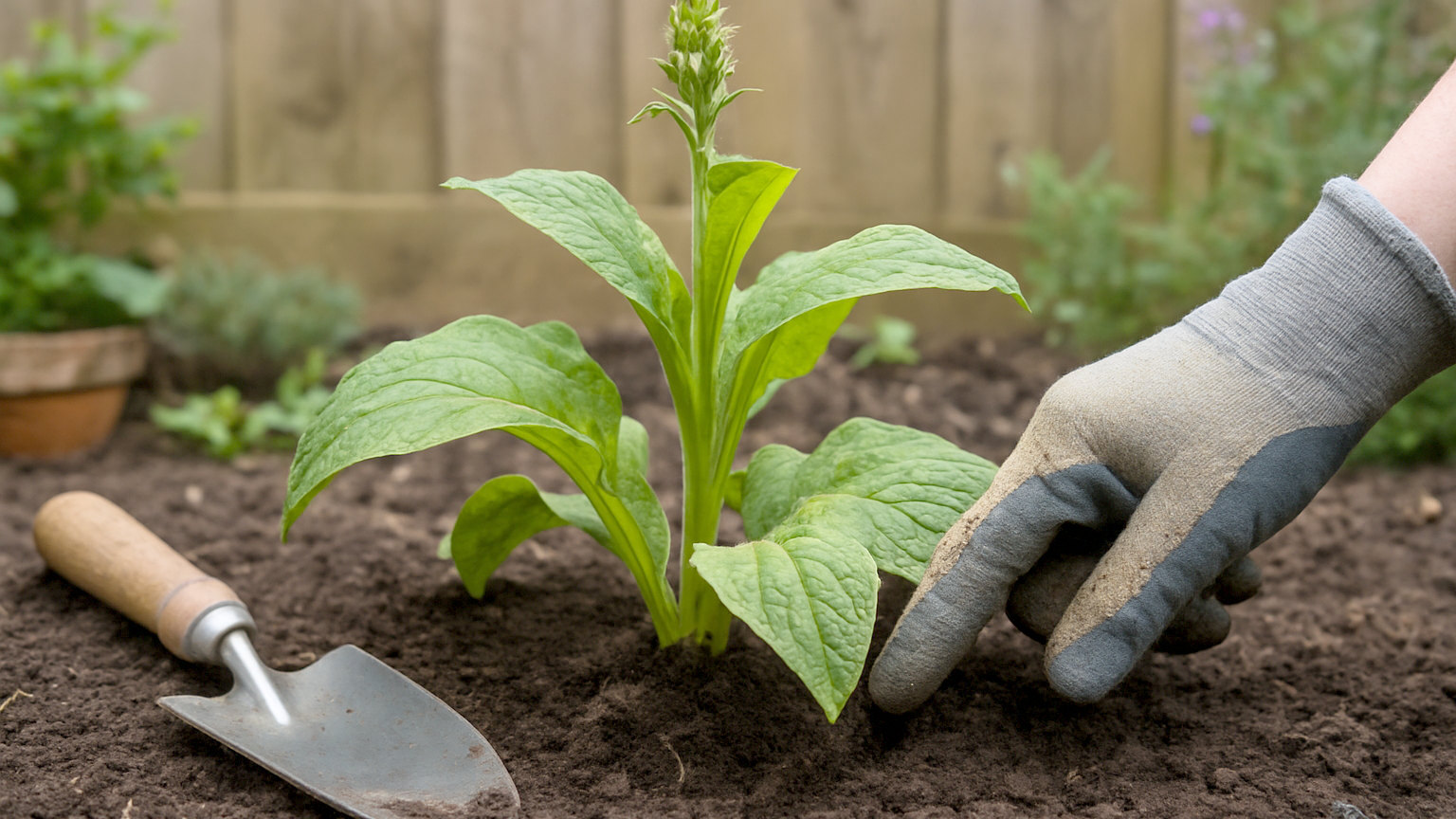
A newly planted shrub that is wilting, yellowing or simply not growing is giving a limited set of signals, and several quite different problems produce almost identical symptoms. Working through them in order identifies the cause quickly.
Feel the soil first
Wilting is caused by drought and by waterlogging in equal measure, and the two need opposite responses.
Roots sitting in saturated soil cannot take up oxygen, and without oxygen they cannot take up water. The plant therefore wilts while standing in mud, and watering it makes matters worse.
Push a finger or a trowel into the soil beside the rootball, about ten centimetres down. Dry and dusty means water. Wet, heavy and possibly sour-smelling means stop watering and improve drainage.
Do not judge by the surface, which dries first and tells you very little.
Check the watering was reaching the roots
A very common cause of failure in a plant that has been watered conscientiously.
A light daily sprinkle wets the top few centimetres and never reaches the rootball, particularly on a plant that went in with dry compost. Meanwhile the surface looks damp and the gardener assumes all is well.
Water thoroughly and weekly, ten to twenty litres for a shrub, rather than lightly and often. Check afterwards by digging down beside the plant.
A container-grown plant put in with a dry rootball is particularly vulnerable, since dry compost repels water and the rootball can stay dry in wet soil.
Check the planting depth
Scrape the soil away from the base of the stem.
Planting too deep is a slow killer. The stem base rots at the collar, and the plant declines over one or two seasons with no obvious cause.
You should be able to see the soil mark on the stem at the surface, or on a tree the root flare where the trunk widens into the roots.
Mulch piled against the stem does the same thing, so check that too.
Look at the roots
If the plant is small enough, ease it up with a fork and look. This one check answers most questions in a minute.
White, firm roots spreading out into the surrounding soil means the roots are fine and the problem is above ground.
Brown, soft, easily stripped roots mean waterlogging and rot.
A rootball still exactly the shape of the pot, with roots circling tightly and none venturing into the soil, means it was planted pot-bound and never established. Tease the roots out, or cut through the outer layer in several places, and replant.
No roots at all, and a plant that comes away in your hand, usually means vine weevil grubs.
Wind rock
A hollow around the base of the stem, and a plant that moves at ground level when pushed gently.
Wind rocking a new plant opens a gap that fills with water and freezes, damaging the roots. Refirm the soil, stake if necessary, and shorten long top growth to reduce the sail area.
Transplant shock
Some check after planting is normal, particularly on evergreens and anything moved during the growing season. Expect a season of little visible growth.
Leaves may yellow and drop as the plant sheds what its reduced root system cannot support. Provided new growth appears, that is recovery rather than failure.
Reducing the top growth by about a third at planting balances the loss of roots and helps considerably.
What not to do
Do not feed a struggling plant. The cause is almost always water, drainage, depth or roots, and fertiliser makes all four worse.
Do not keep watering a plant in wet soil. Do not dig it up repeatedly to check.
Give it time
The old saying about a plant sleeping, creeping then leaping is broadly accurate. A shrub often does very little visible growth in its first season while building roots.
Judge a new planting in its second or third year rather than its first, provided the roots are sound and the soil is neither dry nor waterlogged.
When to give up
If the roots are rotted, if the plant has produced no new growth at all for two full seasons, or if it comes away in your hand, it is finished.
Before replacing, work out what went wrong. Putting an identical plant into the same position without addressing drainage, depth or watering usually produces the same result a year later.


