
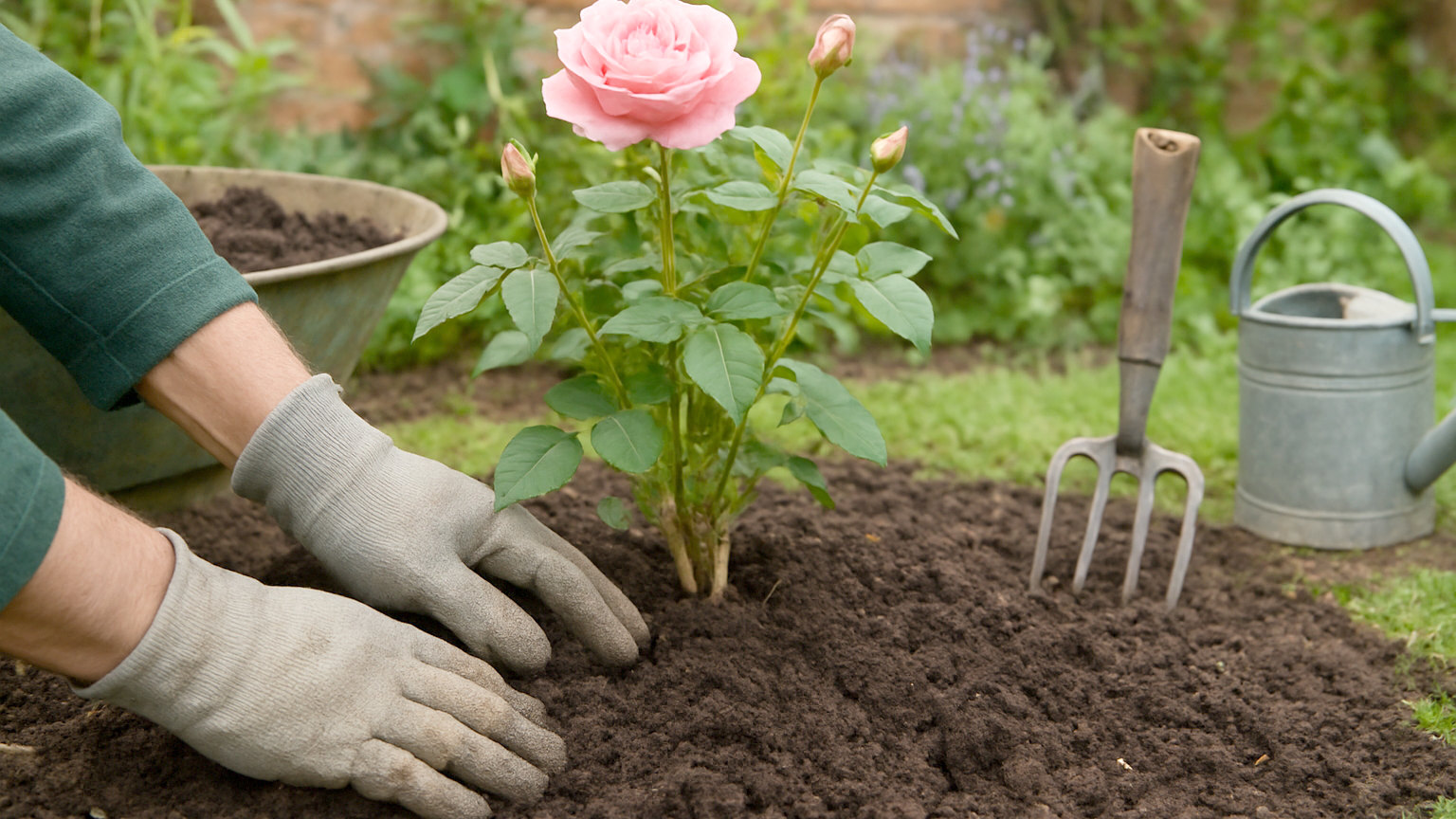
Mulching is spreading a layer of material over the soil surface, and it is the single most useful annual job in a garden. It conserves moisture, suppresses weeds, moderates soil temperature, feeds the soil as it breaks down and improves structure year on year.
What to use
Garden compost is the best all-round choice: it feeds as it rots, improves structure and costs nothing if you make it.
Well-rotted manure is excellent for hungry plants such as roses, fruit and vegetables. It must be genuinely rotted, meaning at least a year old, since fresh manure scorches roots.
Leaf mould is superb for woodland planting and adds structure rather than much nutrition. It costs nothing but a year's patience.
Bark and woodchip last longest and look tidy, which suits shrub borders and paths. They add little nutrition and are best on the surface rather than dug in.
Gravel and grit suit Mediterranean plants, alpines and anything needing a dry crown. They do not feed the soil and last indefinitely.
Straw is used under strawberries and around vegetables, and rots down within a season.
How deep
Five to seven centimetres is the working figure for most mulches. Less than about three centimetres does very little to suppress weeds.
Bark and woodchip can go slightly deeper. Compost and manure at seven centimetres is generous and effective.
Two rules that matter
Never mulch dry ground. A mulch does not add water, it holds in what is already there. Applied to dry soil it seals the dryness in and prevents light rain from reaching the roots.
Mulch after rain or after a thorough watering, when the soil beneath is genuinely moist.
Keep mulch clear of stems and crowns. Material piled against bark holds moisture there and causes collar rot, which kills plants slowly and is a common cause of unexplained failure.
Leave a gap of a few centimetres around trunks and stems, forming a ring rather than a mound.
When to do it
Spring, in March or April, is the main window. The soil is moist from winter, warming up, and the mulch locks moisture in ahead of summer.
Autumn mulching also works well, protecting roots over winter and letting the worms incorporate it over several months.
Avoid mulching in a drought, on frozen ground, or in the coldest part of winter when it can keep the soil cold longer into spring.
Weed first
A mulch suppresses weed seedlings by excluding light. It does nothing to established perennial weeds, which push straight through.
Clear bindweed, ground elder and couch grass before mulching, since burying them simply hides the problem for a few weeks.
Annual weeds can be hoed off and mulched over.
The nitrogen question
Fresh woodchip is often said to rob nitrogen from the soil. This is true where it is dug in and mixed with the soil, since the organisms breaking it down take nitrogen as they work.
Applied to the surface as a mulch, the effect is confined to the top centimetre or two and is negligible for established plants.
Do not dig fresh woodchip into a planting hole or into a vegetable bed. On the surface it is fine.
Where mulching does most
Around newly planted trees and shrubs, where it retains water and keeps grass off the root area.
On clay, where an annual surface mulch gradually transforms the structure without any digging.
On sand, where it increases the soil's ability to hold water.
Around fruit, roses and anything hungry, where the feeding value matters.
Sheet mulching
Cardboard laid on the ground and covered with compost smothers grass and annual weeds entirely, and rots away within a season. It is the standard way to start a no-dig bed over a lawn.
Use plain cardboard with tape and glossy printing removed, overlap the sheets generously with no gaps, and wet them thoroughly before covering.
How much you need
A cubic metre of mulch covers roughly fifteen square metres at seven centimetres deep, which is more material than most people estimate. Buying in bulk costs a fraction of the bagged price for anything beyond a very small area.
Order it delivered loose or in a bulk bag if you have access, since carrying forty bags from a car boot is the usual reason a mulching job never gets finished.


