
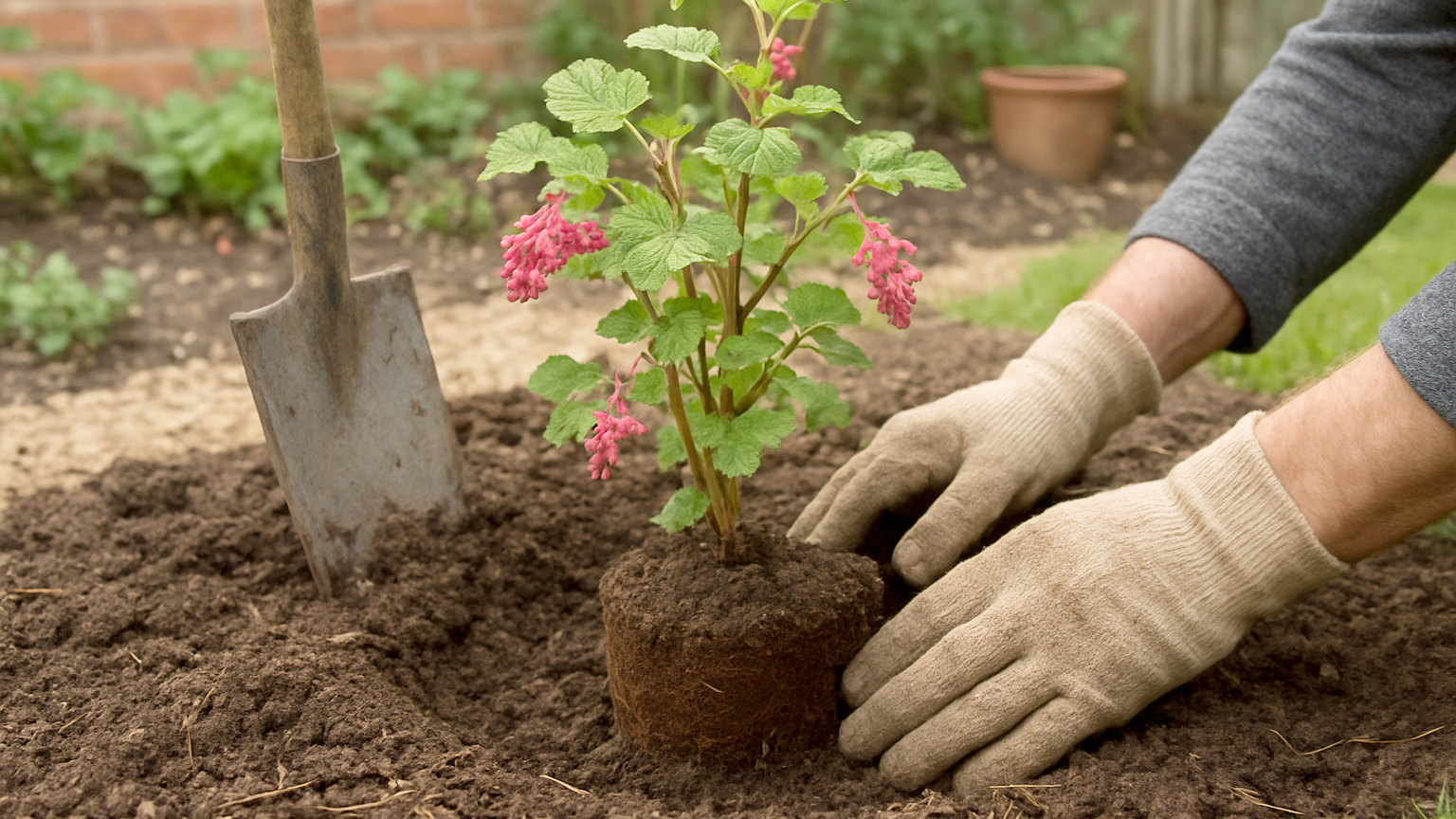
Almost every shrub that dies in a garden dies within two years of being planted, and the cause is usually the planting or the aftercare rather than the plant. The job takes twenty minutes and there are four or five details that decide the outcome.
When to plant
Autumn is the best time for most hardy shrubs. The soil is still warm, rain is reliable, and roots grow through winter so the plant is established before its first dry summer.
Spring is the next best, and is preferable on cold wet clay and for anything slightly tender, which benefits from a full season before facing winter.
Container-grown shrubs can go in whenever the ground is not frozen or waterlogged, but summer planting means committing to watering. Bare-root and root-balled stock is only available and only planted in the dormant season.
Dig a square hole
Make it square rather than round, and considerably wider than it is deep. Roots meeting the smooth curved side of a round hole tend to follow it round; the corners of a square hole guide them out into the surrounding soil.
Aim for two to three times the width of the rootball and no deeper than the rootball itself. Fork the sides and base to break up any smooth compacted surface, which on clay otherwise acts as a sealed container that fills with water.
Do not fill it with compost
A hole filled with rich compost creates a pot in the ground. Roots find the improved soil comfortable, stay within it and never venture into the surrounding ground, so the plant stays small, unstable and dependent on you for water.
Backfill with the soil you dug out, improved with no more than about a quarter compost mixed through. On very poor soil, improve a wide area rather than a deep pocket, since roots spread outwards far more than down.
Prepare the plant
Water the shrub thoroughly in its pot an hour before planting. A dry rootball is very hard to rewet once it is in the ground.
Slide it out and look at the roots. If they are circling the pot, tease them out with your fingers, and if they are tightly matted, cut through the outer layer in three or four places with a knife. Roots left circling continue to circle and eventually strangle the plant.
Depth is critical
Plant so the top of the rootball is level with the surrounding soil, no deeper. Burying the stem base causes rot at the collar, which is a slow and common killer.
Lay a cane across the hole to check the level before backfilling rather than judging by eye. Two exceptions are worth knowing: clematis are planted five to eight centimetres deeper as insurance against wilt, and roses are set with the graft union about five centimetres below the surface in the UK climate.
Backfill and firm
Fill in stages, working soil in around the roots and firming gently with your heel or knuckles as you go to remove air pockets. Firm enough that the plant does not rock, not so hard that you compact the soil into a solid mass.
Leave a shallow saucer-shaped depression around the plant to catch water, which makes a real difference on a slope or free-draining soil.
Water in properly
Water immediately after planting, even in winter and even in the rain. This is not primarily about moisture, it is about settling the soil into contact with the roots. Give a full watering can or two, slowly.
Top up any hollows that appear as the soil settles.
What not to add to the hole
Skip the bonemeal, root-boosting powders and mycorrhizal products unless you have a specific reason. On reasonable garden soil their benefit is marginal at best, and none of them compensates for a hole that is too small or a plant that is not watered. Money spent on mulch and a watering can does more.
Mulch and stake if needed
Mulch a circle at least a metre across with five to seven centimetres of compost or bark, keeping it a few centimetres clear of the stems themselves, since mulch piled against bark causes rot.
Keep that circle free of grass and weeds for the first few years. Competition at the base is one of the main reasons new shrubs grow slowly.
Most shrubs do not need staking, since flexing thickens the stem. Anything tall and top-heavy in an exposed position benefits from a short low stake for the first year or two.


