
Winter losses in British gardens are caused by wet, wind and rapid thawing at least as often as by low temperature itself. Understanding which is at work determines what protection is worth putting up.
Wet kills more than cold
Most so-called frost losses are actually rot. Roots in cold saturated soil through January die, and the plant collapses in spring just as everything else starts growing.
Mediterranean and silver-leaved plants are the classic victims, surviving hard frost in gritty soil and dying at minus two in clay.
The protection that matters here is drainage: grit in the planting hole, planting slightly proud of the surrounding soil, and a gravel mulch that keeps the crown dry.
Horticultural fleece
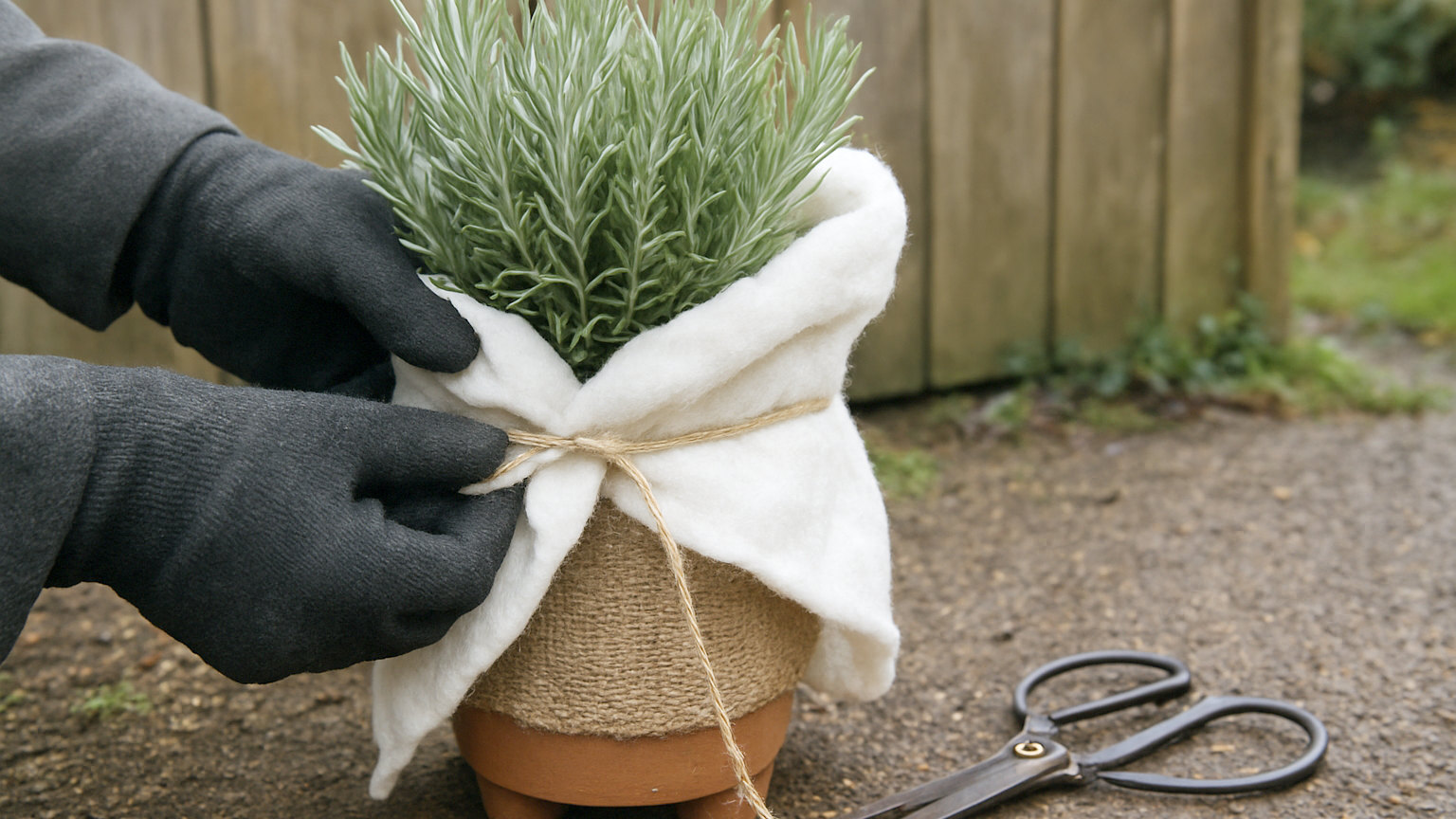
The most useful protective material there is. Lightweight, permeable to light, air and water, and typically giving a couple of degrees of protection.
Use it over vulnerable plants on frosty nights, over early sowings, and over blossom on fruit trees when a late frost threatens.
Remove it during the day where the plant is flowering, so pollinating insects can reach the blossom. Leave it in place through a prolonged cold spell.
Do not use polythene directly on foliage. It does not breathe, moisture condenses inside, and leaves touching it are frequently more damaged than they would have been uncovered.
Protecting the roots, not the top
For plants in containers, wrap the pot rather than the plant. Roots in a pot are exposed to cold from every side and freeze far more readily than roots in the ground.
Bubble wrap or hessian around the container, pots grouped together, moved against a house wall, and raised on feet so they drain freely.
Waterlogging is the bigger risk. Remove saucers in autumn and check drainage holes are clear.
In open ground, a thick mulch over the root area protects the crown of borderline plants even where the top growth is lost.
Do not cut back in autumn
Tender and borderline plants such as penstemon, salvias, fuchsias and agapanthus rely on their old top growth to protect the crown.
Cutting them back in autumn removes that protection and frequently kills them. Leave them until spring growth is clearly visible, then cut back to the new shoots.
Wind
Wind causes more damage than most people credit: scorched foliage, broken stems, rocking that opens holes around roots, and greatly increased water loss.
Filter wind rather than blocking it. A solid fence or wall creates turbulence on the sheltered side that can be more damaging than the open wind.
A hedge, a slatted screen or windbreak netting slows the air passing through and provides genuine shelter for a distance of several times its height.
Temporary windbreak netting on stakes protects new plantings through their first winter and can be removed once they establish.
Late frosts
The most damaging frosts are the late ones in April and May, which catch soft new growth and open blossom.
Watch the forecast from March onwards and keep fleece to hand. Cover fruit blossom, tender bedding and anything recently planted out when a frost is forecast.
Do not plant tender crops out until the last frost date for your area has passed, which varies by weeks across the country.
Rapid thawing
Frost damage is often caused by thawing too quickly rather than by the freezing itself. Rapid thawing ruptures the cells.
This is why camellias and magnolias should not be planted where they get early morning sun. Frosted buds thawed slowly usually recover; the same buds hit by direct morning sun turn brown within hours.
A north or west-facing position solves it entirely.
Snow
Snow insulates and is generally helpful, but its weight splays open hedges and conifers and breaks branches.
Brush heavy snow off evergreens, hedges and anything with a spreading habit, working from the top downwards so you are not loading the branches below.
Cloches and cold frames
For low plantings and early sowings, a cloche or a cold frame gives more protection than fleece and lasts for years.
Ventilate on mild days, since a closed cloche in spring sunshine can exceed thirty degrees and scorch everything inside within an hour.
What not to protect
Fully hardy plants in open ground need nothing. Wrapping them wastes effort, traps moisture and can cause more damage than the weather would.
Reserve protection for tender and borderline plants, containers, early sowings and blossom.


