
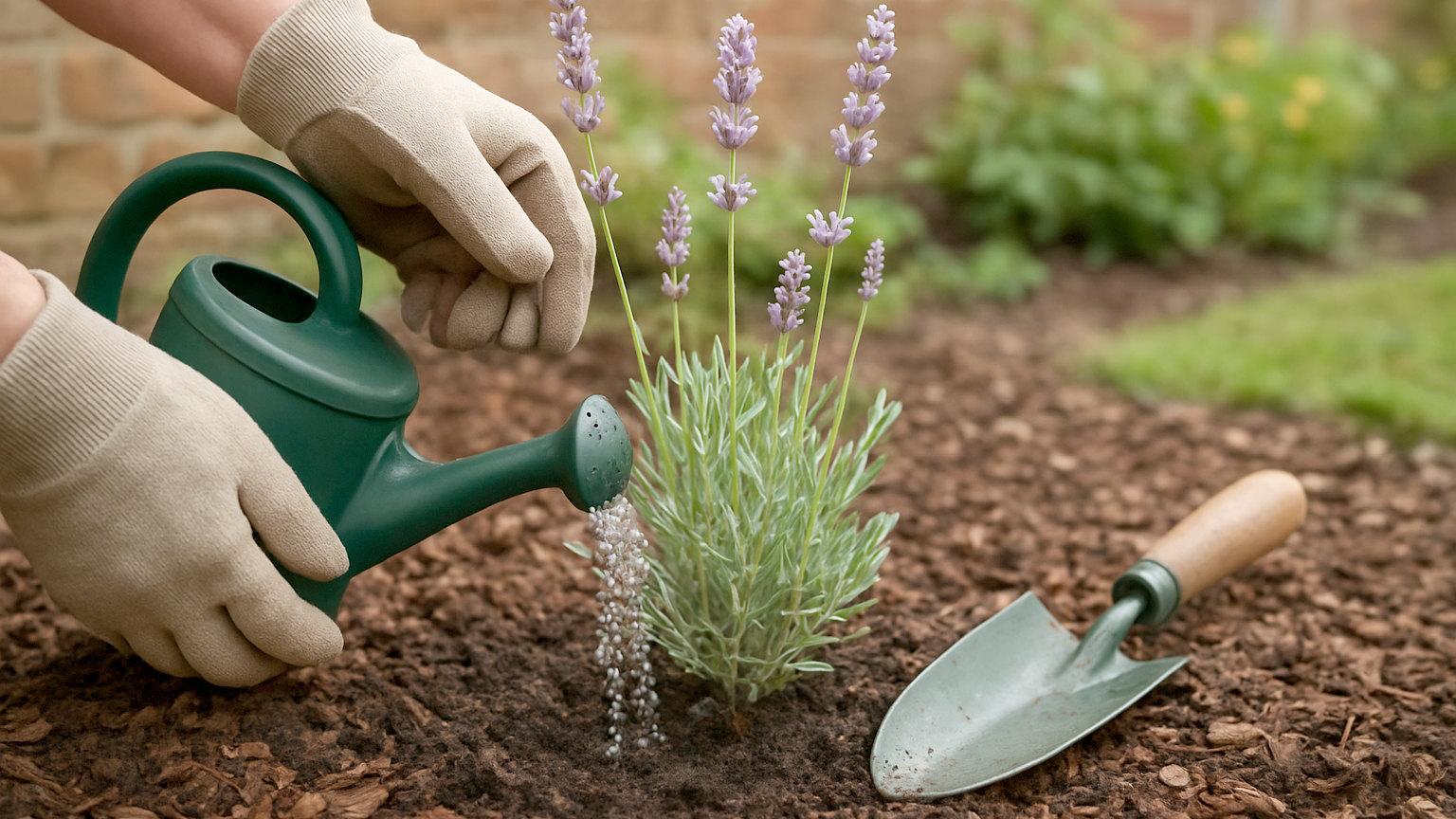
The instinct on planting something is to give it a boost. In most cases that is unnecessary, and in some it does harm. What a new plant needs is water, mulch and time.
Why fertiliser at planting is rarely needed
A newly planted shrub or tree is not short of nutrients. It is short of a functioning root system, and fertiliser does nothing to build one.
Reasonable garden soil contains ample nutrition for a plant to establish. Adding fertiliser to the planting hole can scorch new roots, and it encourages top growth at exactly the point when the plant should be investing in roots.
Container-grown stock also arrives with slow-release fertiliser already in the compost, which continues working for weeks.
What to do instead
Improve the whole bed with organic matter before planting rather than enriching the individual hole.
Mulch after planting with five to seven centimetres of compost or well-rotted manure, keeping it clear of the stem. This feeds slowly, conserves moisture and suppresses weeds, which between them do far more than a handful of fertiliser.
Water thoroughly and consistently through the first two growing seasons. This is what actually determines whether a plant establishes.
When to start feeding
Wait until the second spring for a shrub or tree in open ground, by which point the plant is establishing and a spring feed supports growth.
For perennials and bedding, a balanced liquid feed can begin about six weeks after planting, once roots have taken hold.
For containers, feeding is genuinely necessary, since compost is exhausted within about six weeks and the plant has nothing else to draw on. Start feeding weekly at that point.
Bonemeal
Traditionally scattered in every planting hole. It is a slow-release source of phosphorus, which supports root development, and on soil already adequate in phosphorus it achieves very little.
Most British garden soils are not short of phosphorus. If you use it, mix it into the backfill rather than placing it directly against the roots, and wear gloves.
It also attracts foxes and dogs, which dig up newly planted stock to get at it, and that is a genuine practical objection.
Mycorrhizal fungi
Widely sold and specifically recommended for planting, on the basis that the fungi form a partnership with roots and improve nutrient and water uptake.
The evidence is mixed. Some trials show benefit, particularly on poor or difficult soil, and others show very little, and results vary with soil type and existing fungal populations.
They do no harm and are inexpensive. If you use them, apply directly onto the roots at planting so there is physical contact, since scattering the granules loose in the hole does nothing.
Note that brassicas and a few other plant families do not form mycorrhizal associations at all.
Never feed a struggling plant
A plant that is wilting, yellowing or failing needs diagnosis rather than fertiliser.
The cause is almost always water, drainage, planting depth or root damage. Feeding a plant that cannot take up water because its roots are drowning, or that has lost its roots to vine weevil, makes matters worse rather than better.
Feel the soil, check the drainage and look at the roots before reaching for anything in a bottle.
Signs a plant genuinely needs feeding
Uniform pale yellowing of older leaves with weak thin growth suggests nitrogen shortage, which is common on sandy soil and after heavy rain.
Yellowing between the veins of older leaves, veins staying green, is magnesium, corrected with Epsom salts.
Brown scorching around leaf margins is potassium.
All of these are far more common in containers than in open ground.
The general principle
Feed the soil rather than the plant. An annual mulch of compost supplies a broad range of nutrients slowly, improves the soil's ability to hold them, and prevents most deficiencies without any testing or measuring.
Exceptions worth knowing
Hungry plants genuinely benefit from feeding once established: roses, fruit, clematis and anything cropping heavily.
Very poor soil, thin chalk or pure sand may need more support in the early years than a mulch alone provides.
Container plants are the clearest exception, since compost is exhausted within six weeks and there is nothing else for the roots to reach.


