
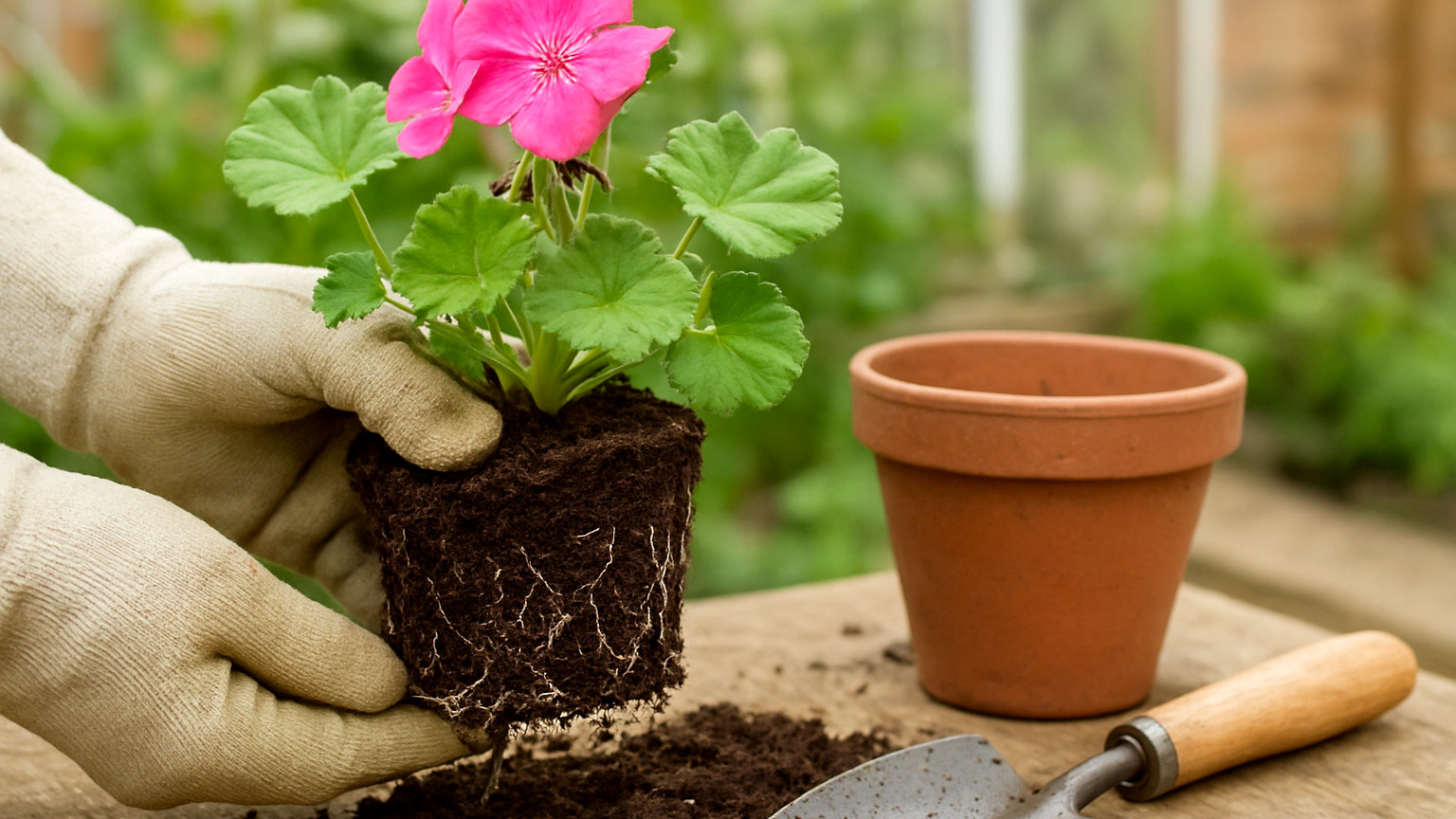
Most of what determines whether a plant succeeds is decided before you get it home. Five minutes of inspection in the garden centre saves a season of disappointment, and the most important part is the bit nobody looks at.
Look at the roots
Tip the plant out of its pot and look. Nurseries and garden centres expect this and nobody minds.
You want to see white or pale healthy roots visible around the outside of the rootball, holding the compost together but not dominating it.
What you do not want is a solid mat of roots circling tightly around the inside of the pot, which means the plant is pot bound. Those roots continue circling after planting and can eventually strangle the plant.
Brown, soft, slimy or foul-smelling roots mean waterlogging and rot. Put it back.
Roots growing out of the drainage holes in quantity mean it has been in that pot far too long.
Look at the compost surface
A crop of weeds or a mat of liverwort and moss on the surface means the plant has been sitting in the same pot for a long time, probably neglected.
It also means you are buying those weeds and introducing them to your garden. Hairy bittercress in particular arrives this way and seeds itself everywhere.
The compost should be moist and firm, not shrunken away from the sides of the pot, which indicates it has dried out badly at some point.
Look at the plant
Check for even, balanced growth rather than a single stem or a lopsided shape.
Look for pests on the undersides of leaves and in the growing tips: aphids, whitefly, red spider mite, scale insects and mealybug are all frequently brought home this way.
Check for disease: blackspot, mildew, rust or unexplained yellowing and leaf drop.
Look at the stem base for damage or rot, and at any graft union for signs it has failed.
Bigger is not better
A smaller plant frequently overtakes a larger one within two or three years, because it establishes faster and adapts to your conditions rather than arriving already shaped by a nursery.
This is particularly true of trees. A young whip or a maiden establishes far more quickly than a large specimen and often ends up larger within a decade.
Buying small also lets you buy more, which for a border of perennials matters, since three of one plant looks far better than one each of three.
Buying perennials in flower
Tempting and rarely the best choice. A perennial in full flower in a pot is putting its energy into blooming rather than rooting, and it establishes more slowly.
Buy earlier in the season if you can, or accept that you should remove the flowers after planting to let the plant settle.
The exception is where you specifically need to check flower colour or scent, which for roses and scented shrubs is a genuine reason to buy in flower.
Bare-root stock
Check the roots are moist and have not dried out, that there is a good fibrous root system rather than a few thick roots, and that the stems are firm with no shrivelling.
Look for a well-balanced root system in proportion to the top growth.
Where to buy
Specialist nurseries generally offer better plants, wider choice, honest descriptions of eventual size and disease resistance, and staff who know the subject.
Garden centres are convenient and vary considerably. End-of-season bargains can be genuine or can be plants that are pot bound and stressed, so the root check matters most there.
When you get it home
Water the plant thoroughly and plant it promptly. If you cannot plant at once, keep it somewhere sheltered and watered rather than in a hot car boot or on a sunny patio.
Quarantine anything destined for a greenhouse for a fortnight, since the great majority of greenhouse infestations arrive on a bought plant rather than flying in.
Mail order
Specialist nurseries send plants by post and the quality is frequently better than anything available locally, since the choice is wider and the stock is grown rather than bought in.
Unpack immediately on arrival, water, and let plants recover in a sheltered spot for a few days before planting.


