
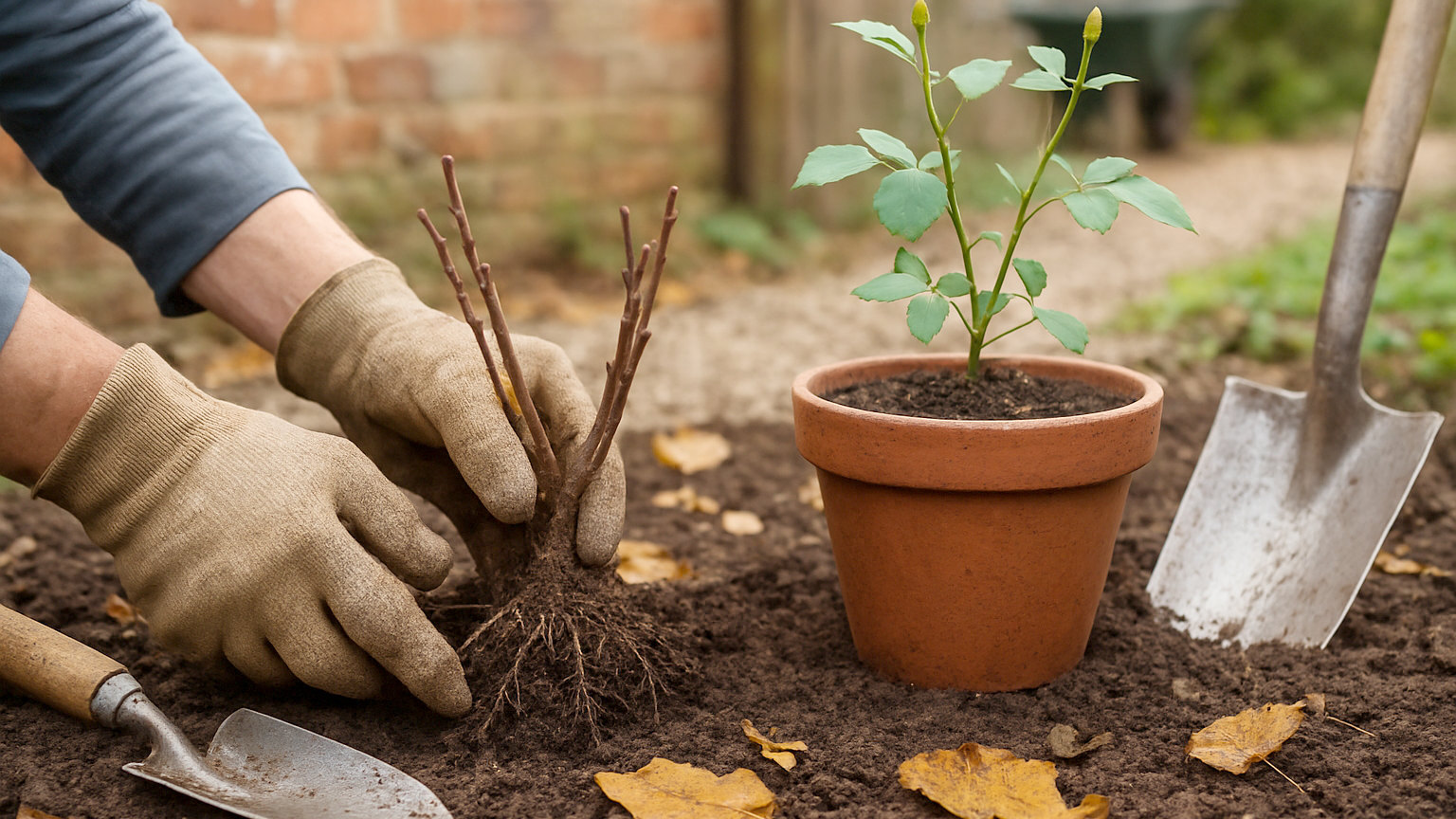
Most planting advice says autumn is best, which is true on free-draining soil and frequently wrong on heavy clay. The right answer depends more on your ground than on the plant.
The case for autumn
Autumn planting, from September to November, gives a plant the longest possible establishment period.
The soil is still warm from summer, so roots grow actively for several weeks. Autumn and winter rain does the watering. And the plant has months to build a root system before it has to support any leaves the following spring.
By the time the first dry summer arrives, an autumn-planted shrub has a far better root system than one planted in April.
This is why bare-root stock is sold in autumn and winter, and why it establishes so well.
The case for spring
On cold wet clay, autumn planting frequently fails. The plant sits in cold saturated soil for five months, growing very little and often rotting before it roots.
Spring planting, from March once the soil has warmed, gives a full growing season to establish before winter. The trade is that you must water through the first summer.
Spring is also the right choice for anything tender or borderline hardy, which benefits from a full season in the ground before facing a winter.
Evergreens are often better in mid-spring or early autumn than in midwinter, since they continue losing water through their leaves and struggle to replace it from cold soil.
What must be planted when
Bare-root stock can only be planted while dormant, between November and March. There is no choice.
Spring bulbs go in during September and October, and tulips in November.
Summer bulbs such as gladioli, dahlias and lilies go in during spring.
Tender bedding and vegetables go out only after the last frost, typically late May.
Biennials such as wallflowers and foxgloves are planted in autumn to flower the following spring.
Container-grown plants
These can technically be planted at any time the ground is neither frozen nor waterlogged, which is the reason garden centres sell them all year.
That flexibility is real and it does not make every month equal. A container plant put in during autumn or spring establishes far more easily than one planted in July.
Summer planting
Possible and it commits you to watering, thoroughly and weekly, for the rest of the season.
If you must plant in summer, do it in the evening or on a dull day, water the plant in its pot beforehand, water in generously afterwards, mulch, and consider shading it for a fortnight.
Removing any flowers helps, since the plant then puts its energy into rooting rather than blooming.
Winter
Planting is possible whenever the ground is workable, which in a mild winter is most of it.
Do not plant into frozen ground, into soil that is saturated, or when hard frost is forecast within a few days. Heel bare-root stock in and wait.
A rough rule
On free-draining or average soil: autumn for almost everything, spring for tender plants.
On heavy wet clay: spring for almost everything, with autumn reserved for bare-root stock that has no alternative, planted on a slightly raised mound.
Either way
Prepare the ground in advance rather than on the day, clear perennial weeds first, plant at the right depth, water in thoroughly whatever the season, and mulch afterwards.
Water through the first two growing seasons regardless of when you planted, since that is what determines whether a plant establishes rather than merely survives.
Moving established plants
The same seasons apply. Move deciduous plants while fully dormant between November and March, and evergreens in early autumn or mid-spring when the soil is warm but the plant is not under heat stress.
Never move anything in summer, in hard frost, or when the ground is waterlogged.
Working out your own dates
Local conditions vary by weeks across the country and even between gardens on the same street. A frost pocket at the bottom of a slope may be a fortnight behind a sheltered garden half a mile away.
Keep a note of when the last frost actually fell in your garden, and after two or three years you will have dates more useful than any published guidance.


