
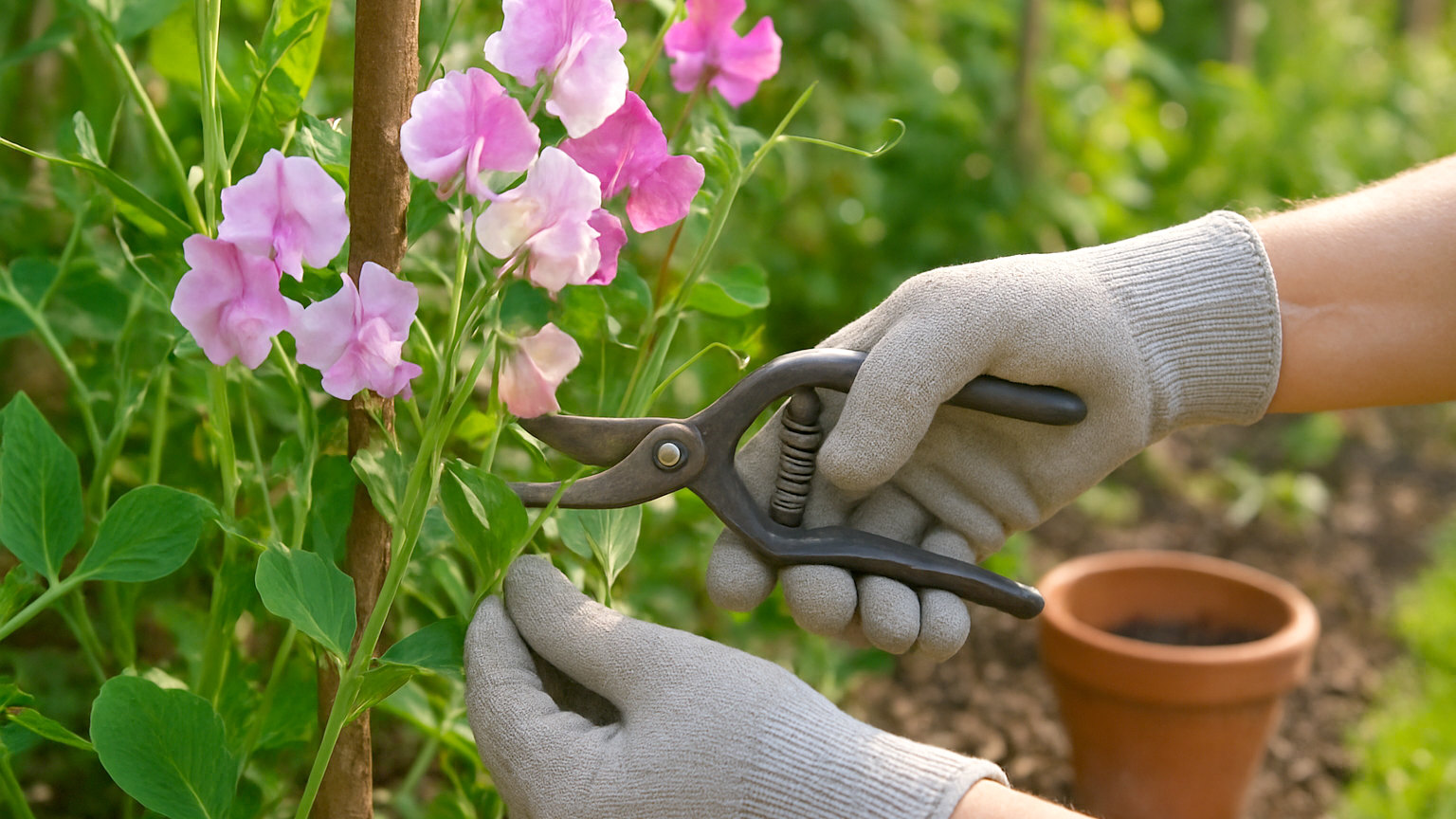
Sweet peas repay attention more directly than almost any other annual. Pick them constantly and they flower for three months; let a few pods set seed and they stop within a fortnight. Everything else about growing them is straightforward.
When to sow
There are two windows and each has its case.
Autumn sowing, in October or November, produces stronger plants with better root systems that flower earlier and for longer. The seedlings are overwintered in a cold frame or unheated greenhouse, kept barely moist and well ventilated. This is what exhibitors do.
Spring sowing, from February to April under cover, is simpler and perfectly good. Flowering starts a few weeks later and the season is a little shorter, but there is no overwintering to manage.
You can also sow direct outside in April where they are to grow, though germination is less reliable and mice are fond of the seed.
Sowing technique
Sweet peas make long roots and hate being cramped, so use root trainers, deep pots or cardboard tubes rather than shallow trays. Sow one seed per module about two centimetres deep in peat-free compost.
Soaking or chipping the seed is often recommended and is largely unnecessary with modern seed. If germination has been poor for you before, soaking overnight does no harm.
Keep them cool rather than warm. Sweet peas germinate at around fifteen degrees and a heated propagator produces soft, drawn seedlings. A cold frame or unheated greenhouse is ideal.
Pinching out
When seedlings have three or four pairs of leaves, pinch out the growing tip above the second pair. This feels wasteful and it is the single most useful thing you can do.
An unpinched sweet pea grows as one long stem with flowers only near the top. A pinched one produces multiple side shoots from the base and several times the number of flowers.
Planting out and supports
Harden off over a fortnight and plant out from April, once they have been acclimatised. Sweet peas are hardy enough to take a light frost, so they do not need to wait until the end of May.
They want rich, moisture-retentive soil in full sun, ideally prepared with plenty of compost or well-rotted manure the previous autumn. A trench filled with organic matter, as for runner beans, pays off here.
Supports need to be in place before planting. A wigwam of canes, netting against a fence, or an obelisk all work, and the support should be at least two metres tall. Sweet peas climb by tendrils and need something thin to grip, so tie them in loosely for the first few weeks until they take hold.
Picking, which is the whole point
Pick every single day, and never let a seed pod form. A sweet pea's biological purpose is to set seed, and once it succeeds it stops producing flowers. A single overlooked pod on a plant will noticeably reduce flowering within days.
Go over the plants each morning, cutting every open flower and pinching off anything that has begun to swell into a pod. The more ruthlessly you pick, the longer the display lasts. A row picked daily will flower from June into September; the same row picked when someone remembers will finish in July.
Watering and feeding
Water generously and consistently, especially in dry spells. Dry roots cause bud drop, where flower buds turn yellow and fall before opening.
Feed weekly with a high-potassium tomato feed once flowering begins. Avoid high-nitrogen feeds, which produce lush foliage and fewer flowers.
Common problems
Bud drop is nearly always inconsistent watering or a sudden cold snap. Powdery mildew appears in late summer, particularly on dry plants in still air, and is reduced by good spacing and consistent moisture.
Mice dig up autumn-sown seed, so keep pots off the ground or cover them with mesh until germination. Slugs will take young plants at ground level in the first weeks after planting out.
Growing them in pots
Sweet peas grow perfectly well in a large container with an obelisk, provided it holds enough compost. Use a pot at least forty centimetres across and deep, since a small pot dries out and dry roots stop flowering faster than anything else. Water daily in summer and feed weekly.
Choosing varieties
Modern Spencer types have large ruffled flowers and long stems for cutting but variable scent. Older grandiflora varieties have smaller flowers and far stronger perfume, which for most gardens is the better trade.


