
In a small garden the ground is limited and the vertical surfaces usually are not, which makes climbers the most efficient plants available. The only real difficulty is that many of the best known are far too big.
Check the eventual size
Vigour is the thing to establish before colour or scent. A great many small-garden problems come from planting something that reaches eight metres against a two-metre fence.
The usual offenders are Russian vine, Virginia creeper, Clematis montana, vigorous rambling roses and Wisteria. All are magnificent given room and unmanageable without it.
Buy from a supplier who states the eventual height and spread honestly, and treat anything described as vigorous as a warning rather than a recommendation.
Compact climbers worth knowing
- Clematis alpina and macropetala - two to three metres, spring flowering, hardy, and needing almost no pruning
- Clematis viticella varieties - two to three metres, cut to the ground each February so they never outgrow the space
- Compact large-flowered clematis - several modern varieties stay under two metres and suit containers
- Trachelospermum - slow and eventually moderate, evergreen and scented
- Solanum crispum - long flowering, though it needs tying and some space
- Compact climbing roses - two to two and a half metres, and there are several good ones
Annual climbers
The most flexible option for a small space, since they cover a structure for one season and leave nothing to prune, and you can change them every year.
Sweet peas, morning glory, black-eyed Susan, canary creeper and climbing nasturtiums all grow from a packet of seed and reach two or three metres.
They are also the answer for covering something temporarily, or filling a gap while a permanent climber establishes.
Obelisks and single supports
An obelisk in a border gives height with almost no footprint, which is exactly what a small garden needs.
Spiral the stems around it rather than running them straight up, which produces far more flower along the length. A clematis, an annual climber or a compact rose all suit one.
A single post with wires, or a pillar at the corner of a bed, does the same job in even less space.
Using the boundaries
Every fence and wall in a small garden is potential growing space. Covering the boundaries with planting also makes them recede visually, which makes the garden feel larger, whereas a bare fence emphasises exactly where it stops.
Fit wires or trellis on battens to every boundary you can. It costs little and doubles the planted area.
Remember you cannot fix anything to a fence you do not own without permission, and check before drilling on a rented property.
Two on one support
Growing two climbers together doubles the season from one planting position.
A spring clematis with a late one, or an evergreen with a summer flowerer threading through it, both work well. Choose a group three clematis for the partner, since cutting it to the ground in February prevents a permanent tangle.
A climber growing through an established shrub is another version of the same idea and uses no extra ground at all.
In containers
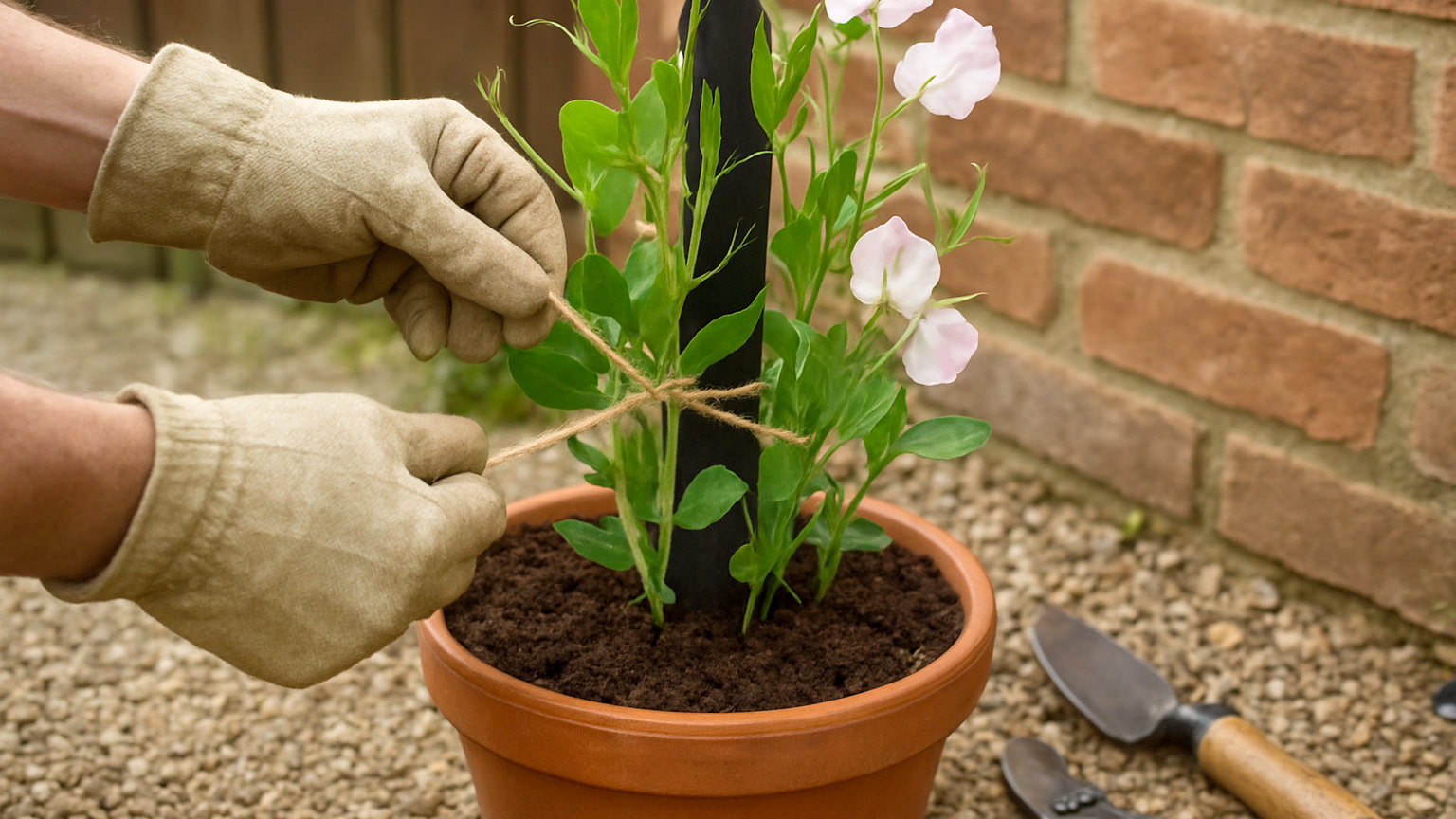
Where there is no soil at all, a large container with an obelisk supports a clematis, an annual climber or a compact rose.
Use a pot of at least forty-five centimetres with soil-based compost, water daily in summer, and feed weekly once flowering starts.
Keeping them in bounds
Prune annually and on time rather than letting things run. In a small garden a year's neglect shows immediately.
Choosing plants that are cut hard each year, such as group three clematis, annual climbers and hard-pruned wall shrubs, means the size is reset every February and never becomes a problem at all.
Scent matters more in a small space
In a small garden you pass every plant closely, so a scented climber over a door, an arch or beside a seat does a great deal of work.
Summer jasmine, trachelospermum, honeysuckle and a well-chosen climbing rose are all worth prioritising over something purely visual.
Growing up through shrubs
A climber threaded through an existing shrub uses no extra ground at all and extends the host's season considerably. A late clematis through a spring-flowering shrub is the classic version.
Choose something that is cut hard each February so it does not permanently tangle with its host.


