
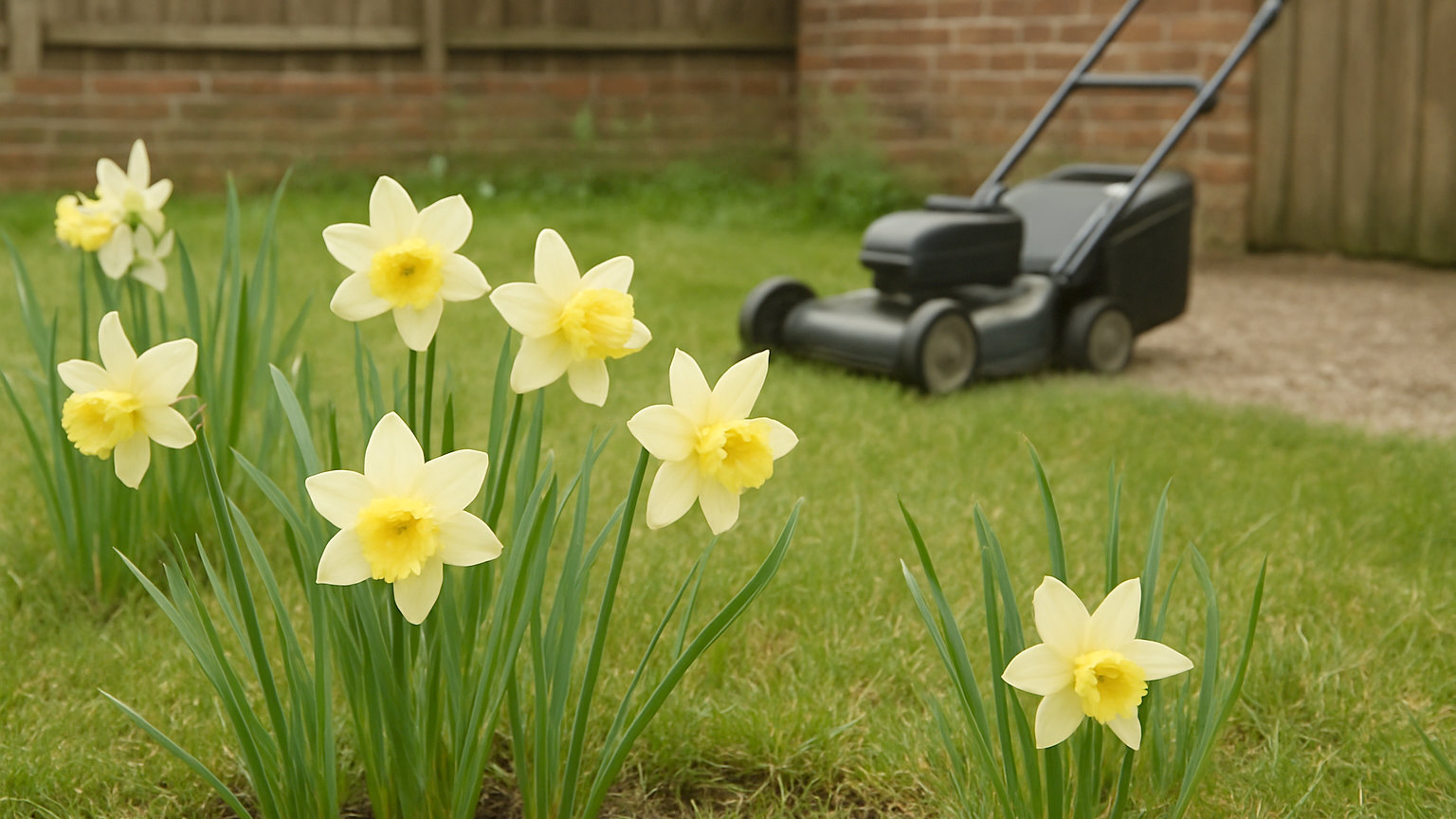
Bulbs planted in grass increase every year with no attention at all, and after a decade produce something no amount of annual bedding could match. The whole technique rests on one discipline: leaving the grass uncut for six weeks after the bulbs have flowered.
Which bulbs naturalise
Not all of them. The ones that succeed are those tough enough to compete with grass roots and vigorous enough to increase.
- Daffodils - the best of all, particularly smaller and older varieties
- Crocus - especially Crocus tommasinianus, which seeds itself into drifts
- Snowdrops and winter aconites - in damper, shadier grass
- Camassia - tall blue spires in May, thriving in damp grass
- Fritillaria meleagris - the snake's head fritillary, for damp meadow conditions
- Muscari - vigorous and untroubled by competition
- Bluebells - native ones, in light shade
- Anemone blanda and nemorosa - in dappled shade under trees
Tulips and the large modern daffodil hybrids generally do not naturalise well, the tulips because they need a dry summer and the big hybrids because they read as bedding rather than as meadow.
Planting for a natural effect
Scatter the bulbs by hand and plant them exactly where they fall. Any attempt to arrange them produces something that looks arranged.
Throw them in a loose handful and resist the temptation to move the ones that landed awkwardly. Vary the density, planting more thickly in the centre of a drift and thinning towards the edges, which is how a colony spreads naturally.
Keep drifts to a few species rather than a mixture of everything, and let them run into one another.
Getting them into the ground
For small quantities, a bulb planter that removes a plug of turf and soil works well. Drop the bulb in and replace the plug.
For larger numbers, lift a flap of turf with a spade in an H-shaped cut, fold it back, place several bulbs on the exposed soil, loosen it a little, and fold the turf back over. This is much quicker than individual holes.
Plant at the proper depth for the species, which for daffodils means fifteen to twenty centimetres. Firm the turf back down and water if the ground is dry.
The mowing regime
This is the whole of the aftercare and the part that determines success.
Do not mow until at least six weeks after flowering has finished. For daffodils that usually means mid to late June.
The leaves are building next year's flower, and cutting them early starves the bulb. A patch mown in May will thin noticeably within two years and disappear within five.
After that first cut, mow normally for the rest of the season. Mow again in autumn and remove the clippings.
Mowing a path through the longer grass makes the area look deliberate rather than neglected, which matters a good deal if it is a visible part of the garden.
A crisp mown edge around an unmown drift has the same effect and takes only moments to maintain each week.
Where to do it
Choose an area you can afford to leave unmown until midsummer. An orchard, a bank, the rough edge of a lawn, beneath trees, or a strip along a boundary all work.
A small front lawn that needs to look neat in May is the wrong place.
Feeding
Little is needed. A high-potassium feed after flowering in the first few years helps establishment, and after that the bulbs generally look after themselves.
Do not use lawn feed or weedkiller on the area, since both harm the bulbs, and high nitrogen encourages the grass to outcompete them.
Adding wildflowers
An area managed this way suits perennial wildflowers, and introducing cowslips, primroses and yellow rattle extends the interest into summer.
Yellow rattle is particularly useful, since it is semi-parasitic on grass and weakens it, giving the flowers and bulbs more room.
How many to plant
More than feels reasonable. Bulbs in grass read at a distance and a scattering disappears entirely against the green.
A hundred daffodils is a modest start for a drift, and they are inexpensive when bought in bulk sacks rather than small packets. Plant heavily in the first year rather than adding a few each autumn, since a planting that looks thin for a decade is discouraging.


