
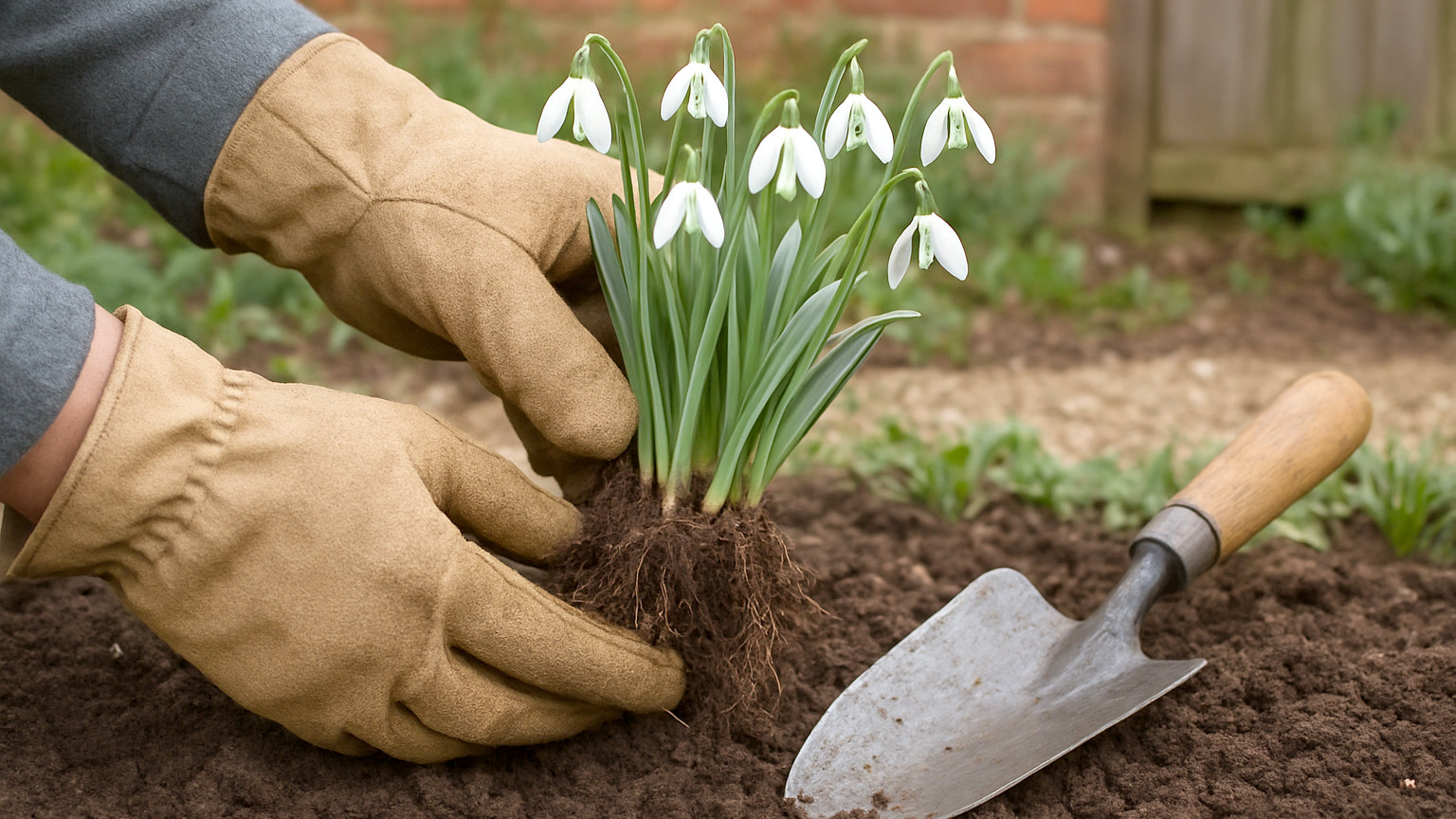
Snowdrops flower when almost nothing else does and increase steadily into drifts that outlive the gardener. The one thing worth knowing is that dry snowdrop bulbs bought in autumn frequently fail, and there is a much better way.
Plant in the green
Snowdrop bulbs dry out easily and establish poorly from dry stock. A bag of dry bulbs bought in September may produce a fraction of what you planted.
The reliable method is to plant in the green: buying or moving plants immediately after flowering, in February or March, while they still have their leaves.
Specialist nurseries sell them this way and it is worth seeking out. They cost more per bulb and a far higher proportion succeed.
If you do buy dry bulbs, choose the plumpest and firmest available, plant them the day they arrive, and expect losses.
Position and soil
Snowdrops want dappled or part shade with moisture-retentive soil that does not dry out in summer.
Under deciduous trees and shrubs is ideal, since they flower and complete their year before the canopy closes overhead. They also do well in grass and along hedge bases.
They dislike hot dry positions and heavy waterlogged ground equally. Add leaf mould or compost to improve the soil before planting.
Planting depth
Plant at about the depth they were previously growing, which is visible as a pale section at the base of the leaves. Roughly eight to ten centimetres for most.
Plant in small clumps rather than singly, spacing groups irregularly for a natural effect. Water them in well after planting in the green.
Dividing established clumps
This is how most gardeners increase snowdrops, and it costs nothing.
Immediately after flowering, while the leaves are still green, lift a congested clump with a fork. Tease it apart into smaller groups of three to five bulbs, or into individual bulbs if you have the patience.
Replant immediately at the same depth, water in, and leave them. They will settle within a season.
Divide every three to five years, or whenever a clump becomes congested and flowers less freely.
Leave the foliage
As with all bulbs, the leaves feed next year's flower. Leave them until they yellow and die back naturally, usually by late spring.
In grass, do not mow until the foliage has gone over, generally not before late May.
Varieties
Galanthus nivalis, the common snowdrop, is the one to plant for naturalising. It is cheap, vigorous and increases readily, and a hundred bulbs cost little.
Galanthus elwesii is larger with broader grey-green leaves and often flowers earlier.
Beyond those lies a world of named varieties collected obsessively, some of which change hands for remarkable sums. Flore Pleno is the common double, S. Arnott is tall and scented, and Atkinsii is early and vigorous.
For most gardens, a large quantity of the common species does more than a handful of rarities.
Where they come from
Buy from a reputable nursery. Never dig snowdrops from the wild or from a hedgerow, and be cautious of very cheap bulk offers of uncertain origin.
Wild snowdrop populations have been damaged by collection, and taking plants from land without the owner's permission is theft regardless.
Problems
Snowdrops are largely trouble free. Narcissus bulb fly occasionally attacks them, and grey mould can affect clumps in a very wet winter, showing as collapsed foliage with grey fuzz.
Remove affected material and improve drainage. Congestion causing reduced flowering is far more common than any disease, and lifting and dividing solves it.
Snowdrops in containers
They grow well in pots, which lets you place them by a door in February and move them away afterwards. Use a soil-based compost, keep the pot in shade and never let it dry out in summer, since a dormant snowdrop bulb in a hot dry pot will not survive.
What to plant alongside
Winter aconites, cyclamen coum, hellebores, pulmonaria and early crocus all share the same conditions and flower at the same time, and between them fill a shaded area from January to March.
Winter aconites are also best moved in the green, for the same reason as snowdrops. Once both are established together they seed and spread into a carpet with no further help.


