
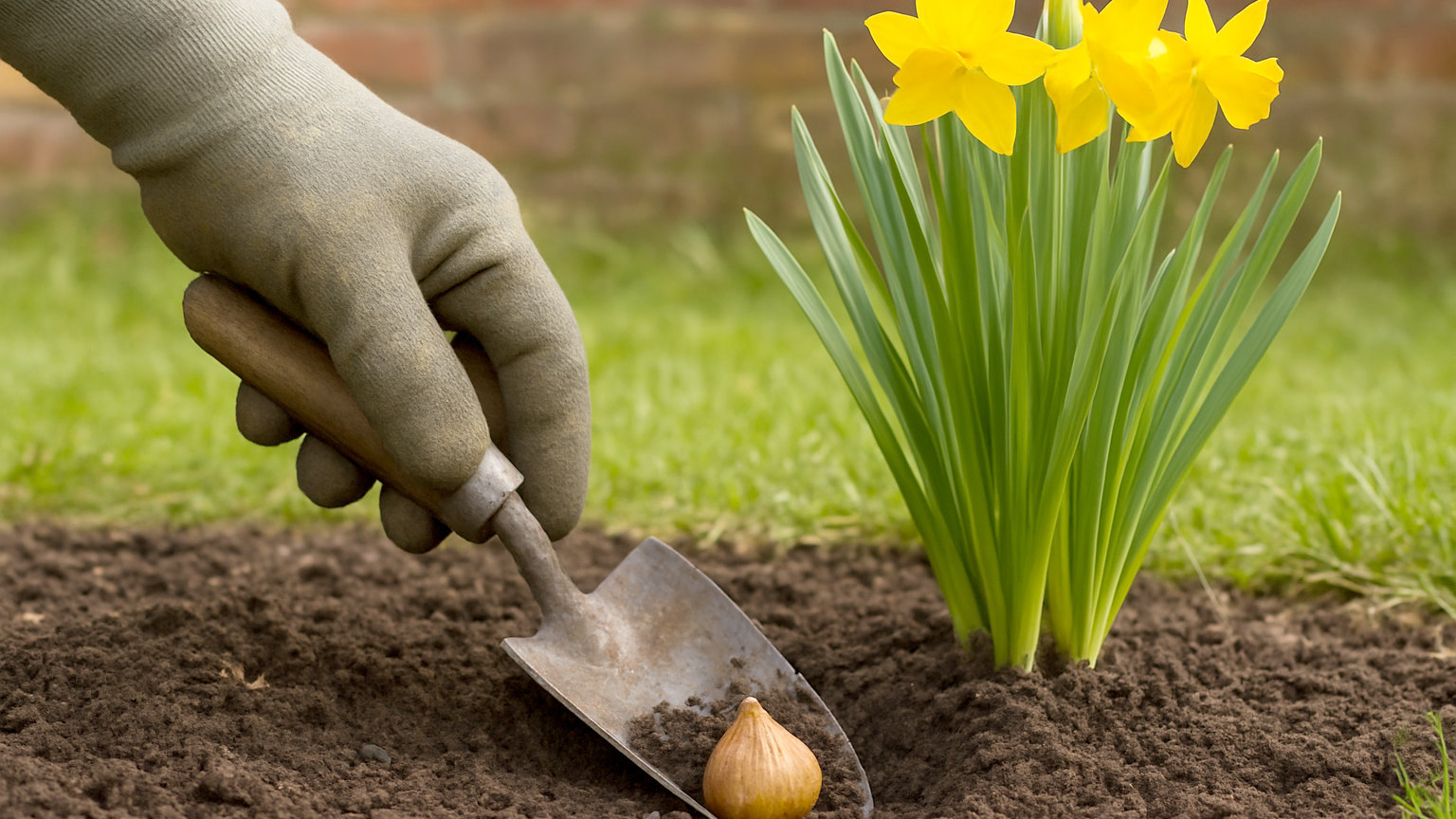
Daffodils are the most dependable bulb in a British garden. They tolerate a wide range of soils, come back year after year, increase into clumps, and need almost nothing. The few ways they go wrong are all avoidable.
Plant early
September is the month, and no later than October. Daffodils start rooting early and need time to establish before winter.
This is the opposite of tulips, which are planted in November. Buying both at the same time in August and planting them together is a common error that suits neither.
Buy firm, heavy bulbs with no soft patches or mould, and plant them as soon as you get them home rather than leaving them in a bag in a warm shed.
Depth and spacing
Plant at three times the height of the bulb, which for most daffodils means fifteen to twenty centimetres deep.
Shallow planting is the commonest cause of daffodils going blind. A bulb near the surface splits into many small offsets, none of which is large enough to flower.
Space them eight to fifteen centimetres apart, closer for a dense display and wider if you want them to increase over time. Plant with the pointed end upwards.
Position
Full sun to light shade, in any reasonable soil that is not waterlogged. They tolerate heavier ground than most bulbs.
They do well under deciduous trees and shrubs, flowering and dying back before the canopy closes overhead, which makes them useful in areas that are shaded for most of the year.
Why they go blind
Blindness means healthy leaves and no flowers, and there are four usual causes.
Congestion. An established clump eventually becomes so crowded that no bulb has room to build. Lift and divide in summer once the foliage has died down, replanting the largest bulbs and discarding the tiny ones.
Shallow planting, as above.
Foliage removed too early. The leaves feed next year's flower, and cutting or mowing them before they yellow starves the bulb.
Drought after flowering. The bulb is building for next year through late spring, and a dry April and May reduces the following display.
Never tie the leaves
Knotting or plaiting daffodil foliage was standard practice for tidiness and it is thoroughly counterproductive. It reduces the leaf surface available for photosynthesis and shades the leaves against each other, so the bulb is fed less.
Leave the foliage untouched for at least six weeks after flowering, until it has yellowed and pulls away easily.
If the untidiness is a problem, plant daffodils among perennials whose growth comes up and hides the dying leaves, or naturalise them in an area of grass you can leave unmown.
Naturalising
Daffodils are the best bulb for naturalising in grass. Scatter them by hand and plant where they fall, which gives a natural drift rather than an obvious pattern.
Do not mow until at least six weeks after flowering, which usually means mid-June. That regime is the whole of the maintenance.
Smaller species and older varieties look far more natural in grass than the large modern hybrids, which read as bedding.
Deadheading and feeding
Deadhead once the flowers fade, cutting off the developing seed pod so energy goes into the bulb rather than into seed.
A high-potassium feed after flowering, or a mulch of compost, supports the following year. Avoid high-nitrogen feeds, which produce leaves at the expense of flowers.
Narcissus bulb fly
The main pest. The larva eats out the centre of the bulb, which then produces a few thin grassy leaves and no flower.
The adult lays near the neck of the bulb as the foliage dies back. Firming the soil around the necks, or drawing soil over them once the leaves collapse, reduces access. Bulbs in shaded or grassy positions are noticeably less affected than those in warm bare soil, since the fly prefers sunny open ground.
A caution
Daffodil bulbs are poisonous and have occasionally been mistaken for onions, with serious consequences. Store them well away from food and label them clearly.
The sap also irritates skin and shortens the vase life of other cut flowers, so condition cut daffodils on their own in fresh water for several hours before combining them with anything else in an arrangement.


