
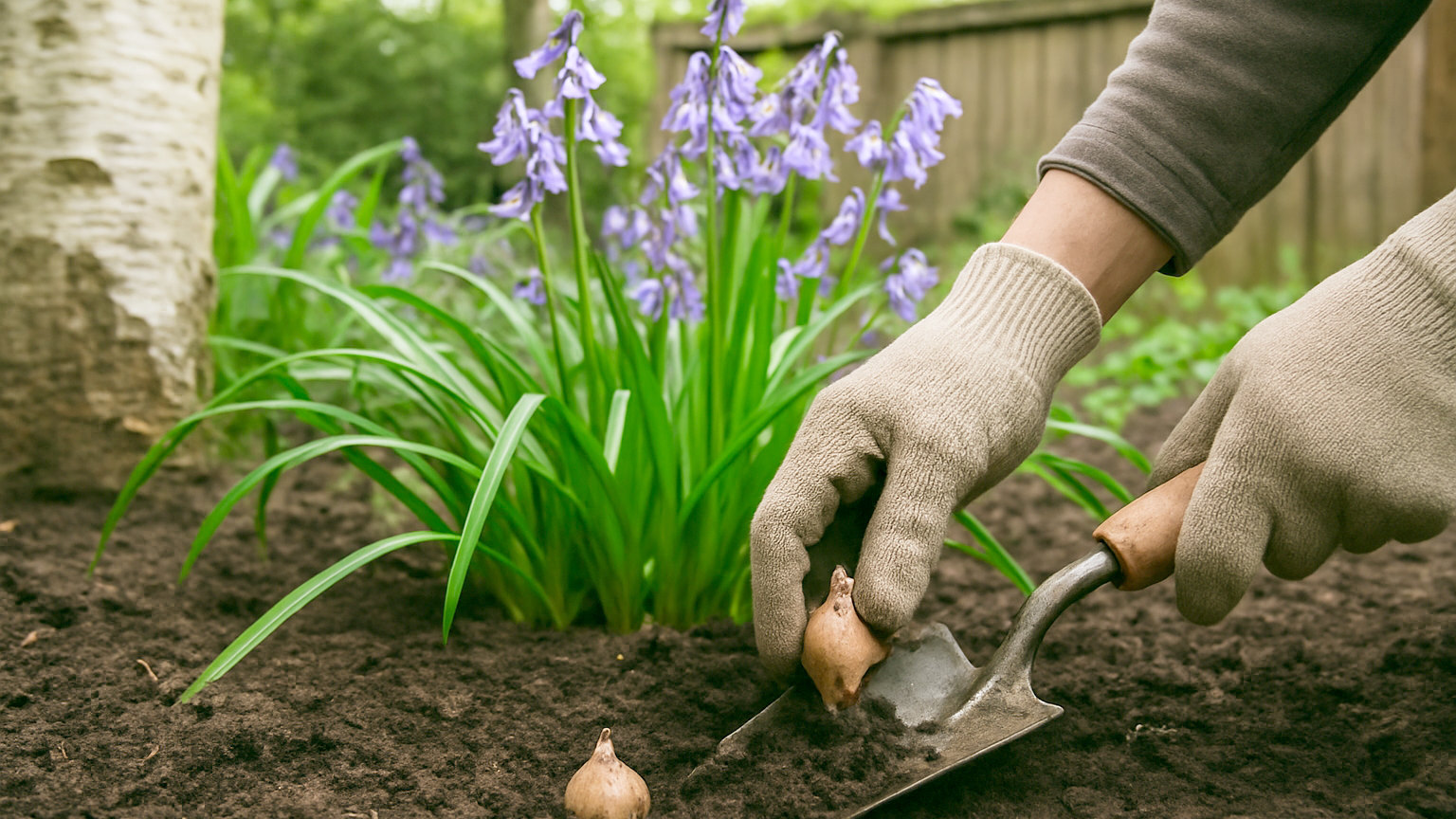
Shade is easier for bulbs than for almost any other plant, because most spring bulbs flower and complete their year before the leaf canopy closes overhead. A bed in deep shade in August may be in full sun in March, which is exactly what they need.
Under deciduous trees
This is the ideal position for woodland bulbs, and it makes productive use of ground that is difficult for anything else.
The bulbs emerge in late winter, flower in the available light, build their reserves and die back by the time the tree comes into full leaf. The canopy then keeps them dry and dormant through summer, which many of them prefer.
Evergreen shade is much harder, since there is no window of light at any point in the year, and very few bulbs will tolerate it.
What to grow
- Snowdrops - the classic, in moist dappled shade
- Winter aconites - eranthis, yellow cups in January and February
- Cyclamen hederifolium and coum - autumn and winter flowering, with marbled foliage, and excellent in dry shade
- Anemone nemorosa - the wood anemone, spreading slowly into carpets
- Anemone blanda - blue daisies in early spring, tolerant of dry shade
- Erythronium - dog's tooth violet, elegant and worth the cost
- Scilla and chionodoxa - small blue flowers that seed themselves about
- Narcissus - most daffodils tolerate light shade well
- Camassia - for damp, partly shaded grass
- Fritillaria meleagris - damp shade and meadow conditions
Dry shade under trees
The hardest condition, since tree roots take the moisture before your bulbs see any.
Cyclamen hederifolium is the outstanding choice, thriving in dry shade beneath beech and conifers where almost nothing else will. Anemone blanda, muscari and some of the tougher narcissi also cope with these conditions.
Do not dig over the area under a mature tree, which damages the tree and is hard work. Plant into gaps between roots, adding compost to each planting hole, and mulch the surface with leaf mould each autumn.
The bluebell question
Plant native English bluebells, Hyacinthoides non-scripta, and avoid the Spanish bluebell.
Spanish bluebells and the hybrids between them cross with native populations and are steadily diluting them across the country. The Spanish plant is more vigorous and increasingly dominant.
Tell them apart by the flower: the native has narrow flowers on one side of an arching stem, with a strong sweet scent and creamy pollen. The Spanish has broader flowers all round an upright stem, little or no scent, and blue pollen.
Buy native bluebells only from a reputable supplier who can confirm they are cultivated stock. It is an offence to dig up wild bluebell bulbs, and trading in wild-collected bulbs is illegal.
Native bluebells are best planted in the green after flowering, like snowdrops, since dry bulbs establish poorly.
They also take several years to settle before spreading, so patience is required, and they should never be introduced into an area of established native woodland without advice.
Planting in shade
Improve the soil with leaf mould or compost, which suits woodland bulbs particularly well.
Plant at the normal depth for the species, and always in generous quantities. Woodland bulbs read as drifts rather than as individuals, and a handful simply looks lost.
Scatter them and plant where they fall for a natural effect, letting the drifts run into one another at the edges.
Aftercare
Leave the foliage until it yellows, as with all bulbs, which in a woodland setting is easy since nobody is mowing.
Mulch with leaf mould each autumn rather than feeding, which mimics what happens naturally and improves the soil steadily.
Most woodland bulbs increase by seed as well as by offsets, so leaving seedheads on cyclamen, anemones and scilla speeds up the colonisation considerably.
Patience
Woodland bulbs establish slowly. Erythronium, wood anemone and native bluebells may take three or four years to settle before they begin to spread.
Once they do, they persist for decades with no attention at all, which makes the wait worthwhile.
Combining them
Woodland bulbs suit the same conditions as hellebores, pulmonaria, epimedium and ferns, and the combination gives a shaded area interest from January through to summer.
Plant bulbs beneath and among the perennials rather than in separate patches, so the emerging perennial foliage covers the dying bulb leaves in late spring.


