
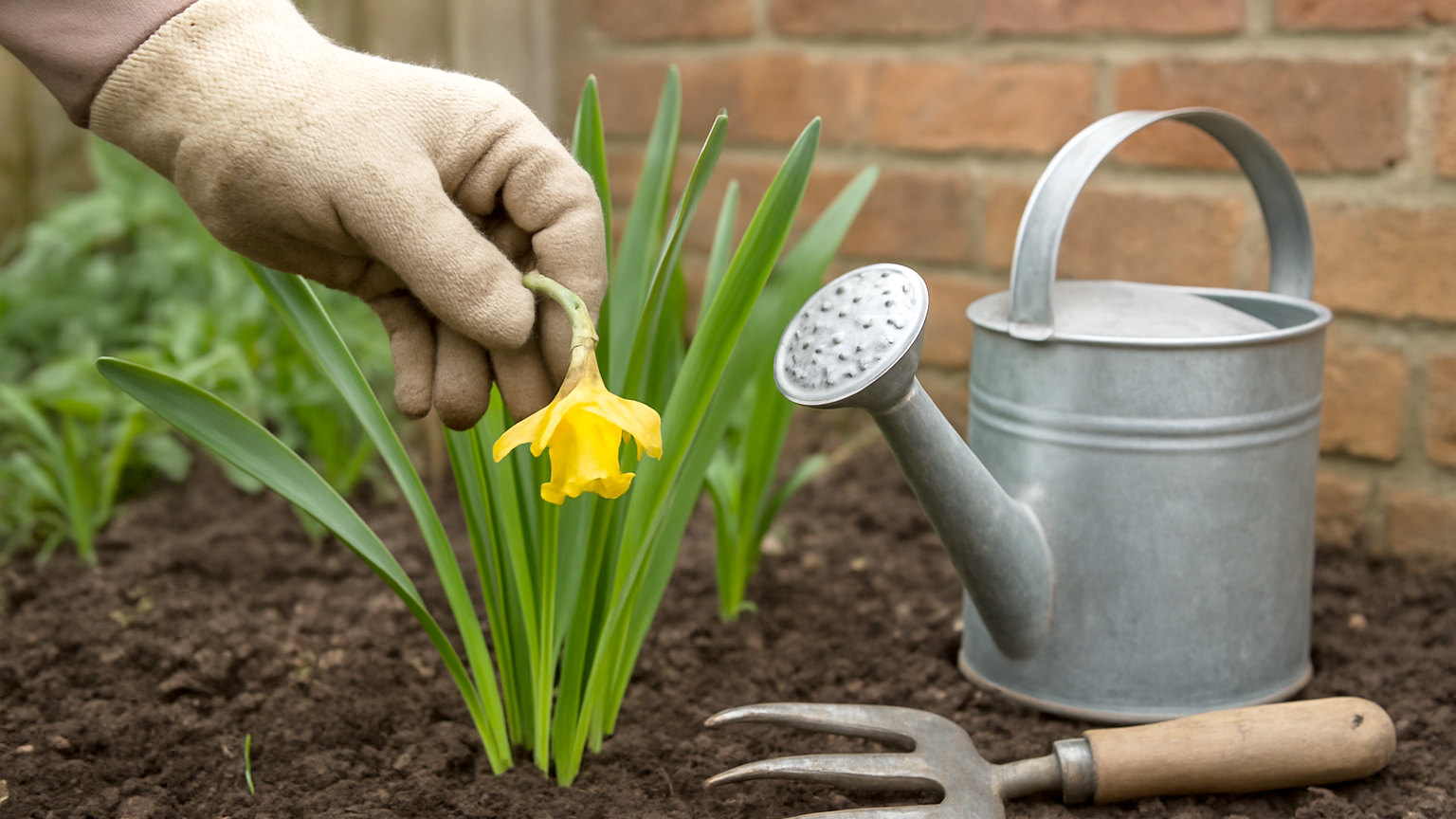
A bulb's flower for next spring is formed during the six weeks after this spring's flower fades. Everything you do in that window matters far more than anything you do in autumn.
Deadhead promptly
As soon as the petals drop, cut the flower stem below the developing seed pod.
Setting seed takes a great deal of energy and produces nothing you want, since bulbs raised from seed take years to reach flowering size. Removing the pod directs everything back into the bulb.
On daffodils and tulips, cut the stem near the base but leave the leaves entirely. On alliums, leave the seedheads if you want the winter structure, accepting the small cost.
Leave the foliage for six weeks
The leaves feed next year's flower, and removing them early is the commonest cause of bulbs going blind.
Leave them until they have yellowed and pull away with a gentle tug, which is usually about six weeks after flowering.
Never tie, knot or plait the foliage. This was standard practice for tidiness and it is thoroughly counterproductive, reducing the leaf area exposed to light and shading the leaves against each other.
In grass, do not mow until at least six weeks after flowering has finished, which for daffodils means mid to late June.
Dealing with the untidiness
Yellowing bulb foliage is the price of a display and there are ways to hide it rather than remove it.
Plant bulbs among perennials whose growth comes up in May and covers the dying leaves. Hardy geraniums, hostas, alchemilla and nepeta all do this well.
Plant them in an area of grass you can leave unmown, or in a part of the border you do not look at closely in June.
In containers, move the pot out of sight while the foliage dies down.
Feeding
This is the point in the year when feeding does most good.
Apply a high-potassium feed, such as tomato feed, weekly while the foliage is still green, or scatter sulphate of potash around the clump.
Avoid high-nitrogen feeds and general lawn fertilisers, which encourage leaf and grass growth rather than flower buds.
Water in dry spells during those six weeks. Drought at this stage directly reduces next year's display.
When to lift
Most bulbs are best left in the ground and need lifting only when they become congested and flowering declines, typically every three to five years.
Lift when the foliage has died down and the bulbs are dormant, usually June or July. Separate the clump, replant the largest bulbs at the proper depth and discard the smallest.
Replant immediately if you can, or dry the bulbs and store them somewhere cool, dry and airy until autumn.
What must be lifted
Tender bulbs and corms that will not survive a British winter in the ground.
Gladioli are lifted after the first frost, dried, cleaned and stored frost free. Dahlias and begonias likewise, though dahlias can be left under a thick mulch on free-draining soil in mild areas.
Tulips are often lifted, both because they may rot in summer wet and because it lets the ground be used for something else.
Storing
Dry lifted bulbs thoroughly for a week or two somewhere warm and airy. Clean off soil, remove old shrivelled material and discard anything soft, damaged or mouldy.
Store in paper bags, nets or trays in a single layer, somewhere cool, dry, dark and frost free. Never store in polythene, which traps moisture and causes rot.
Check occasionally through the winter and remove anything that has started to rot.
Container bulbs
Feed and water through the six weeks exactly as for bulbs in the ground, then either plant them out into a border or grass, store them, or discard them.
Daffodils, crocus and muscari from pots are well worth planting out into grass or a border. Tulips rarely repeat well and most gardeners replace them each year.
A note on timing
Six weeks is a guide rather than a rule. What matters is that the foliage has yellowed and pulls away easily, which in a cold late spring may take longer and in a warm one rather less.
If in doubt, wait. Nothing is lost by leaving foliage a fortnight longer, and a great deal can be lost by removing it a fortnight early.


