
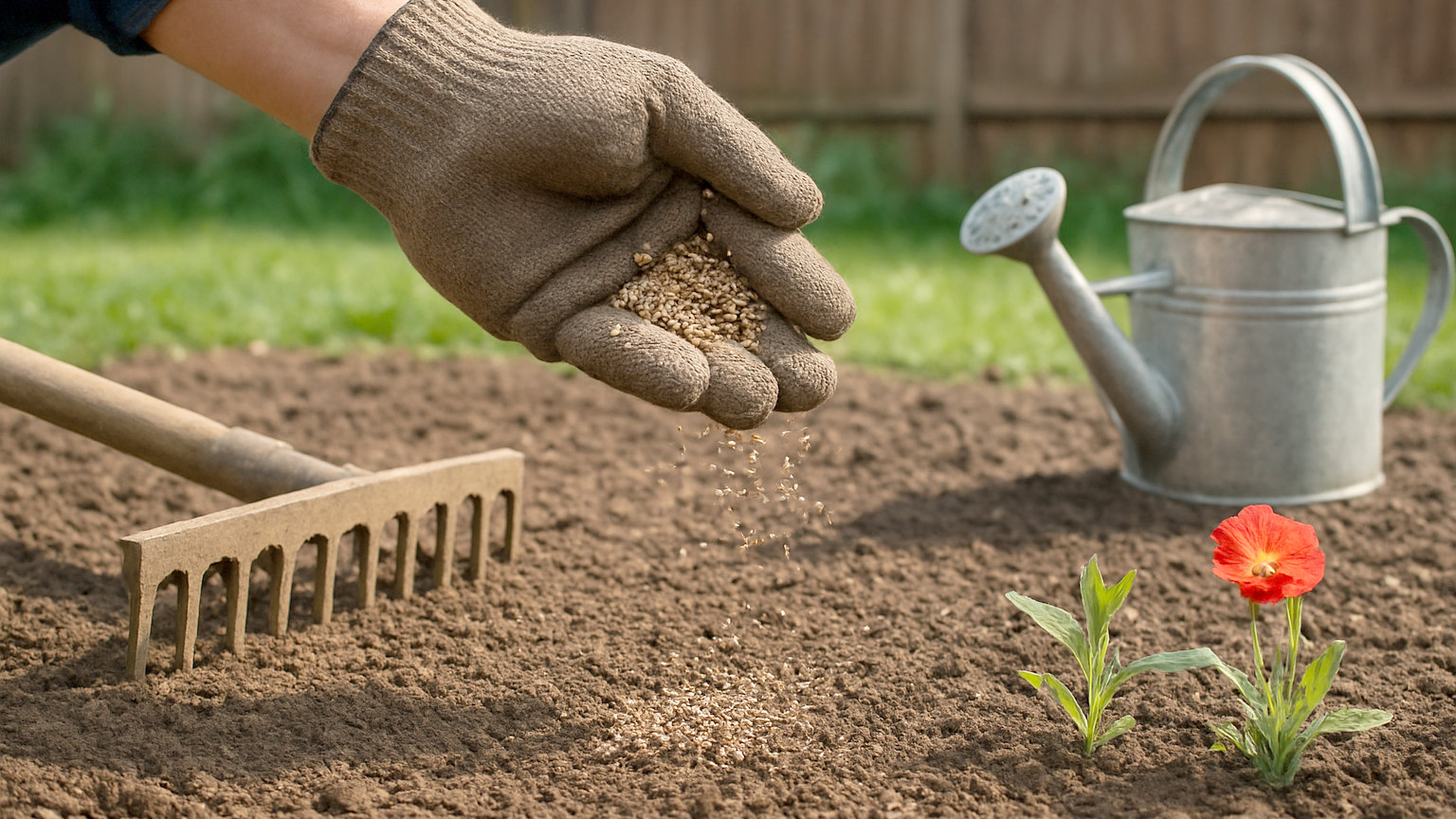
An annual meadow of poppies, cornflowers and corn marigolds produces a spectacular display in its first summer, which is exactly what perennial wildflower meadows do not. The trade is that it must be resown, and that it will only work on poor soil.
Annual and perennial meadows are different things
Cornfield annuals are arable weeds. They evolved to colonise ground disturbed by ploughing, germinate quickly, flower, set seed and die within a year.
A perennial wildflower meadow is grassland with perennial flowers in it. It takes several years to establish, flowers less dramatically, and persists once established.
An annual mix needs bare cultivated soil and resowing each year. Scattering cornfield annual seed into existing grass will produce almost nothing, which is the commonest disappointment.
Low fertility is essential
This is the point that determines success. On rich soil, vigorous grasses and weeds outgrow the wildflowers and smother them within weeks.
Do not add compost, manure or fertiliser. If the ground is rich, strip off the topsoil and sow into the subsoil, or dilute the fertility by mixing in a substantial quantity of sand or subsoil.
A poor, thin, stony patch that grows nothing well is the ideal site.
The mix
A classic cornfield annual mix contains corn poppy, cornflower, corn marigold, corncockle and corn chamomile.
Buy from a reputable supplier and check the mix is appropriate to Britain and preferably of native origin. Cheap wildflower mixes frequently contain non-native and ornamental species, and some contain a high proportion of grass seed, which defeats the purpose.
Note that corncockle seed is poisonous, which matters if the area is used by children or livestock.
Preparing the ground
Clear all existing vegetation, including perennial weeds, which must be removed before sowing since they cannot be dealt with afterwards.
Cultivate to produce a fine seedbed as you would for vegetables, then firm it by treading and rake it level.
Leaving the prepared ground for a few weeks lets a flush of weed seed germinate, which can then be hoed off before you sow. This stale seedbed technique makes a considerable difference.
Sowing
Sow in spring, from March to May, or in autumn in September, which generally gives stronger plants and earlier flowering.
Rates are much lower than people expect, typically around one to five grams per square metre. Sowing too thickly produces crowded weak plants.
Mix the seed with dry sand to bulk it out, which makes even distribution far easier. Sow half walking in one direction and half at right angles.
Rake very lightly and firm by treading or rolling. Do not bury the seed, since many of these species need light to germinate.
Aftercare
Water in dry spells until the seedlings are established, then leave them alone. Do not feed at any point.
Protect from birds, which take the seed, with netting or by running string over the area until germination.
The display peaks from June to August. Once it goes over, let the plants shed their seed before clearing.
The following year
Some species will self-seed and return, particularly poppies, whose seed persists in soil for years. Most will not return reliably, and the display gets thinner each season.
To maintain it, cultivate the ground lightly in autumn or spring, which disturbs the soil in the way ploughing would, and resow. This annual disturbance is what the plants evolved for.
A perennial meadow instead
If you want something permanent, a perennial meadow needs different handling: sowing a grass and wildflower mix on poor soil, or introducing yellow rattle into existing grass to weaken the grasses, then cutting once in late summer and removing the arisings.
It takes three years to look like anything and then persists. Many people sow an annual mix for immediate effect while establishing a perennial meadow alongside.
What it does for wildlife
Cornfield annuals are genuinely valuable to pollinators, since all are single flowered with open accessible centres and they flower in quantity. The seed feeds birds through autumn if the plants are left standing.
Several of these species have become scarce in the countryside as arable practice changed, so growing them in a garden has more than ornamental value.
Corncockle in particular is now rare in the wild, though its seed is toxic and it should not be sown where livestock graze.


