
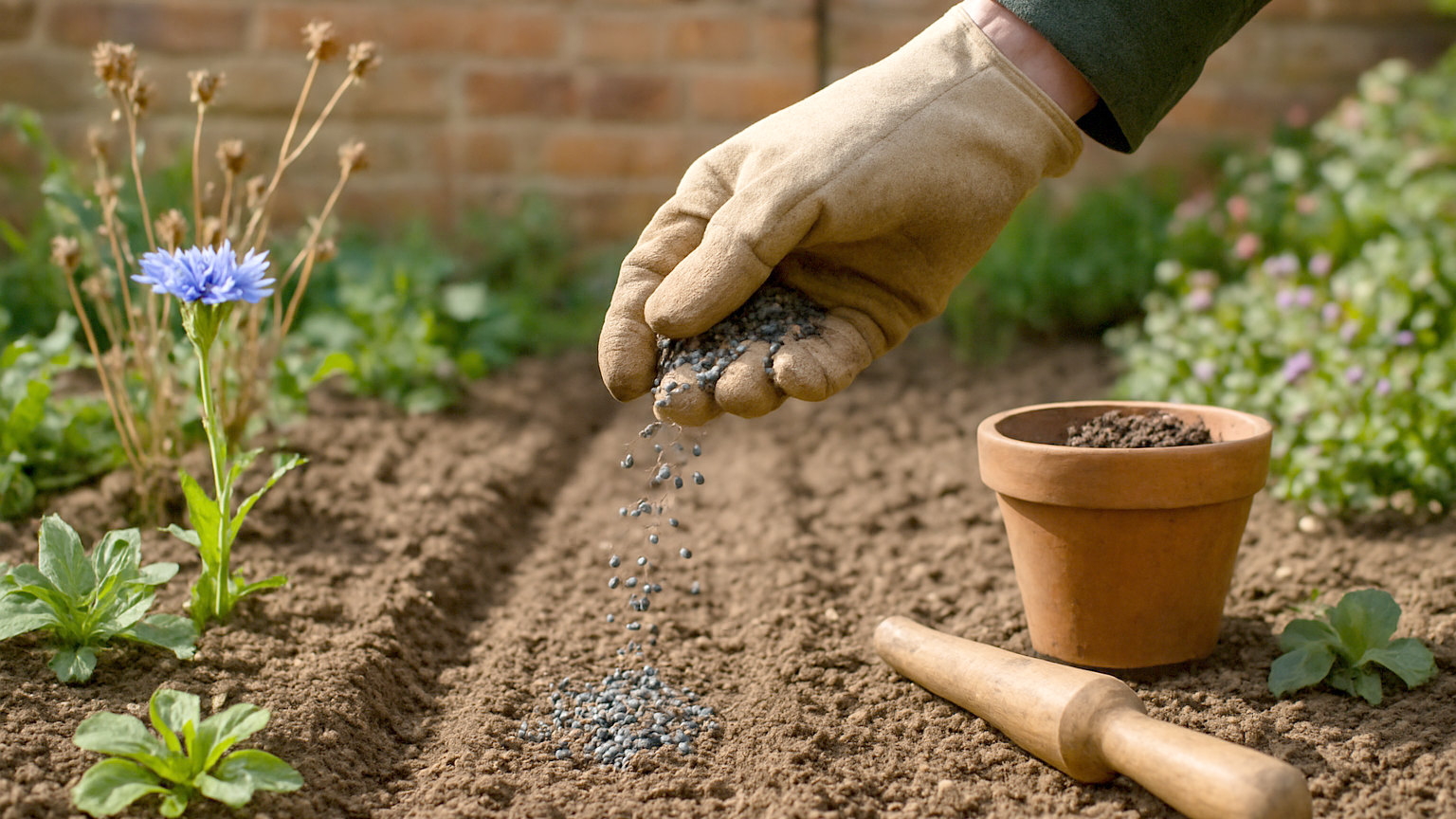
These three belong together because they behave the same way. All are hardy, all resent being transplanted, all are better sown in autumn than spring, and all will seed themselves around a border indefinitely once introduced.
Sow direct, always
All three have taproots and dislike root disturbance. Plants raised in modules and transplanted are checked badly, flower less and are frequently overtaken by anything sown direct.
Poppies in particular will not tolerate it at all. Sow where they are to flower, and thin rather than transplant.
Autumn sowing
September is the better sowing time for all three. Seedlings overwinter as small rosettes, build roots through the cold months, and flower several weeks earlier and considerably larger the following summer.
An autumn-sown cornflower may be twice the size of a spring-sown one and flower from late May rather than July.
On cold wet clay, autumn sowings often rot, so spring sowing from March to May is the safer choice there. Sowing at both times spreads the display.
Cornflowers
Centaurea cyanus, the true blue of a cornfield and one of the few genuinely blue flowers available.
Sow thinly at about one centimetre deep and thin to twenty to thirty centimetres. Crowded plants are thin and floppy.
They reach sixty to ninety centimetres and benefit from twiggy pea sticks pushed in while small. Deadhead regularly and they flower for months; leave them to seed and they stop within weeks.
Excellent for cutting, and they dry well. Bees work them constantly.
Pink, white and dark maroon varieties exist, though the blue is what most people want.
Nigella
Love-in-a-mist, with blue, white or pink flowers held in a ruff of fine ferny foliage.
Sow at about one centimetre deep and thin to fifteen to twenty centimetres. It reaches around forty-five centimetres and needs no support.
The seedheads are as good as the flowers: inflated striped pods that dry perfectly and last for years in an arrangement. Leave some on the plant for that reason.
Nigella self-seeds enthusiastically. Once you have grown it in a border you will have it every year without sowing again, which is generally welcome.
Annual poppies
Shirley poppies, derived from the field poppy, and opium poppies with their glaucous foliage and large seedheads, are both grown the same way.
The seed is extremely fine. Mix it with dry sand to sow evenly, scatter it on the surface and barely cover it, since it needs light to germinate.
Thin to twenty to thirty centimetres. Crowded poppies are spindly.
They flower briefly, each bloom lasting only a day or two, but a stand produces flowers over several weeks. The seedheads that follow are excellent dried.
Poppies do not last as cut flowers unless the cut stem end is sealed with a flame or dipped briefly in boiling water immediately after cutting, which stops the milky sap bleeding out.
Sowing rates and spacing
All three are sown far more thickly than they should be, because the seed is small and it is difficult to judge. Sowing a pinch at a time along a drill, rather than tipping from the packet, gives far better control and leaves less thinning to do later.
Poor soil suits them
All three flower better on unimproved ground. Rich soil produces leafy plants that flop and flower less, so do not manure the area before sowing.
They also need full sun. In shade all three become drawn and disappointing.
Letting them naturalise
Leave the last flowers of the season to set seed and all three will populate the border themselves.
Self-sown seedlings appear where conditions suit them, germinate at exactly the right moment, and are frequently better plants than anything sown deliberately. Learn to recognise the seedlings so you do not hoe them off.
Thin the self-sown ones as you would a deliberate sowing, since they come up far too thickly to produce good plants.
If a patch becomes too dominant, simply hoe off the excess. None of these is difficult to control, unlike some self-seeders.
Wildlife value
All three are excellent for pollinators, since the flowers are single with open accessible centres. Cornflowers in particular have nectaries at the base of the bracts that ants and other insects use as well as bees.
Poppy seedheads and nigella pods feed birds through autumn if left standing, and the dried heads look good in the border well into winter.


