
A biennial grows leaves in its first year, flowers and sets seed in its second, and then dies. That two-year cycle puts them out of step with how most people garden, which is why they are underused, and it is also what makes them so useful: they flower in May and June, filling the gap between the last bulbs and the first perennials.
The ones worth growing
- Foxgloves - digitalis, tall spires for part shade, and among the best plants for bumblebees
- Wallflowers - erysimum cheiri, intensely scented in April and May
- Sweet william - dianthus barbatus, clove-scented and excellent for cutting
- Honesty - lunaria, purple spring flowers followed by silver seed discs
- Verbascum - felted rosettes and tall spires, thriving on poor dry soil
- Canterbury bells - campanula medium, large bells in early summer
- Forget-me-nots - myosotis, the classic underplanting for tulips
- Icelandic poppies - often grown as biennials for early flowers
Sow in May, June or July
This is the part that catches people out. Biennials are sown in the summer of the year before you want them to flower.
Sow in a seedbed, in modules or in trays, from May to July. Sowing too early produces plants that may flower in their first autumn and then die; sowing too late produces plants too small to flower the following spring.
Germination is usually straightforward and the seed does not need warmth beyond normal summer temperatures.
Growing on
Prick out or thin the seedlings and grow them on through summer in a nursery bed or in pots, keeping them watered.
They need to reach a decent size, with a well-developed rosette, by autumn. A small plant going into winter will not flower well the following year.
Plant out in autumn
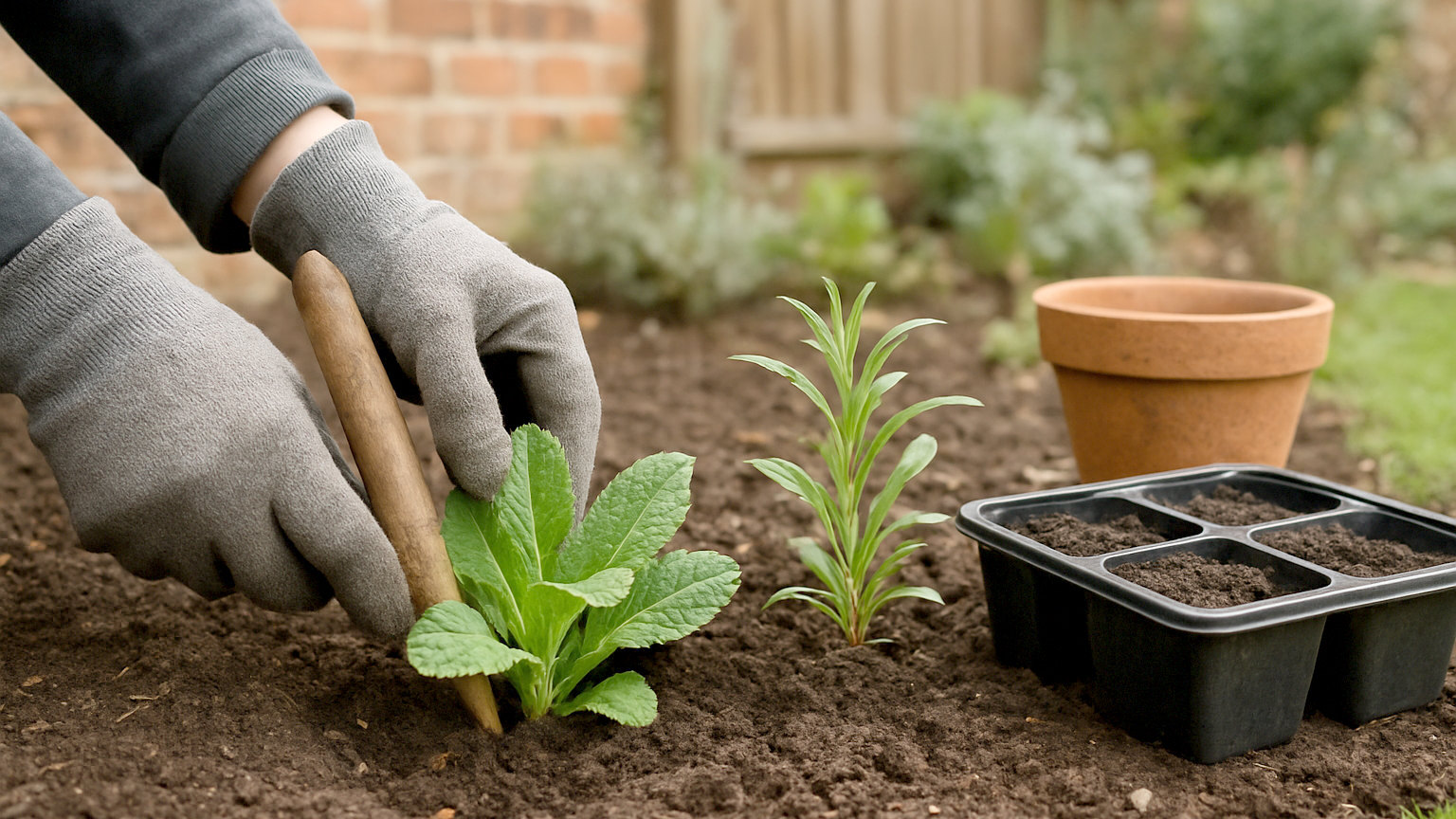
Move them to their flowering positions in September or October, once summer bedding is cleared and while the soil is still warm enough for roots to establish.
Space foxgloves and verbascum at forty-five centimetres, wallflowers and sweet william at about thirty.
Wallflowers are traditionally bought as bare-root bundles in autumn, which is much the cheapest way to plant a large display. Plant them immediately on arrival and never let the roots dry out.
The classic combinations
Wallflowers with tulips is the traditional spring bedding scheme, and it works because they flower together and the wallflower scent carries.
Forget-me-nots underplanted with tulips give the same effect in blue. Foxgloves through a shaded border with ferns and hostas is the woodland version.
Let them seed
Once you have grown biennials, you need never sow them again. Foxgloves, honesty, forget-me-nots and verbascum all self-seed generously.
Leave the flower spikes to ripen and shed seed, then either let the seedlings come up where they fall or move them in autumn to where you want them.
Self-sown foxgloves in particular appear in exactly the right places, in the shade at the back of a border, and are frequently better placed than anything you would have chosen.
The trade is a year with no flowers if you clear every plant. Sowing or allowing seed every year keeps the cycle running so there is always a generation coming.
A caution about foxgloves
All parts of a foxglove are poisonous if eaten, and the leaves have occasionally been confused with comfrey.
Wear gloves when handling them, wash your hands afterwards, and think carefully about planting them where small children play or where anyone might gather leaves in mistake for something edible.
The same caution applies to the seed, which is produced in quantity and remains toxic.
Afterwards
Pull the plants once flowering finishes and they begin to yellow, unless you are leaving them to seed. Wallflowers are cleared in June to make way for summer bedding.
Some wallflowers and sweet williams survive a second year and flower again, though usually less well, and they are better replaced.
Perennial forms
Several plants sold as biennials have perennial relatives worth knowing. Erysimum Bowles's Mauve is a perennial wallflower flowering for most of the year, and Digitalis lutea and some other foxglove species are perennial rather than biennial.
These give the same effect without the two-year cycle, at the cost of a shorter flowering season in some cases and less of the vertical drama that biennial foxgloves provide.


