
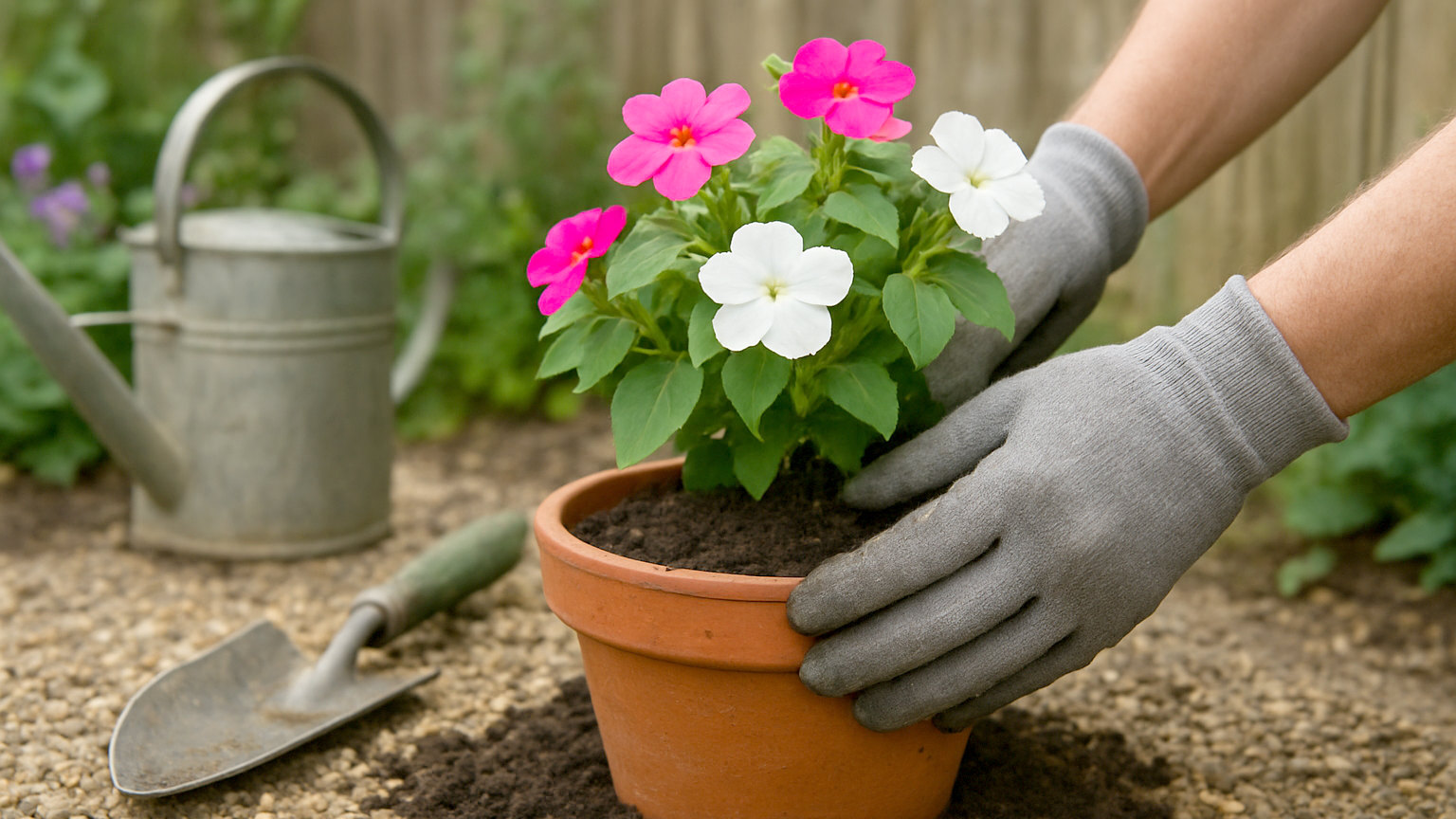
The great majority of summer bedding is bred for full sun and sulks without it. A shaded border or a north-facing container needs a different set of plants, and there are enough good ones to make it worthwhile.
Work out which shade you have
Shade cast by a building or a fence is usually cool and reasonably moist, and it is the easier kind. Shade under a tree is dry, because the roots take the moisture before your plants see any, and it is considerably harder.
For dry shade, improve the ground with compost, water regularly through the first season, and use containers if the root competition is severe.
Begonias
The most useful shade bedding there is. Fibrous-rooted bedding begonias flower continuously from June to the frosts, need no deadheading, and tolerate both shade and rain far better than most bedding.
Tuberous begonias give larger, showier flowers and suit containers and baskets. Start the tubers into growth in pots under cover in March, hollow side up, and plant out after the last frost.
Lift tuberous begonias in autumn, dry them off and store them frost free, and they last for years.
Busy lizzies and the mildew problem
Impatiens walleriana was the standard shade bedding plant for decades until impatiens downy mildew arrived, which caused sudden leaf drop and collapse across the country.
Modern resistant varieties, sold as Beacon or Imara, have largely solved this, and are worth seeking out specifically. Older unnamed busy lizzies may still fail.
New Guinea impatiens are a different species and unaffected by the disease. They are larger, with bolder foliage, and want a little more light than the old busy lizzies.
Fuchsias
Excellent in shade, flowering from midsummer to the frosts. Upright bush types suit borders and containers; trailing varieties are among the best plants for a shaded hanging basket.
Most bedding fuchsias are half-hardy and are discarded or overwintered under cover. Hardy varieties exist and can stay outside permanently, dying back and reshooting in spring.
Deadhead by removing the developing seed pods as well as the spent flowers, since fuchsias set seed readily and slow down if allowed to.
The rest of the list
- Nicotiana - tobacco plant, scented in the evening and good in light shade
- Lobelia - trailing and bush forms, tolerating part shade well
- Coleus, now solenostemon - grown entirely for foliage, and colours better out of fierce sun
- Torenia - the wishbone flower, genuinely shade loving and underused
- Mimulus - monkey flower, liking damp shade
- Heuchera - a perennial, but used as long-term container foliage in shade
What not to try
Petunias, calibrachoa, verbena, gazania, marigolds, pelargoniums and most silver-leaved plants all want full sun. In shade they become drawn and leggy, flower sparsely and rot in wet weather.
Planting sun-loving bedding in shade is the commonest reason a shaded container disappoints, and no amount of feeding or watering corrects it. Change the plants rather than the treatment.
Use foliage and pale colours
Shade planting that relies entirely on flowers looks thin. Build it around contrasting foliage instead: coleus, heuchera, ferns, ivy and variegated forms.
Pale flowers read far better in low light than deep ones. White, cream, pale pink and lime green lift a dark corner, while deep reds and purples disappear into it entirely.
White nicotiana and white busy lizzies are particularly effective at dusk, when they are almost the only things still visible in a shaded garden.
Watering in shade
Shaded containers dry out more slowly than those in sun, so water less and check before watering. Overwatering is the usual cause of failure in a shaded pot.
Under a tree the opposite applies, since the canopy sheds rain and the roots take the moisture. Those positions need watching closely.
Feeding
Shade bedding grows more slowly than the same plants would in sun, so feed at the normal weekly rate but do not be tempted to overdo it in the hope of forcing growth. Excess nitrogen produces soft foliage that rots in damp shaded conditions.
Use a high-potassium feed once flowering starts, as with any bedding.
Slugs
Damp shade is where slugs live, and shade bedding suffers accordingly. Busy lizzies and begonias are both taken readily in the first fortnight after planting out, so protect them until they are established.


