
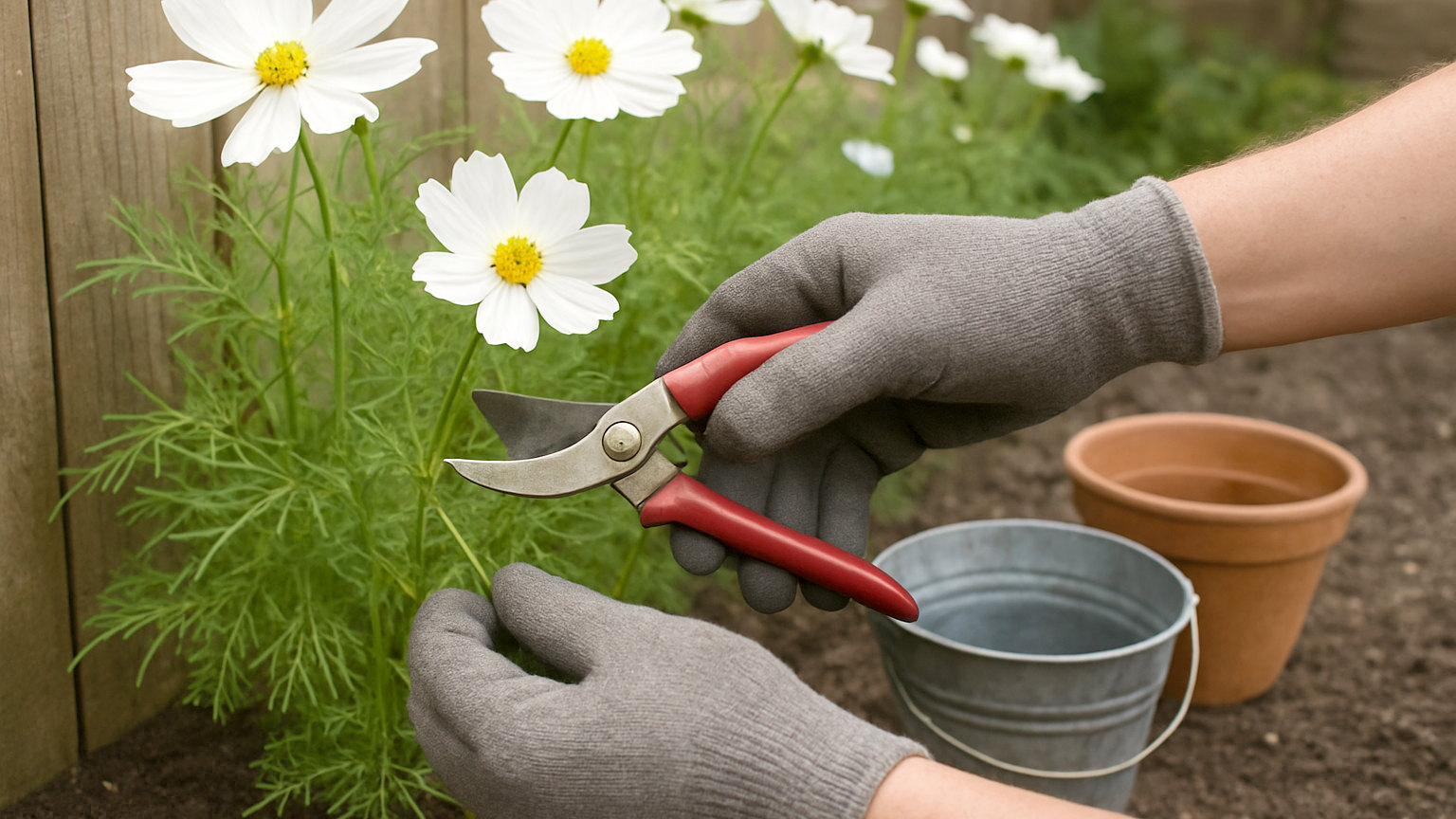
A cutting patch is the most productive use of a few square metres in a garden. Annuals grown for cutting produce more the more you pick, so a short row supplies a house with flowers from June until the frosts.
Why annuals are ideal
Cutting a flower removes the plant's chance of setting seed, and an annual responds by producing more flowers. The relationship is direct: pick constantly and the plant keeps going, leave it and it stops within weeks.
They are also cheap, quick from seed, and grown in a row rather than a border, so you can cut without spoiling a display.
The best annuals for cutting
- Sweet peas - the classic, flowering for months if picked daily
- Cosmos - long stems, prolific, from July to November
- Zinnia - strong colours and stems, needing warmth and a sunny summer
- Ammi majus and orlaya - white lace, the filler that makes an arrangement
- Cornflower - blue, and best from an autumn sowing
- Antirrhinum - snapdragons, tall varieties for cutting rather than bedding types
- Calendula - easy, long flowering and cheerful
- Scabious and didiscus - good stems and long vase life
- Nigella - flowers, then seedheads for drying
- Sunflowers - branching varieties rather than the giants
- Larkspur - the annual delphinium, and it dries well
Add foliage: bupleurum, dill, ammi and the leaves of anything with good form. An arrangement of flowers alone looks unfinished.
Growing them in rows
Grow cutting flowers in a dedicated row or block, in a spare corner or on a vegetable bed, rather than in a border. You can then cut hard without leaving gaps where they show.
Full sun, reasonable soil, and support for anything tall. Netting stretched horizontally over the row at about forty centimetres, which the plants grow up through, is the commercial method and works perfectly at garden scale.
Sow successionally every three or four weeks from March to June so the supply keeps coming rather than arriving all at once.
Pinch out
Pinch the growing tip out of cosmos, antirrhinum, zinnia and sweet peas when they are about twenty centimetres tall.
It delays the first flower by a fortnight and roughly doubles the number of stems, which for cutting is exactly the trade you want.
When to cut
Cut in the early morning, when stems are full of water. Flowers cut in afternoon heat wilt and never fully recover.
Take a bucket of water into the garden and put stems straight into it rather than carrying an armful to the house. The minutes out of water matter.
Cut most flowers when the buds are showing colour and just beginning to open, since they continue opening in the vase. The exceptions are cosmos, zinnia and dahlias, which barely open after cutting and should be taken when the flower has just opened.
Conditioning
Strip every leaf that would sit below the waterline, since foliage in water rots and shortens vase life dramatically.
Recut the stems at an angle and stand them in deep cool water in a dark place for a few hours, or overnight, before arranging. This is conditioning and it makes a real difference.
Poppies, euphorbia and anything with milky sap need the cut end sealed with a flame or dipped briefly in boiling water to stop them bleeding.
Making them last
Use a scrupulously clean vase, since bacteria are what block the stems. Change the water every two days and recut the stems each time.
Keep arrangements out of direct sun, away from radiators and away from a fruit bowl, since ripening fruit gives off ethylene which ages flowers rapidly.
Flower food genuinely helps, providing sugar and an antibacterial agent, and a homemade version of sugar with a drop of bleach does much the same.
Keep picking
The most common mistake is not cutting enough. A cutting patch left unpicked for a fortnight sets seed and stops, and no amount of feeding restarts it.
Cut even when you do not need flowers, and give them away. The plant does not distinguish between a vase and a compost heap, and a patch picked hard in July is still producing in October.
Drying for winter
Several of these dry well and extend the season indoors. Larkspur, nigella seedheads, statice, honesty discs and ornamental grasses all hang and dry successfully.
Cut them just before they are fully open, strip the leaves, and hang small bunches upside down somewhere warm, dark and airy.


