
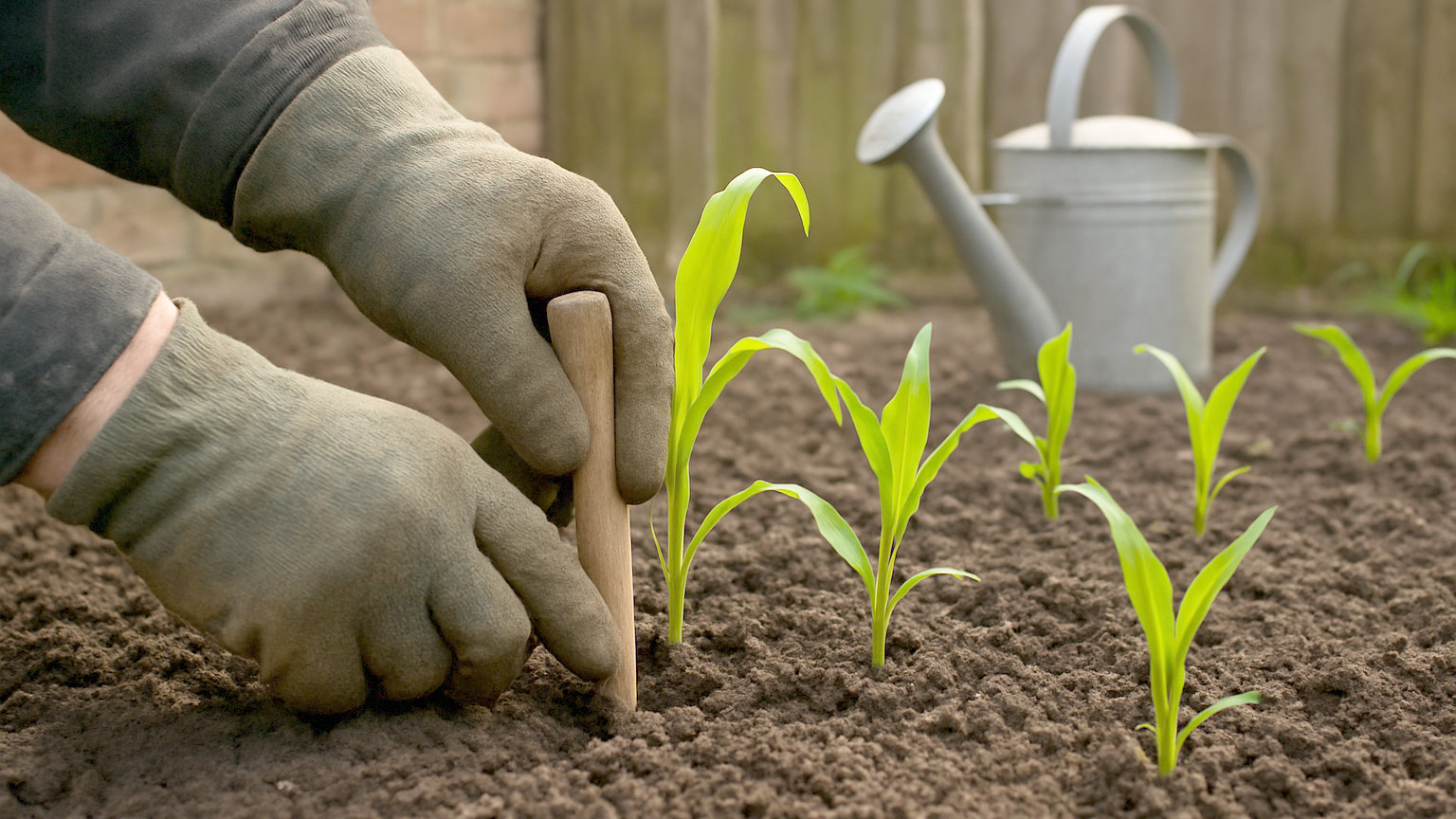
Sweetcorn eaten within an hour of picking is a genuinely different vegetable from anything bought, because the sugars begin converting to starch the moment the cob comes off the plant. It is also the crop where one piece of technique matters more than everything else combined.
Plant in a block, never a row
Sweetcorn is wind pollinated, so it must be planted in a block rather than a single line. The tassels at the top of each plant shed pollen, which must land on the silks emerging from the developing cobs below.
In a long single row, most of the pollen blows away and misses the silks entirely, producing cobs with scattered kernels and large gaps. In a block, pollen from every plant lands on its neighbours.
A block of at least four by four plants is the practical minimum, and larger is better. This one decision accounts for most sweetcorn disappointment.
For the same reason, do not grow two different varieties close together, particularly supersweet types alongside standard ones, since cross-pollination produces starchy tasteless kernels. Separate varieties by a good distance or grow only one.
Sowing
Sweetcorn needs a long warm season and is killed by frost, so it is usually started under cover.
Sow from late April, one seed per deep pot or root trainer about two and a half centimetres deep. Deep containers matter because sweetcorn makes long roots quickly and resents disturbance.
Direct sowing outside is possible from mid-May in a warm season and in the south, under a cloche, but the plants are usually several weeks behind.
Planting out
Harden off over a fortnight and plant out after the last frost, typically late May or early June.
Space plants forty-five centimetres apart each way in the block. They want full sun, shelter from strong wind, and reasonably fertile, moisture-retentive soil.
Plant slightly deeper than they were in the pot, which encourages rooting from the buried stem and improves stability.
Through the season
Water well, particularly once the tassels appear and while the cobs are filling, which is when the crop is decided. A dry spell at that point produces poorly filled cobs.
Sweetcorn produces short roots from the base of the stem, and drawing soil up around the base as the plants grow gives useful support in wind. Staking is worth it in exposed gardens, since a metre and a half of plant catches a lot of weather.
Do not remove side shoots, sometimes called tillers, which appear at the base. They contribute to the plant rather than taking from it.
Helping pollination
On a still day when the tassels are shedding, tapping the tops of the plants or gently shaking them helps distribute pollen. It takes a minute and improves cob filling noticeably in a sheltered garden.
Knowing when it is ready
The silks at the top of the cob turn brown and dry, usually a month or so after they first appear. That is the first sign, and by itself it is not enough.
The reliable test is to peel back a small section of the husk and press a kernel with a thumbnail. If the liquid that comes out is milky, the cob is ready. If it is clear and watery, it needs longer. If it is thick and doughy, you have left it too late and the sugars have already converted.
Most plants produce one good cob and sometimes a smaller second.
Pick and cook immediately
The old advice about having the water boiling before you go out to pick is not entirely a joke. Sugars convert to starch rapidly after harvest, and a cob eaten within an hour is markedly sweeter than one eaten the following day.
Twist the cob downwards and sharply to snap it off. If you cannot cook it immediately, refrigerate it at once, which slows the conversion.
Baby corn
Baby corn is simply sweetcorn picked very young, a few days after the silks emerge and before pollination has done much. Any variety will produce it, though dedicated baby corn varieties give more cobs per plant. Picking some young is a reasonable way of thinning a block that has set more cobs than it can fill well.
Growing squash beneath
Sweetcorn casts light shade and stands upright, which makes the block a good place to grow squash or trailing courgettes at the base. The squash shades the soil and suppresses weeds while the corn takes the height, and the two do not compete heavily.


