
Runner beans give back more per square metre than almost anything else you can grow, and they need three things to do it: a support strong enough for a mature crop, ground that holds moisture, and picking often enough to keep them producing. Get those right and a short row will feed a household from July until the frosts.
When to sow
Runner beans are killed outright by frost, so nothing goes outside until the risk has passed where you are, which in much of the country means the end of May. Sowing earlier gains you nothing, because the plants sulk in cold soil and are overtaken by later sowings.
The usual approach is to sow in pots or root trainers under cover in late April, two seeds to a pot at about five centimetres deep, and plant out hardened-off seedlings after the last frost. Alternatively sow direct outside from late May, two seeds at the base of each support, removing the weaker seedling.
A second sowing in mid-June extends the season well into autumn, and is worth doing if you have room.
Preparing the ground
Beans want moisture more than anything, and the classic bean trench exists for that reason. Dig a trench a spade deep along the row over winter or in early spring, fill it with compost, kitchen waste or well-rotted manure, and backfill. It holds water through July, which is when the crop is decided.
Choose a sunny spot sheltered from strong wind, because a fully grown bean structure catches wind like a sail. Beans fix their own nitrogen, so they do not need a high-nitrogen feed, and too much produces leaf at the expense of pods.
Supports that hold
This is where most failures happen. A mature runner bean row is heavy, and a structure that looked adequate in May collapses in an August gale.
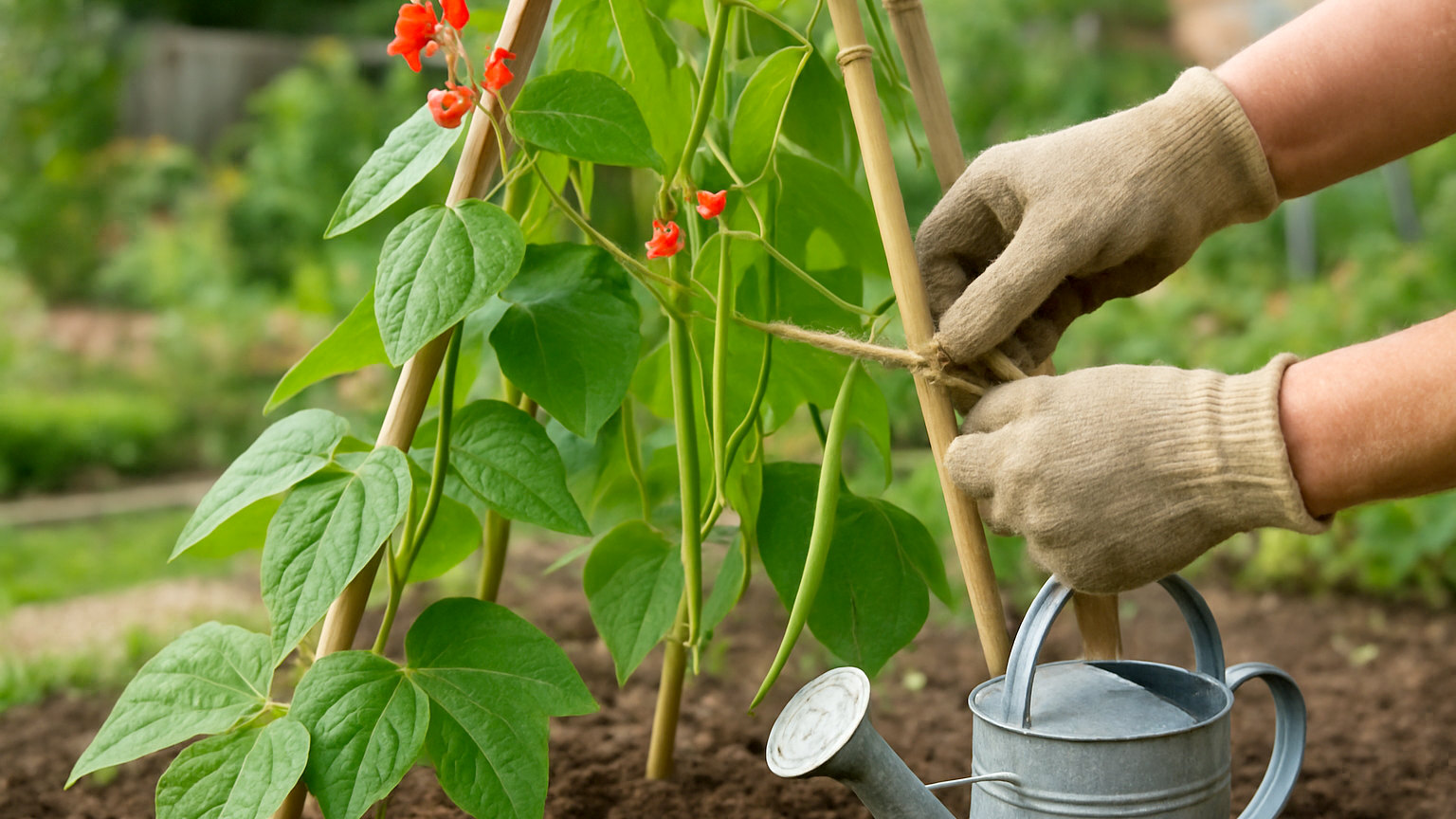
Use canes at least two and a half metres long, pushed a good thirty centimetres into the ground. A double row with the canes crossed near the top and a horizontal cane laid in the V and tied firmly is far stronger than a wigwam, though a wigwam works well in a small garden or a large pot.
Tie every joint properly with garden twine rather than relying on friction. Guy the ends of a long row to a stake if it is exposed.
Watering, and why flowers drop
If beans flower but no pods form, the usual cause is dry roots. Runner beans need consistently moist soil once flowering starts, and a dry spell at that point causes the flowers to drop without setting. Water thoroughly at the base two or three times a week in dry weather rather than sprinkling daily, and mulch with compost or grass clippings to hold it in.
Misting the flowers is often recommended and makes very little difference. Watering the soil does. Cold nights and a shortage of pollinating insects can also reduce setting, and growing a few flowers nearby helps more than anything you spray on.
Pinching out and general care
Guide the young plants onto their canes by hand for the first week or two, twisting them anticlockwise, after which they climb by themselves. When they reach the top, pinch out the growing tip to push energy into pods rather than more growth.
Slugs are the main threat to young plants, so protect them until they are climbing strongly. Blackfly can gather on the tips and are usually dealt with by pinching out the affected tip and leaving the ladybirds to it.
Picking
Pick every two or three days, and pick young. A bean left to swell tells the plant it has finished its job, and cropping slows sharply once seeds start to mature inside the pods. Regular picking keeps a plant productive for two months or more.
Twenty centimetres is about right for most varieties, when the pod snaps cleanly and the beans inside are barely visible as bumps. Any that get away from you can be left to dry fully on the plant and shelled for use as dried beans over winter.
Varieties worth knowing
Stringless varieties save preparation time and are worth choosing unless you specifically want an old variety for flavour. Scarlet Emperor and Enorma are long-standing reliable croppers, White Lady sets better in hot weather because white flowers are less attractive to birds that damage them, and Hestia is a dwarf variety that needs no support and grows well in a large pot.
If you save seed, runner beans cross readily with anything flowering nearby, so saved seed will not come true to variety unless you have grown only one.


