
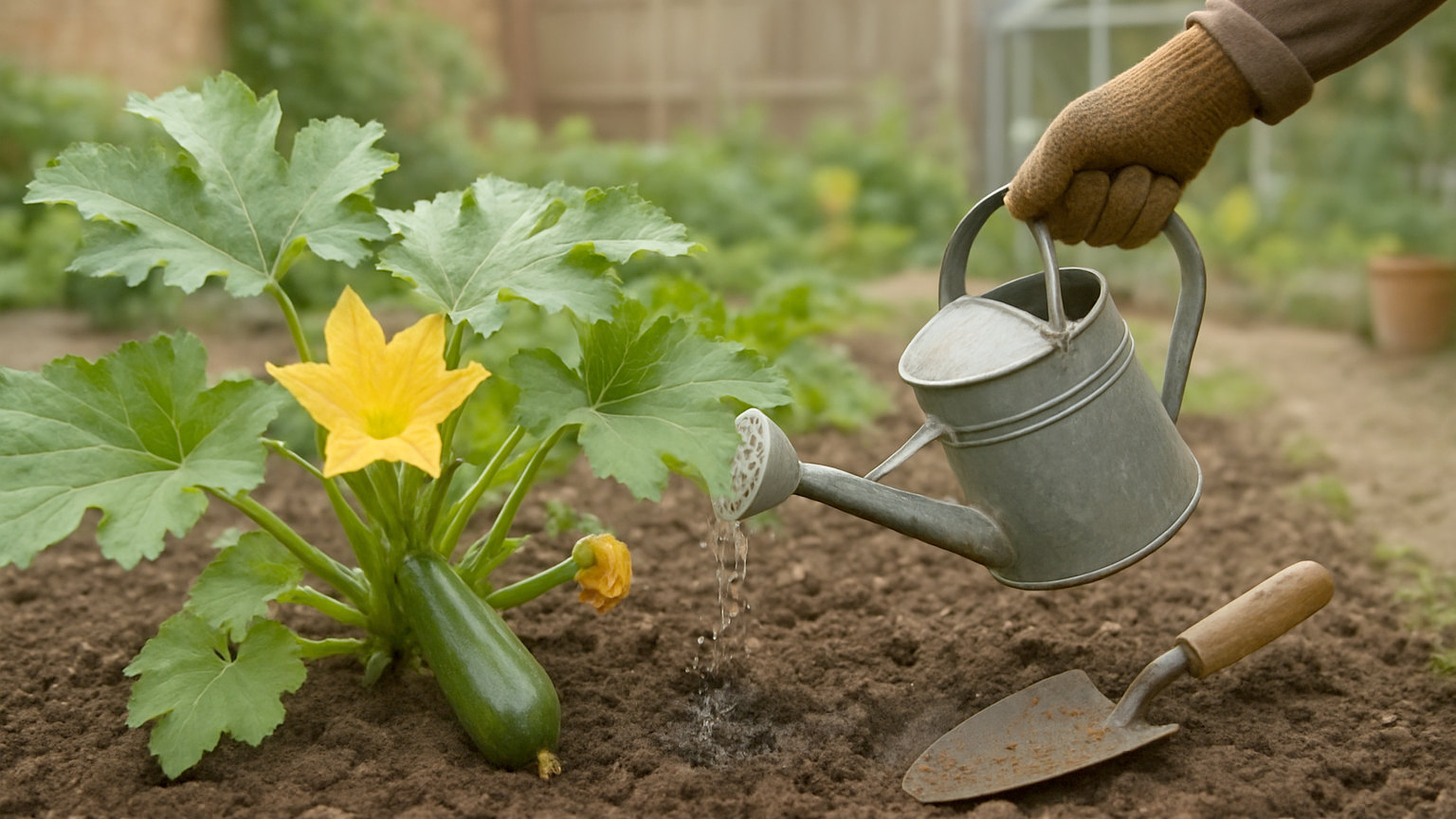
Courgettes are among the most productive things you can grow and the crop most often overdone. Two plants will keep a household in courgettes through the summer; three will produce more than anyone wants and a steady supply of marrows you did not ask for.
Sowing
Sow indoors from mid-April, one seed per pot, pushed in on its edge about two centimetres deep. Sowing on edge rather than flat is traditional and helps avoid the seed rotting.
They germinate fast in warmth and grow quickly, so there is no advantage in sowing early. A plant sown in April is ready to go out at the right time; one sown in March becomes leggy and pot-bound waiting for the frosts to finish.
Alternatively sow direct outside in late May or early June under a cloche or a cut-off bottle, which works well in a warm season.
Planting out
Courgettes are killed outright by frost, so harden them off over a fortnight and plant out only once the risk has passed, which in much of the country means the end of May.
They are hungry and thirsty. Prepare the planting position with a generous amount of well-rotted manure or compost dug in, and space plants ninety centimetres apart. That looks absurd in June and is correct by August, when a single plant covers a square metre.
A traditional approach is to plant on top of a shallow mound with a sunken ring around it, or with a length of pipe sunk beside the rootball, so water goes straight down to the roots rather than sitting around the stem.
Watering
Water generously and consistently at the base, avoiding the crown of the plant where water sitting encourages rot.
Irregular watering is the usual cause of poor cropping and of fruit aborting. Mulch around the plant once the soil is warm to conserve moisture and suppress weeds.
Feed weekly with a high-potassium tomato feed once the first fruits have set.
Why early fruits shrivel
Small fruits that turn yellow at the tip, shrivel and rot have not been pollinated. This is extremely common on the first flowers and is not a disease.
Courgettes carry separate male and female flowers. The female has a tiny courgette behind the bloom; the male sits on a plain stem. Early in the season plants often produce mostly male flowers, or the weather is too cold and wet for insects to fly, so the females go unfertilised.
It usually corrects itself within a couple of weeks. To hand pollinate, pick a male flower, strip the petals off and dab the pollen onto the centre of a female flower, ideally in the morning.
Picking
Pick at ten to fifteen centimetres, and pick every couple of days at the height of the season. Courgettes swell astonishingly fast, and one missed behind a leaf on Friday is a marrow by Monday.
Cut the stem with a knife rather than twisting, which can tear the plant. Regular picking keeps the plant producing; leaving fruit to mature signals that its job is done and cropping slows sharply.
The flowers themselves are edible and are worth using, particularly the males, which are surplus anyway.
Powdery mildew
A white dusty coating on the leaves, almost inevitable from midsummer. It is caused by dry roots combined with humid air rather than by wet conditions.
Water thoroughly at the base, mulch, and space plants for airflow. Remove the worst affected leaves, which also lets light in. Mildew-resistant varieties are available and noticeably better.
By the time it takes hold in September the plant has usually cropped well anyway.
Slugs
Young plants are extremely vulnerable in the first fortnight after planting out and can be eaten to nothing overnight. Protect them until they are growing strongly, after which they are large enough not to matter.
If you end up with a marrow
Every grower does. A courgette that has become a marrow is perfectly usable stuffed and baked, and leaving one to mature deliberately at the end of the season gives you something that stores for weeks in a cool place.
Varieties
Yellow varieties are easier to spot among the foliage, which genuinely reduces the number that turn into marrows. Compact and climbing varieties are available for small gardens, and round types suit stuffing.


