
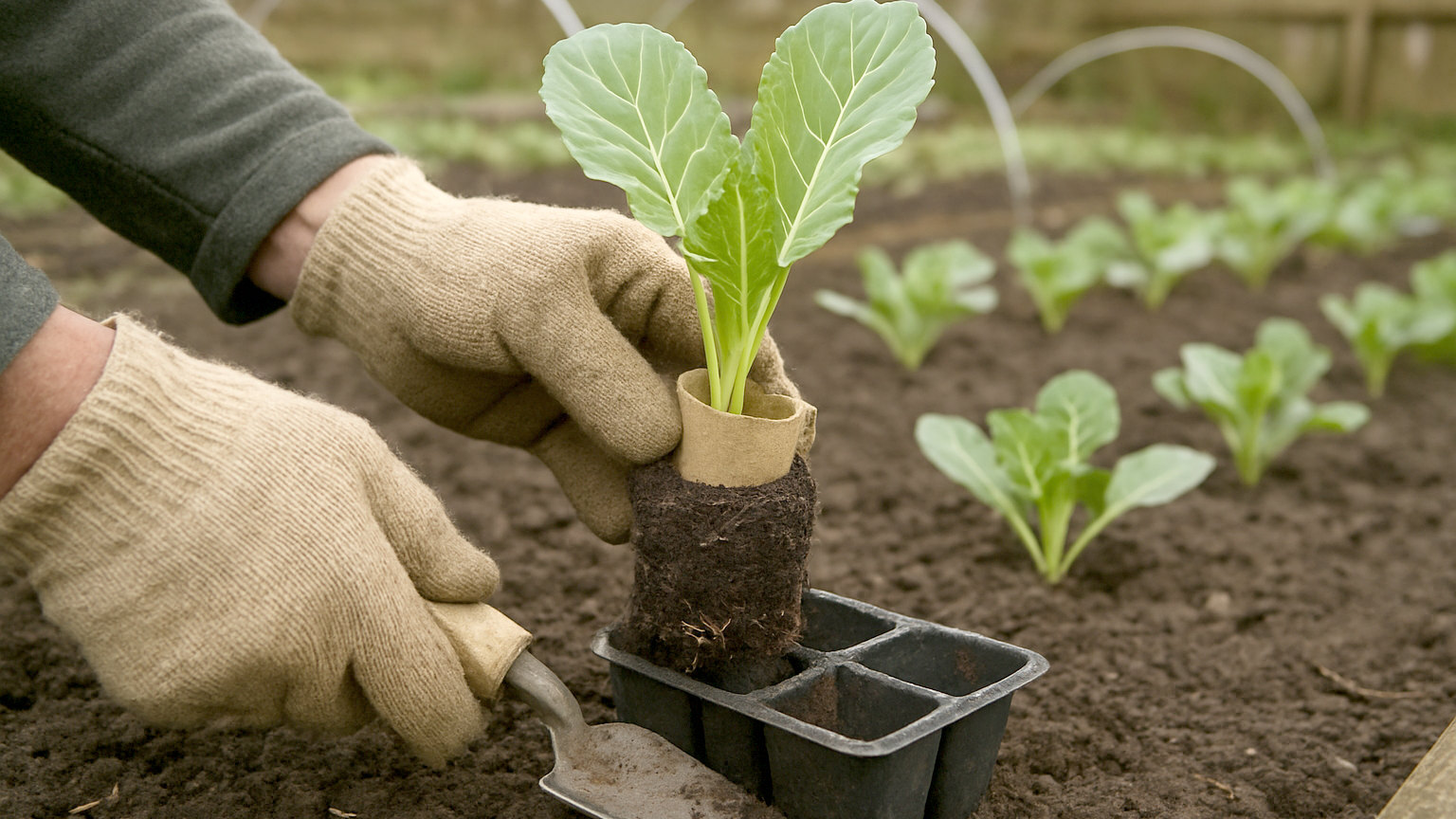
Cabbages are grown somewhere in the garden almost all year, because there are four seasonal types with different sowing times. They ask for three things: firm ground, protection from cabbage root fly, and netting against pigeons and butterflies.
The four types
- Spring cabbage - sown July to August, planted September, harvested April to June. Often eaten as loose spring greens
- Summer cabbage - sown March to April, harvested July to September
- Autumn cabbage - sown April to May, harvested September to November
- Winter cabbage, including savoy and red - sown April to May, harvested November to February
Growing two or three types keeps a supply going for most of the year, and spring cabbage in particular fills the hungry gap when little else is available.
Sowing and transplanting
Cabbages are almost always sown in a seedbed or in modules and transplanted, rather than sown where they are to grow. This uses the ground more efficiently, since the seedlings occupy a small area while an earlier crop finishes.
Sow thinly about two centimetres deep, and transplant when the plants have four or five true leaves and are around ten to fifteen centimetres tall, usually five or six weeks later.
Water the seedbed well an hour before lifting, and plant so the lowest leaves are just above soil level.
Firm ground matters
Brassicas need firm soil, which is the opposite of most vegetables. Loose ground produces plants that rock in the wind and cabbages that fail to heart up properly.
Do not dig the bed immediately before planting. Ideally use ground that was manured for a previous crop and has settled over winter. Tread the soil firm before planting, and after setting each plant, firm it in hard with your knuckles or heel.
The traditional test is that a leaf tugged gently should tear rather than the plant lifting out.
Spacing
Spacing controls the size of the head. Around forty-five centimetres each way suits most summer and autumn types; winter cabbages and savoys want fifty to sixty. Spring cabbage can go closer, at about thirty centimetres, with alternate plants pulled as greens.
Cabbage root fly
The larvae eat the roots, causing plants to wilt in sunshine, turn bluish and eventually collapse. It is the most damaging pest of young brassicas and the easiest to prevent.
Fit a collar around the stem at planting: a disc of card, carpet underlay or a proprietary product, about fifteen centimetres across, sitting flat on the soil. It stops the fly reaching the soil to lay her eggs.
Alternatively cover the whole bed with fine insect mesh from planting, which excludes root fly, butterflies and pigeons at once.
Netting
Cabbage white butterflies lay in summer and the caterpillars strip plants rapidly. Pigeons take brassicas year round and are worst in winter when other food is short.
Net over hoops with a mesh of around 1.3 millimetres, keeping it well clear of the foliage since both pigeons and butterflies will work through anything touching the leaves. Bury or weight the edges.
Check under the leaves regularly for clusters of yellow eggs and rub them off.
Clubroot
The serious disease, causing swollen distorted roots, stunted growth and wilting. It persists in soil for up to twenty years, so prevention matters more than anything.
It is worse on acid, poorly drained soil. Liming to raise the pH towards neutral, improving drainage, and a long rotation all reduce the risk. Resistant varieties are available and worth using on infected ground.
Raise plants in large pots so they go out with a substantial root system, which helps them outgrow the damage. Never move soil from an infected bed elsewhere, and clean tools and boots.
Splitting heads
A cabbage that splits open has usually taken up water rapidly after a dry spell, forcing the head to expand faster than the outer leaves allow. Consistent watering prevents it. If a head is ready and heavy rain is forecast, cutting it promptly is the simplest answer.
Watering and harvesting
Water regularly, particularly in dry spells and while the heads are forming. A general feed in midsummer suits the heavier winter types.
Cut the head with a sharp knife when firm. Leaving the stump in the ground with a cross cut into the top frequently produces a second crop of small greens, which is worth doing for the space it costs.


