
Beetroot is quick, tolerant and among the best crops for a beginner. One quirk explains most of the confusion around it: what looks like a single seed is actually a corky cluster containing several, so thinning is unavoidable however carefully you sow.
The seed cluster
Most beetroot seed is multigerm, meaning each wrinkled brown pellet contains two to four seeds. Sow one and you get a small clump of seedlings.
Monogerm varieties are available and produce a single seedling per seed, which saves thinning. Unless you buy those, plan to thin.
Soaking the seed in water for an hour before sowing softens the cork and speeds up germination noticeably.
When and where to sow
Sow from April to July directly where the plants are to grow. Early sowings in March are possible under cloches or fleece, using a bolt-resistant variety.
Beetroot wants an open sunny position on light, well-drained soil that has not been freshly manured. It tolerates a wide range of conditions and does not need rich ground.
Sow every three or four weeks through the season for a continuous supply rather than a glut, since beetroot does not stand for long once mature.
Sowing and thinning
Sow at about two centimetres deep in drills thirty centimetres apart, spacing the clusters roughly ten centimetres along the row.
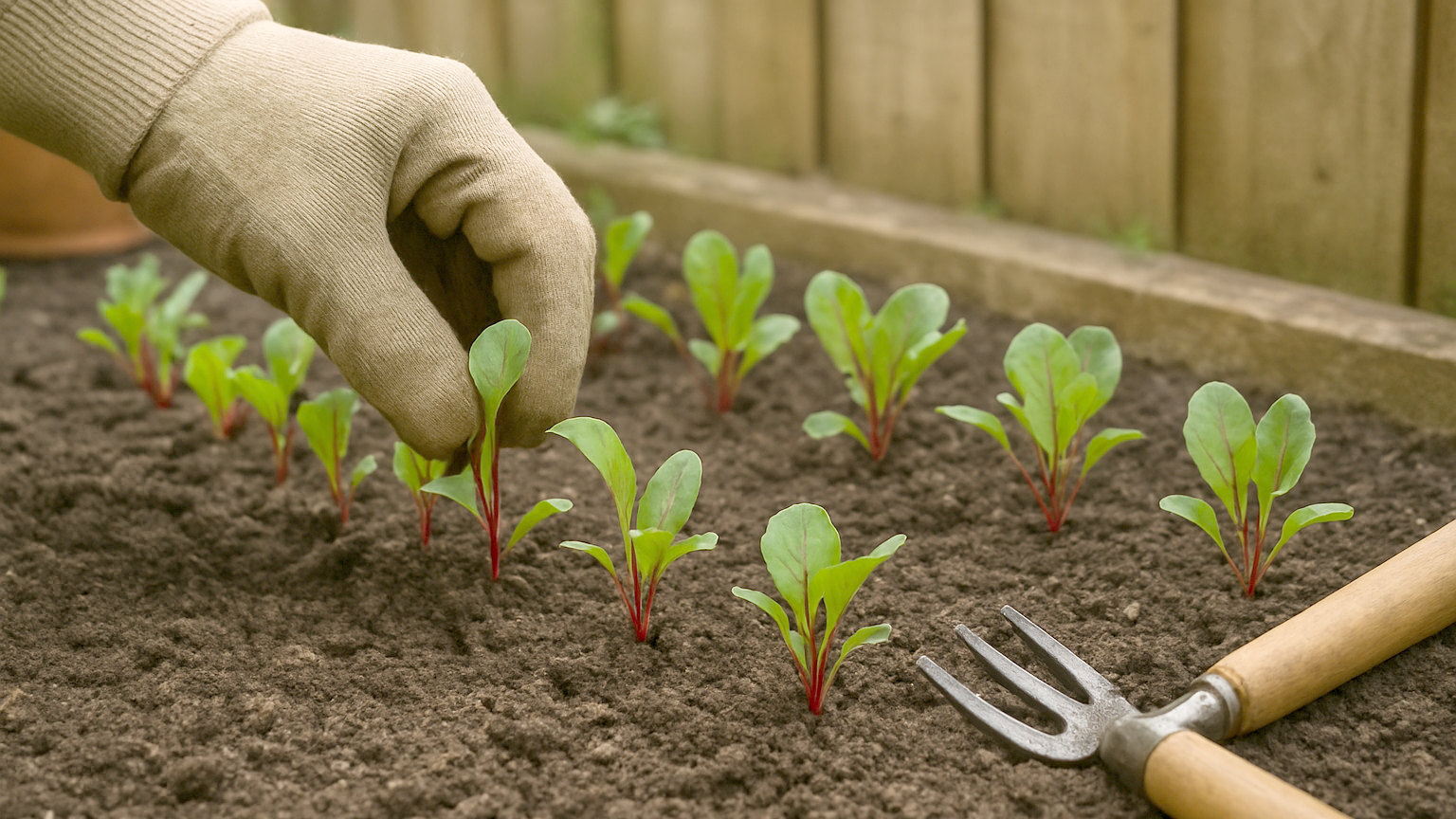
When the seedlings have a couple of true leaves, thin each clump to the strongest single plant. Snip the others off at soil level with scissors rather than pulling them, which disturbs the roots of the one you are keeping.
Final spacing of around ten centimetres gives good-sized roots. Closer spacing, at about five centimetres, produces smaller roots for pickling, which is a legitimate choice rather than a failure.
Thinnings are edible and make a good addition to a salad, so nothing is wasted.
Bolting
Beetroot running to seed rather than swelling is the most common problem. It is triggered by cold, by a check in growth, and by drought.
Avoid sowing too early into cold soil, which is the usual cause. Choose bolt-resistant varieties for any sowing before May. Keep the plants growing steadily without checks, which mostly means consistent watering.
A bolted plant will not produce a usable root and is best pulled.
Watering
Water regularly and evenly. Dry conditions produce woody roots and encourage bolting, while a heavy soak after a dry spell causes the roots to split.
Mulching between the rows helps hold moisture and suppresses the weeds that would otherwise compete.
Harvesting
Pull beetroot at golf ball to tennis ball size. This is the point people most often get wrong, leaving them to grow larger on the assumption that bigger is better. Beyond about tennis ball size they turn woody and lose sweetness.
Roots are usually ready eight to twelve weeks after sowing. Pull alternate plants first, which gives the remainder room to size up over the following weeks.
Twist the leaves off rather than cutting them, leaving about three centimetres of stalk. Cutting into the root causes it to bleed and lose colour when cooked.
Do not waste the leaves
Beetroot foliage is edible and good, cooked like chard or used small in salads. Young leaves are among the better things to come off the plant, and the crop effectively gives two harvests.
Storing
Beetroot keeps for a few weeks in the fridge with the leaves removed. For longer storage, lift in autumn before hard frost and pack the roots in boxes of damp sand somewhere cool and frost free, where they keep for several months.
In mild areas on free-draining soil they can be left in the ground under a straw mulch and lifted as needed, though slugs and rot become more likely.
Growing in containers
Beetroot does well in pots, needing about twenty centimetres of depth. Sow direct into the container and thin as usual, and keep the compost evenly moist, since containers dry out fast and dry beetroot goes woody. A single large pot sown three times through the season keeps a household supplied.
Colours
Beyond the standard deep red, golden and white varieties are available, along with Chioggia, which has concentric pink and white rings when sliced. The paler ones do not bleed, which makes them easier in salads.


