
Potatoes divide sharply on whether they are worth the space. First earlies, dug young in June, taste nothing like anything you can buy and justify the ground several times over. Maincrop potatoes occupy a bed for five months to produce something available cheaply all year, and in a small garden they rarely earn their keep.
Which type to grow
First earlies go in around late March and are ready in about ten weeks, from June. They are small, waxy and the ones worth growing.
Second earlies follow a couple of weeks later and crop from July. Maincrop goes in from mid-April and stays in the ground until September, producing the larger potatoes that store through winter but occupying the bed all summer and carrying the highest blight risk.
If you have one bed, grow first earlies. If you have several, add a maincrop for storage.
Chitting
Chitting means standing seed potatoes in a cool, light, frost-free place for four to six weeks before planting, so they produce short green shoots. An egg box on a windowsill in an unheated room is the traditional method.
It gives earlies a genuine head start of a week or two. For maincrop it makes little difference. What matters is that shoots should be short, stubby and green, not the long pale sprouts that develop in a dark cupboard, which snap off during planting.
Use certified seed potatoes rather than supermarket ones, which may carry disease and are often treated to suppress sprouting.
Planting
Plant into a trench about fifteen centimetres deep, shoots upward, spacing first earlies around thirty centimetres apart with sixty centimetres between rows. Maincrop needs more room, nearer forty centimetres in the row and seventy-five between.
Potatoes prefer slightly acid soil that has had compost or well-rotted manure worked in, and they do a genuinely useful job of breaking up ground that has not been cultivated. They will not tolerate a waterlogged site.
Earthing up
Potatoes exposed to light turn green, and green potatoes are toxic. Earthing up prevents that, and it is not optional. When the shoots are about twenty centimetres tall, draw soil up around them to leave only the top few centimetres showing, and repeat two or three times as they grow.
It also protects early shoots from late frosts, which blacken foliage and set the crop back. If frost is forecast after the shoots are up, cover them with fleece or draw soil over them overnight.
Growing in bags and containers
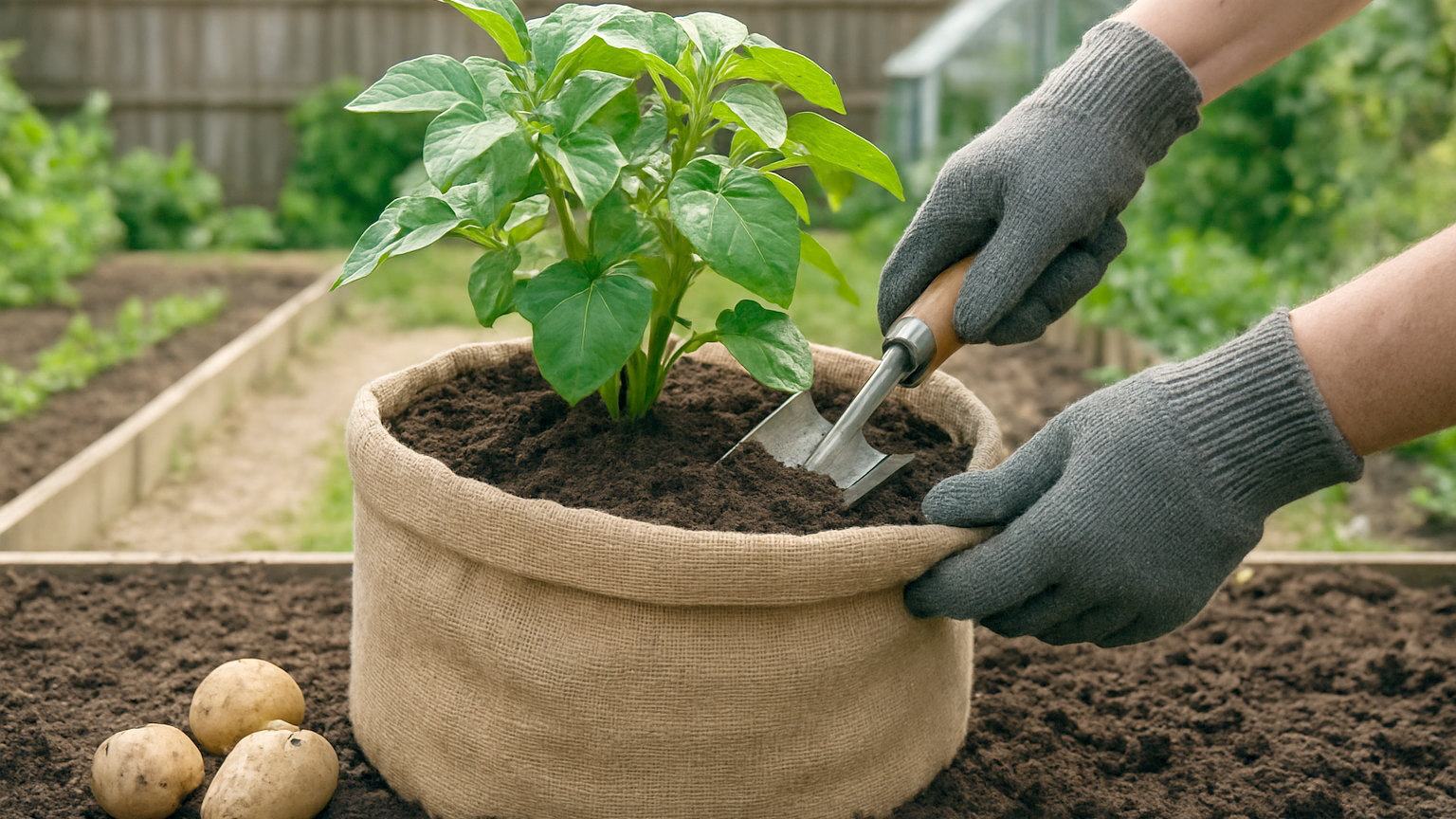
Potatoes grow well in bags, which suits a patio or a garden with poor soil. Use a bag of at least forty litres, put three seed potatoes in a bag that size, and start with about fifteen centimetres of compost at the bottom.
Add more compost as the shoots grow, in the same way as earthing up, until the bag is nearly full. Container-grown potatoes dry out fast and need watering almost daily in summer, which is the commonest reason a bag disappoints.
Blight
Late blight is the disease that ruins maincrop potatoes, usually arriving in warm humid weather from July onwards. It shows as dark brown patches on leaves, often with a pale edge, spreading rapidly until the foliage collapses, after which the spores wash down and rot the tubers.
There is no cure once it takes hold. The practical response is to cut all the foliage off at ground level immediately and remove it, then leave the tubers in the ground for two or three weeks before lifting, so the spores on the surface die off.
Earlies usually escape because they are lifted before blight season. For maincrop, choose a blight-resistant variety, space plants generously for airflow, and never compost infected foliage.
Harvesting and storing
Lift earlies when the flowers open, scraping soil away from one plant to check the size. They do not store and are best eaten within a few days.
For maincrop, cut the foliage down in early September and leave the tubers for a fortnight to firm their skins. Lift on a dry day, let them dry for a few hours, and store only undamaged tubers in paper or hessian sacks somewhere cool, dark and frost-free.
Check stored potatoes monthly and remove any that have started to rot, as one will spoil the sack.


