
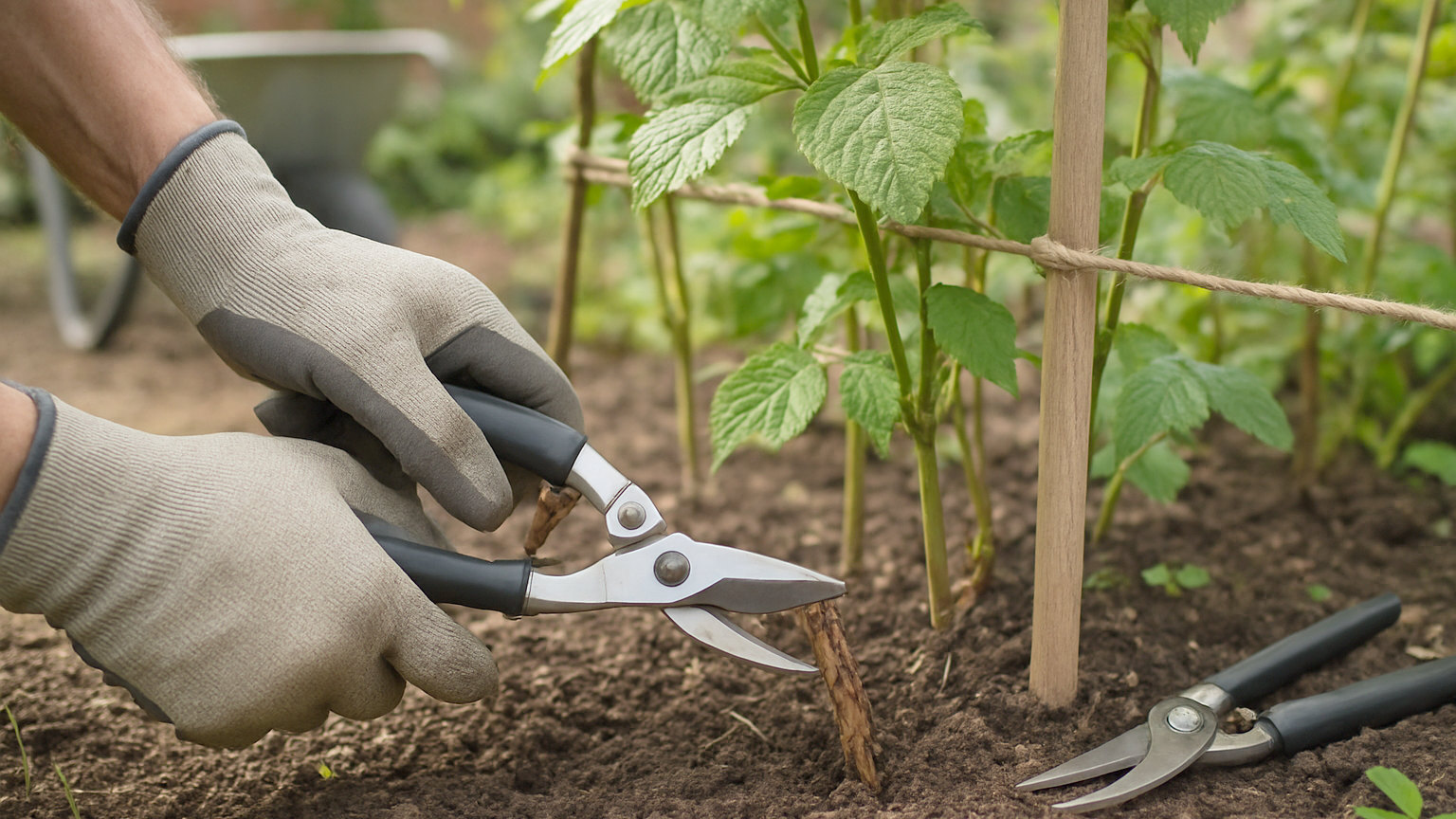
Soft fruit pruning looks like a collection of unrelated rules and is really one question applied to each plant: does it fruit on wood made last year, or on older wood carrying permanent spurs? Answer that and the method follows.
The two groups
Fruits on young wood - blackcurrants, raspberries, blackberries and hybrid berries. These are pruned by removing whole old stems or canes at the base, to make room for new growth.
Fruits on spurs on older wood - redcurrants, whitecurrants and gooseberries. These are pruned by keeping a permanent framework and shortening the side shoots that grow from it.
Blueberries sit between the two, fruiting best on wood two to four years old, and are pruned lightly by removing a proportion of the oldest stems.
Blackcurrants
In winter, cut about a third of the stems right down to ground level, choosing the oldest and darkest. Young wood is pale, old wood is dark and often flaking.
Do not shorten the remaining stems. Over three years the whole bush is renewed.
Redcurrants, whitecurrants and gooseberries
Build an open goblet on a short clear leg, with eight to ten main branches and a clear centre.
In summer, around July, shorten the current season's side shoots to about five leaves. In winter, cut those back further to one or two buds from the main branch, and reduce the leaders by about a quarter.
The open centre matters for airflow, which reduces mildew, and for getting your hands in among gooseberry thorns.
Summer raspberries
Cut out the canes that have just fruited, right to the ground, immediately after picking finishes. They will never fruit again.
Tie in the new green canes that grew this season, keeping six to eight strong ones per plant and removing the rest. In February, tip them back to just above the top wire.
Autumn raspberries
Far simpler. In February, cut every cane to ground level without exception. New canes grow in spring and fruit the same autumn.
The commonest error is pruning autumn varieties as if they were summer ones, leaving old canes standing, which produces a poor early crop and a degenerating patch.
Blackberries and hybrid berries
Canes fruit in their second year and then die. After picking, cut out every fruited cane at the base and tie in this year's new growth to replace it.
Keep the two generations separated on the support through the season, old canes one side and new the other, and the autumn job takes minutes instead of being an untangling exercise.
Blueberries
Leave a young bush alone for three years. From the fourth winter, remove about a quarter of the oldest stems at the base, along with anything weak or low-lying.
Do not shorten the remaining stems, since the fat rounded fruit buds sit near the tips.
When to prune
Winter pruning of currants, gooseberries and blueberries is done any time between leaf fall and bud burst, so November to early March.
Summer raspberries, blackberries and hybrid berries are pruned in summer immediately after fruiting. Summer spur pruning of gooseberries and red currants happens in July.
Autumn raspberries are the exception at the other end, cut in February rather than after fruiting.
Universal rules
Whatever the plant, always remove dead, damaged and diseased wood, anything crossing and rubbing, and anything lying on the soil.
Use sharp, clean secateurs and disinfect the blades between plants, particularly when cutting anything diseased. Cut to an outward-facing bud where you are shortening a shoot.
Bin or burn diseased prunings rather than composting them.
Prunings from healthy currants and gooseberries are worth keeping if you want free plants, since the same pencil-thick shoots you remove in autumn make ideal hardwood cuttings.
If you inherit a neglected bush
Renovate over two or three winters rather than in one session. Taking everything at once provokes a mass of vigorous unproductive growth.
Remove about a third of the oldest wood each year, aiming to rebuild the appropriate shape for that fruit, and accept a reduced crop for a season or two.
Rhubarb and blackberries
Rhubarb is not pruned at all beyond cutting out flower spikes as they appear and clearing dead leaves in autumn. Blackberry hybrids follow the blackberry method exactly, with fruited canes removed and new ones tied in each year.


