
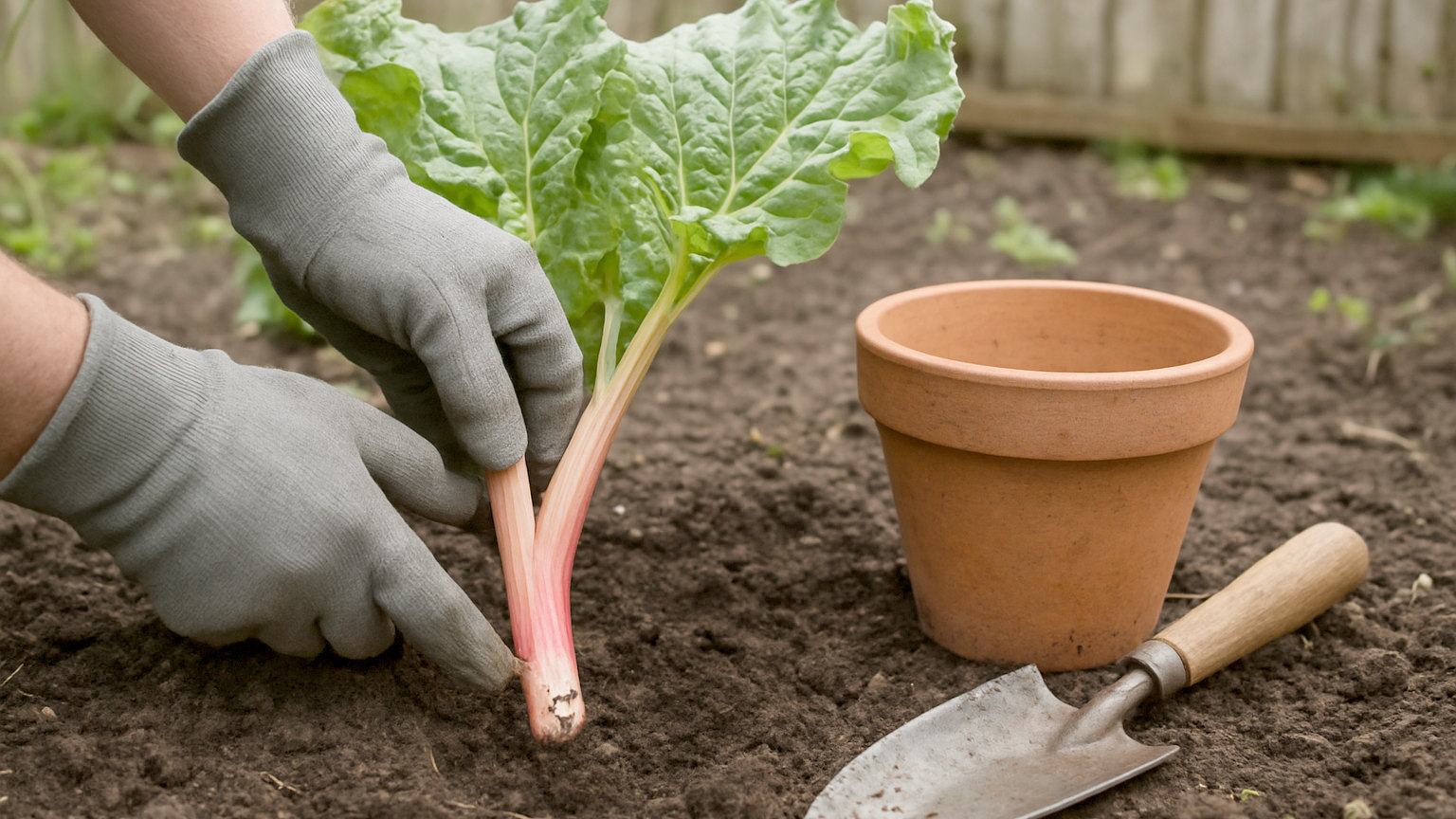
Rhubarb is about the least demanding thing in a kitchen garden. Plant it once, feed it generously, and it will crop for a decade or more with almost no attention. The rules that matter are all about restraint in harvesting.
A caution about the leaves
Rhubarb leaves are poisonous and must never be eaten. They contain high levels of oxalic acid and other compounds, and eating them causes serious illness.
Only the stalks are edible. Cut the leaves off as soon as you have pulled the stems and put them on the compost heap, where they break down harmlessly.
The leaves are also worth knowing about if children or pets use the garden.
Planting
Plant dormant crowns between November and March, in an open sunny position on deep soil with plenty of well-rotted manure worked in. Rhubarb is a heavy feeder and will occupy the same spot for years, so preparation is worth doing properly.
Set the crown so the growing points sit just at or very slightly below the soil surface. Burying them deeply causes rot.
Space plants about ninety centimetres apart, since a mature crown makes a substantial plant. They tolerate light shade but crop better in sun, and they dislike waterlogging.
Rhubarb can be raised from seed, though the results are variable and it takes considerably longer. A named crown is the better route.
The first year
Take nothing at all in the first season. The plant needs the whole year's leaves to build a crown that will support cropping.
Pull only sparingly in the second year, and harvest normally from the third.
Pull, do not cut
Grasp the stem near the base, pull downwards and outwards, and it comes away cleanly from the crown with a twist.
Cutting leaves a stub that rots back into the crown, and repeated cutting causes the plant to decline. This is a genuine difference rather than tradition.
Stop in July
Stop harvesting around the end of June or early July, and never take more than about half to two-thirds of the stems at any one time.
The remaining leaves feed the crown for the rest of the season and build the reserves for next year. Stripping a plant bare, or continuing into late summer, produces thin stems the following spring and eventually kills it.
Later stems also become tougher and more acidic, so there is little to be gained.
Forcing
Forcing produces very early, pale pink, exceptionally tender stems, and it is one of the pleasures of the year.
In January or February, cover a dormant crown with a traditional terracotta forcer, a large bucket or a dustbin, excluding all light. Stems appear several weeks earlier than usual and are ready in about six to eight weeks.
Force a given crown only once every three years, and do not harvest it at all for the rest of that season. Forcing exhausts the plant, and forcing the same crown repeatedly kills it. Rotate between plants if you want forced rhubarb annually.
Feeding and watering
Mulch generously with well-rotted manure each autumn or spring, keeping it clear of the crown itself. Rhubarb tolerates and appreciates more nitrogen than most fruit.
Water in dry spells, since drought produces thin stems.
Flower spikes
A thick flower stem appearing from the centre should be cut out at the base as soon as you see it. Flowering diverts a great deal of energy from the crown.
Frequent flowering usually indicates a plant under stress or one that needs dividing. Some varieties are simply more prone to it than others, and a plant that flowers every year despite good treatment is worth replacing.
Dividing
Rhubarb in containers
It can be grown in a large pot, at least fifty centimetres across and deep, though it will never match a plant in open ground. Use a soil-based compost with plenty of well-rotted manure, water generously, and expect to divide and repot every three years or so.
Dividing
Every five or six years, lift the crown in winter while dormant and cut it into sections with a spade, each with at least one fat bud and a good piece of root.
Discard the old woody centre and replant the outer sections into refreshed ground. This keeps rhubarb going indefinitely and gives you plants to pass on.


