
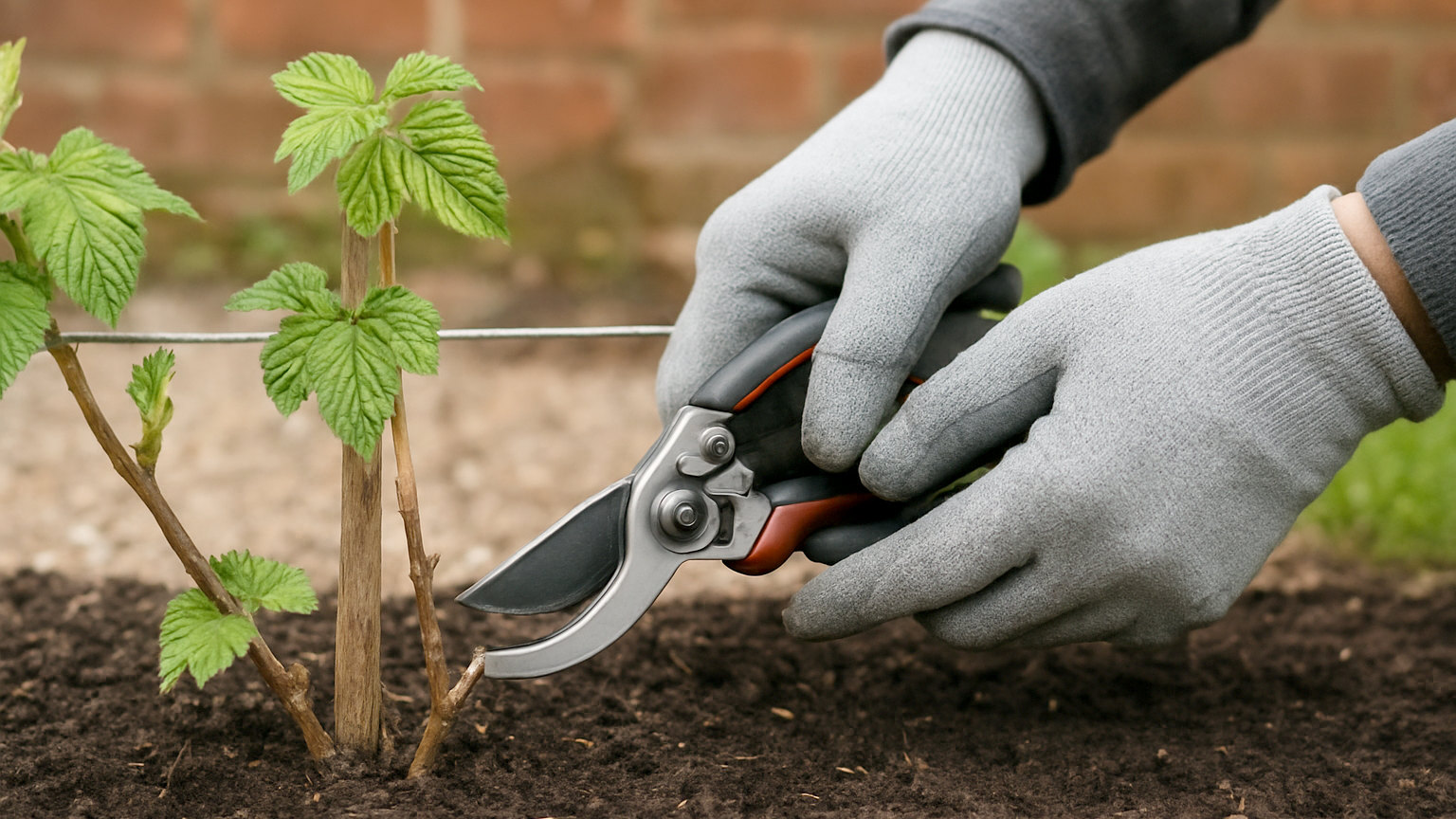
Raspberries are among the easiest and most productive things you can grow, and almost all the difficulty comes down to one question: which type you have. Summer and autumn raspberries are pruned at completely different times and in completely different ways, and confusing them costs a whole season of fruit.
Summer or autumn
Summer-fruiting raspberries crop in June and July on canes grown the previous year. Autumn-fruiting varieties crop from August until the frosts on canes grown in the same season.
That single difference determines everything. If you inherited a patch and do not know which you have, watch it for a year. Fruit before the end of July on tall canes that were there over winter means summer fruiting. Fruit from August on canes that appeared this spring means autumn.
For a small garden, autumn varieties are the easier choice. They need no support in a sheltered spot, the pruning is one straightforward job, and they crop at a time when little else is producing.
Planting
Plant bare-root canes between November and March, in sun or light shade, in soil enriched with compost. Raspberries want moisture-retentive ground that never waterlogs, and they dislike chalky or very alkaline soil.
Set canes about forty-five centimetres apart in rows a metre and a half apart, with the roots just below the surface, no more than five to eight centimetres deep. After planting, cut every cane down to about twenty-five centimetres. This feels drastic and is essential, as it forces the plant to establish roots rather than fruit in its first year.
Supports
Summer varieties need a support system, since the canes reach two metres and carry a heavy crop. Two posts with horizontal wires at sixty centimetres, a metre and, and a metre and a half is the standard arrangement, with canes tied in individually.
Autumn varieties are shorter and self-supporting in a sheltered position, though a single row of string between posts stops them flopping across a path after rain.
Pruning summer raspberries
Cut out the canes that have just fruited, right down to the ground, immediately after picking finishes. They will never fruit again. Leave the new green canes that grew this year, tie them into the wires, and those are next summer's crop.
Aim to keep six to eight strong new canes per plant and remove the rest. In February, tip the retained canes back to just above the top wire.
Pruning autumn raspberries
Far simpler. In February, cut every cane down to ground level. All of them, without exception. New canes grow from the base in spring and fruit that same autumn.
The mistake to avoid is pruning them in the summer-fruiting way, leaving old canes standing. That produces a light early crop on the old wood and a poor one later, and the patch degenerates over a few years.
Watering, feeding and suckers
Raspberries are shallow rooted and need consistent moisture, particularly while fruit is swelling. Mulch generously each spring with compost or well-rotted manure, keeping it clear of the canes themselves, and it will hold water and feed at the same time.
Do not dig around them. Shallow roots resent disturbance, and forking near the row damages them and provokes suckering.
Raspberries spread by suckers, and a row will march outwards over the years. Pull unwanted suckers up rather than cutting them, which only encourages more, and do it while they are small. A physical barrier sunk around the bed keeps a patch where you put it.
Netting and birds
Birds will take the crop, and netting is the only reliable answer. Use a fruit cage or drape netting over a frame, keeping it taut and well clear of the fruit.
Use netting with a mesh of at least two centimetres so birds cannot become entangled, check it daily during the season in case anything has got in, and remove it once picking finishes.
Problems worth knowing
Raspberry beetle causes the small dried patches and the pale grubs found in picked fruit, and is worst on summer varieties. Autumn croppers largely escape it, because they fruit after the beetle's active period, which is another argument for growing them.
Yellowing leaves with green veins usually indicates iron shortage on alkaline soil rather than a feeding problem, and is difficult to correct permanently on chalk.
Life expectancy
A raspberry bed crops well for ten years or so before vigour declines and virus builds up. When yields drop noticeably, replant with fresh certified virus-free stock in a different part of the garden rather than replacing canes in the same soil.


