
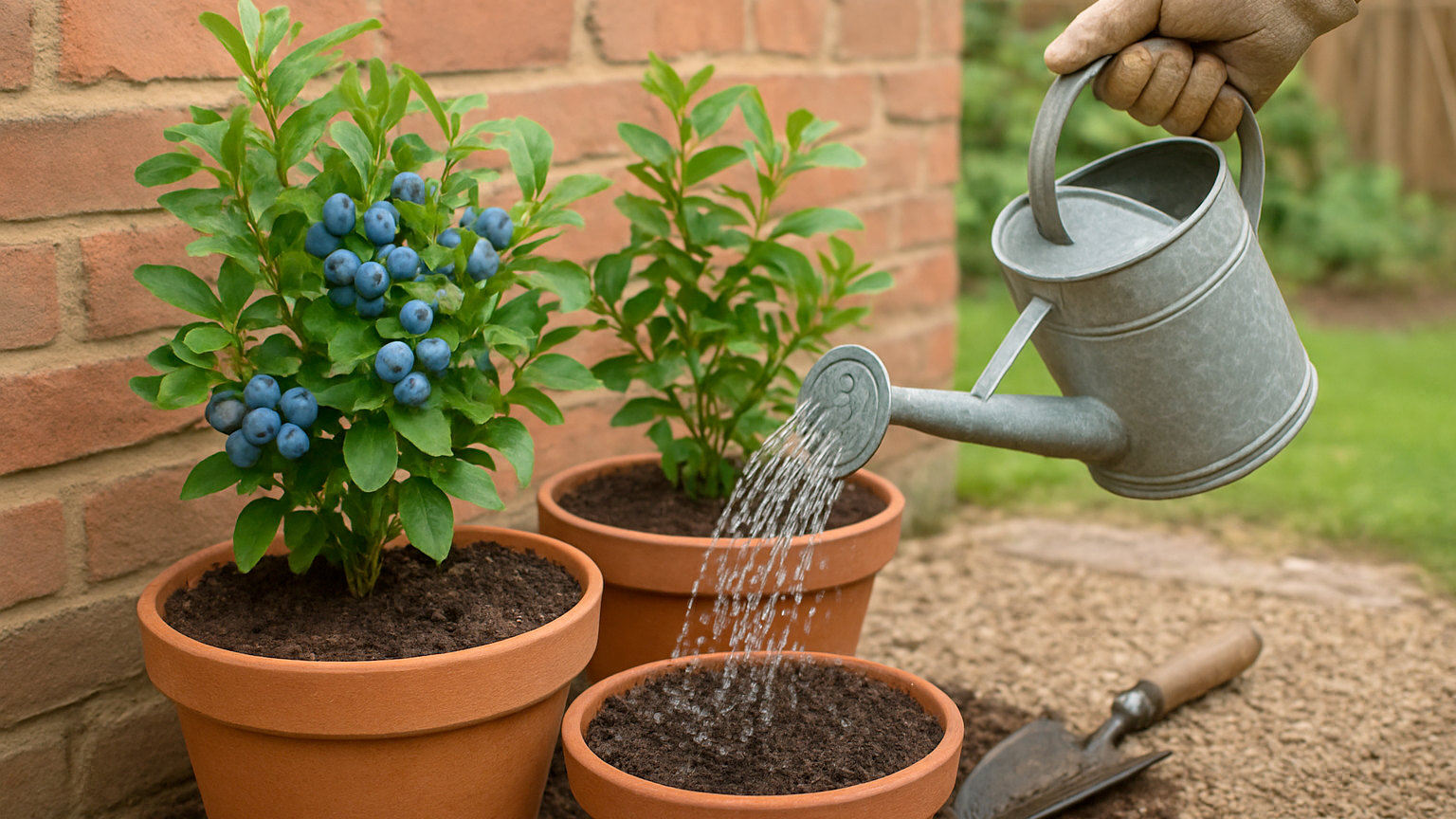
Blueberries are easy to grow and impossible to grow badly wrong in only one respect: they need acid soil. Get that right and they are among the most trouble-free fruit there is. Get it wrong and the plant yellows, stops growing and slowly dies.
They need acid soil
Blueberries want a pH between about 4 and 5.5, which is considerably more acidic than most British garden soil.
Test your soil before planting in the ground. If it is neutral or alkaline, do not attempt to acidify a bed, which is expensive, temporary and rarely successful.
Grow them in pots of ericaceous compost instead. This is what most gardeners do and it works extremely well. A container of forty to fifty centimetres suits a mature bush.
Water with rainwater
Tap water in hard water areas is alkaline and contains calcium, and watering blueberries with it steadily raises the pH of the compost until the plant cannot take up iron.
Use rainwater from a butt wherever possible. If you must use tap water occasionally in a drought it will not kill the plant, but rainwater should be the default.
Keep them consistently moist. Blueberries are shallow rooted and dislike drying out, and a pot in summer may need daily watering.
Yellow leaves
Yellowing between the veins on the youngest leaves, with the veins staying green, is iron shortage caused by the pH having risen. It is the standard blueberry complaint.
Correct it in the short term with chelated or sequestered iron. Fix it properly by switching to rainwater, top dressing with fresh ericaceous compost, and feeding with an ericaceous fertiliser rather than a general one.
Grow two varieties
Most modern blueberries are self-fertile and will crop alone, but two different varieties flowering at the same time produce noticeably heavier crops and larger berries.
Choosing an early and a late variety also spreads picking across several weeks rather than concentrating it into one.
Bluecrop is the reliable standard. Duke is early, Chandler has very large berries, and Top Hat is compact enough for a small pot.
Position
Full sun for the best crops and sweetest fruit, though they tolerate light shade. Shelter from strong wind, and avoid a frost pocket since the flowers are vulnerable.
They are fully hardy and need a cold winter period, so do not bring pots indoors.
Feeding and mulching
Feed with an ericaceous fertiliser in spring, following the rate on the packet. Do not use general fertiliser, bone meal or mushroom compost, all of which raise the pH.
Mulch with composted pine bark, pine needles or ericaceous compost, which suppresses weeds, holds moisture and maintains acidity as it breaks down.
Pruning
Leave a young bush alone for the first three years apart from removing anything dead or damaged.
From the fourth winter, prune while dormant between November and March. Blueberries fruit best on wood two to four years old, so the aim is a steady supply of new shoots.
Cut out about a quarter of the oldest stems at the base each year, along with anything weak, low-lying or crossing. Do not shorten the remaining stems, since the fat rounded fruit buds sit at the tips.
Netting
Birds take blueberries the moment they colour. Net with a mesh of at least two centimetres over a frame, secured at the base, and check daily so nothing gets caught.
Repotting
Blueberries have fine surface roots and a shallow rootball, so they are straightforward to repot and tolerate it well.
Move up a pot size every two or three years, or root prune and replace the compost if the plant is at its final size. Refresh the top few centimetres of compost each spring in the meantime.
Picking
How long before they crop
A young blueberry takes three or four years to crop properly, and a bush bought in a small pot may give only a handful in its first couple of seasons. That is normal. Buying a larger established plant shortens the wait considerably and is usually worth the extra.
Picking
Leave the berries a few days after they turn blue, since they continue sweetening on the bush. A ripe blueberry comes away with the lightest touch, so pick over the bush several times across a fortnight.


