
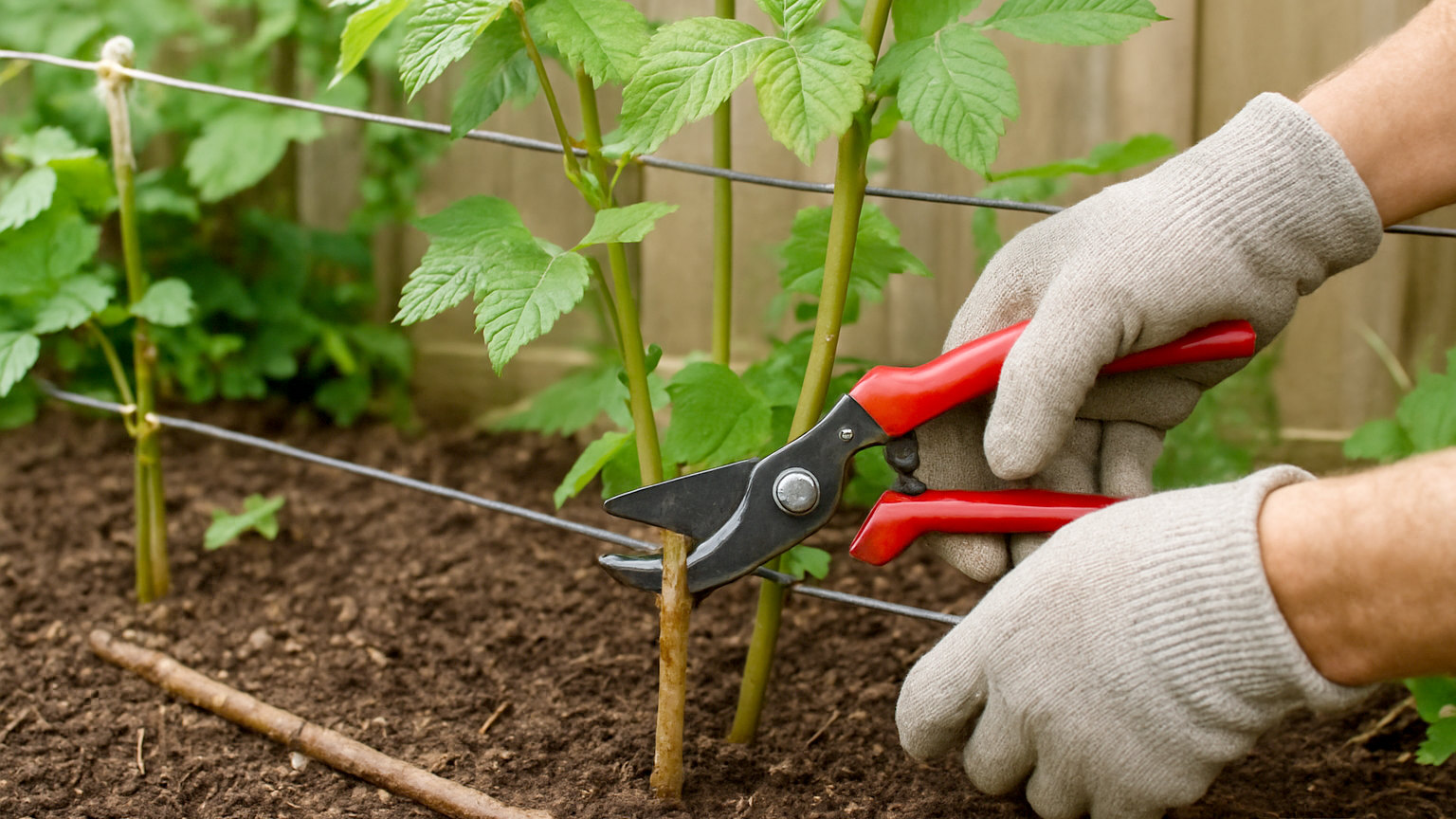
Cultivated blackberries crop far more heavily and over a longer period than anything you will find in a hedgerow, and modern thornless varieties remove the main objection to growing them. The single thing to understand is that canes fruit once and are then removed.
The two-year cycle
A blackberry produces canes one year, which fruit the following year and then die. Every year the plant makes a new set of canes at the same time as the previous set is cropping.
After picking finishes, cut every cane that has fruited right down to ground level and tie in this year's new canes to replace them. That is the whole pruning regime.
Keeping old and new canes separated on the support through the season makes this straightforward. Train the fruiting canes to one side and the new growth to the other, or fruiting canes along the lower wires and new canes up the middle, and the autumn job takes minutes rather than being an untangling exercise.
Vigour and space
Blackberries are vigorous. A single plant of a strong variety can produce canes four or five metres long, and it will take over a border if given the chance.
Space plants two and a half to four metres apart depending on variety, and less for the compact ones. Check the eventual size before buying, since the difference between varieties is considerable.
They tolerate light shade and less than ideal soil, which makes them useful on a boundary or a north-facing fence where little else will fruit.
Supports
A permanent wire framework is needed. Posts with horizontal wires at about seventy-five centimetres, one metre and one metre thirty is the standard arrangement.
Tie canes in as they grow rather than letting them sprawl, since they root wherever a tip touches the ground and quickly become a thicket.
Fan training, weaving or rope training all work. What matters is that the two generations of cane can be told apart.
Thornless varieties
Worth choosing unless you specifically want a defensive hedge. Loch Ness is compact, thornless and heavy cropping, and suits a smaller garden. Oregon Thornless has attractive cut leaves. Loch Tay is early and thornless.
Thorny varieties such as Himalayan Giant crop enormously and are genuinely unpleasant to prune.
Hybrid berries
Tayberry, loganberry, boysenberry and similar are grown and pruned in exactly the same way, and they generally have better flavour than blackberries with slightly lower yields.
Tayberry is the pick of them for flavour, and thornless forms are available. Loganberry is sharper and best cooked, and japanese wineberry is worth growing as much for its bristly red stems in winter as for the fruit.
Planting and feeding
Plant bare-root between November and March, or containerised at any time. Set the plant at the same depth it grew and cut the cane back to about twenty-five centimetres after planting to encourage strong growth from the base.
Mulch with compost or well-rotted manure each spring, keeping it clear of the crown, and apply sulphate of potash in late winter. Water in dry spells while fruit is swelling.
Controlling the spread
Blackberries sucker and tip-root. Pull unwanted suckers up rather than cutting them, and keep the tips of canes off the ground.
Every part of a cane that has rooted will produce a new plant, so a neglected blackberry becomes a thicket within a few seasons.
Harvesting
Pick when the berries are fully black, plump and pull away easily. A blackberry that resists is not ripe, and one that is glossy black but firm will be sour.
Cultivated varieties crop over several weeks from July to October depending on variety, so pick over the plant repeatedly rather than expecting a single harvest.
Problems
Freezing and using them
Blackberries freeze well spread on a tray before bagging. They also make the best of all hedgerow jellies, and combine particularly well with apples, which ripen at the same time and provide the pectin that blackberries lack.
Problems
Raspberry beetle causes dried patches at the stalk end with small pale grubs inside. Cane spot and spur blight show as purple blotches on the canes. Both are reduced by cutting out old canes promptly and keeping the plant open and airy.


