
Strawberries are productive, easy and short-lived, and the last of those is what catches people out. A plant crops heavily in its second and third years, then falls away sharply. Treating the bed as something to be renewed on a rolling cycle rather than a permanent planting is the single thing that keeps a supply going.
Types worth knowing
Summer-fruiting strawberries give one concentrated crop, and are grouped as early, mid and late season. Planting one of each spreads picking from late May into July.
Perpetual or everbearing varieties produce smaller flushes from summer into autumn. The total yield is usually lower and the fruit often less sweet, but they are useful in containers and for a longer picking season.
Alpine strawberries are tiny, intensely flavoured, tolerate shade and come readily from seed. They make good edging under taller plants.
Planting, and the depth that matters
Plant in late summer or early autumn for a full crop the following year, or in spring for a lighter first season. Space plants about forty-five centimetres apart with seventy-five centimetres between rows, in full sun on soil improved with compost.
The crown must sit exactly at soil level. Bury it and the plant rots; leave it proud and the roots dry out. That single detail accounts for most failures in the first month. Spread the roots downwards in the hole rather than curling them round.
Water in well and keep them watered through the first few weeks while they root.
The three year cycle
Yields peak in years two and three, then decline as virus accumulates and plants congest. Rather than replacing everything at once, replant a third of the bed each year using runners from your healthiest plants, so you always have a productive mix of ages.
Move the bed to fresh ground every few years if you can. Replanting strawberries into the same soil repeatedly builds up soil-borne problems.
Runners
Strawberries send out long stems with plantlets along them. In a plant's fruiting years these divert energy from the crop, so cut them off unless you want new plants.
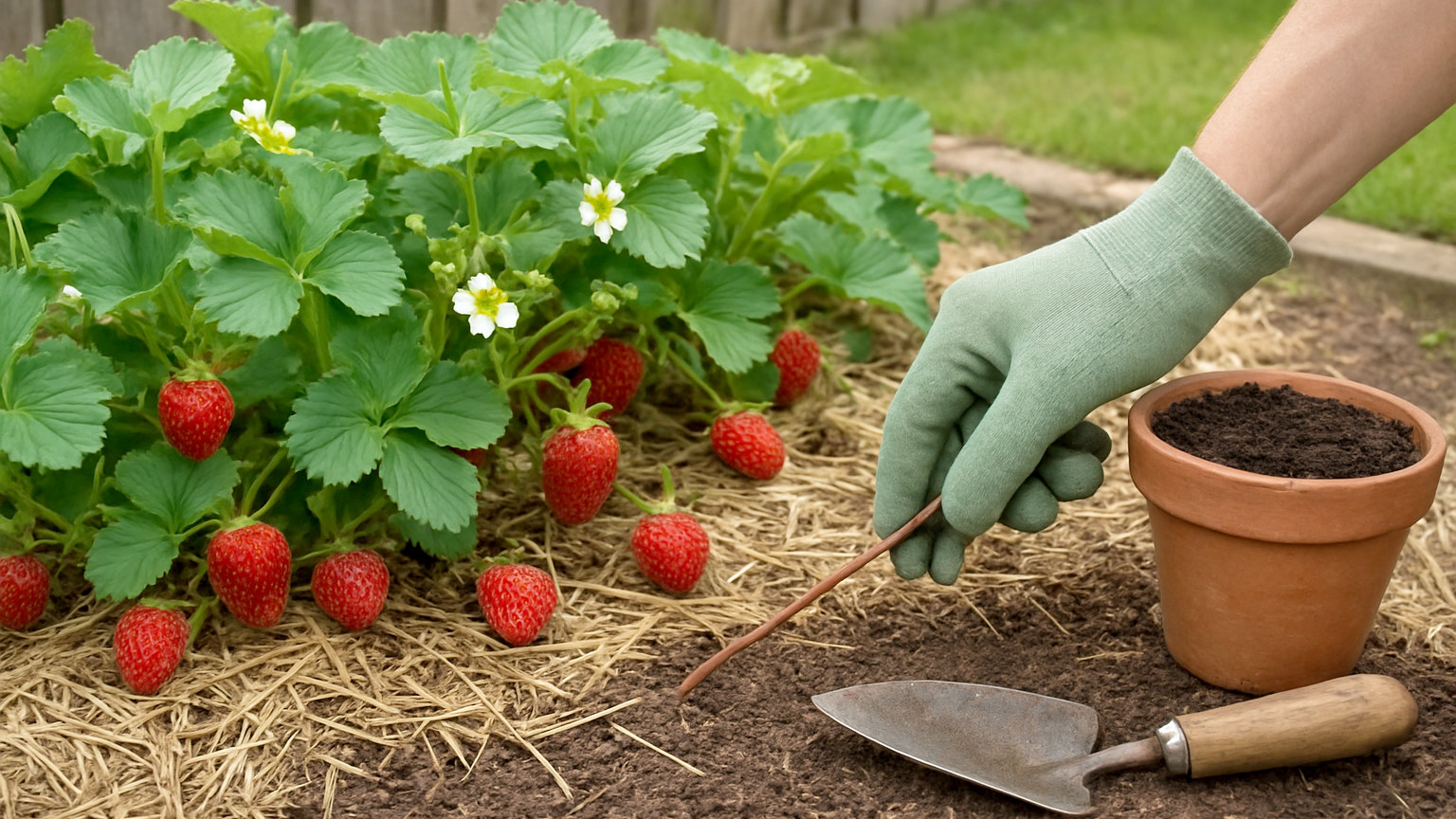
To propagate, peg the plantlet down into a small pot of compost sunk beside the parent, using a bent wire or a stone, and leave it attached until it has rooted, usually four to six weeks. Then sever it and plant it out. It costs nothing and produces better plants than buying in, provided the parent is healthy.
Take runners only from vigorous plants with no sign of virus, which shows as mottled, puckered or yellowing leaves and reduced vigour.
Keeping fruit clean and safe
Ripening fruit lying on wet soil rots and attracts slugs. Tuck straw under the plants as the fruit begins to swell, which is where the name comes from, or use proprietary strawberry mats. Straw also suppresses weeds and keeps soil off the fruit.
Birds will take a crop the day before you intended to pick it. Net with a mesh of at least two centimetres, held clear of the fruit on a frame, and check it daily so nothing gets trapped.
Containers, baskets and towers
Strawberries grow well in pots, troughs and hanging baskets, and growing them off the ground largely solves both the slug problem and the muddy fruit problem.
Use a container at least twenty centimetres deep with good drainage, in peat-free compost. Containers dry out fast, so water daily in warm weather and feed weekly with a high-potassium tomato feed once flowering begins. Nitrogen-rich feeds produce lush leaves and little fruit.
In winter, move pots against a wall and lift them onto feet. Plants are hardy but roots in a pot are more exposed to freezing than roots in the ground.
After picking
Once cropping finishes on summer varieties, cut the old foliage back to about ten centimetres, leaving the crown and any new central leaves. Clear away the straw and any debris.
This tidies the plants, removes a good deal of disease and encourages fresh growth for next year. Give a light feed and a mulch afterwards. Perpetual varieties are left alone until they finish in autumn.
Common problems
Grey mould turns fruit fuzzy in wet summers, and the answer is airflow: adequate spacing, removing affected fruit promptly and not overhead watering. Powdery mildew shows as leaf curl with a white bloom underneath. Vine weevil grubs eat the roots of container plants, causing sudden collapse, and are best dealt with by repotting into fresh compost or applying nematodes.


