
Grapes ripen outdoors in Britain more readily than people expect, given a warm sheltered wall and a variety bred for the climate. The main requirements are sun, airflow and a pruning system followed consistently.
Position
A south or west-facing wall or fence is close to essential. The wall radiates heat overnight and extends the ripening season by weeks.
Grapes want free-draining soil and dislike waterlogging. They tolerate poor ground, and rich soil produces vigorous growth at the expense of fruit.
Plant about forty-five centimetres out from the wall, since the ground immediately beneath is dry, and lean the plant inwards.
Choose an outdoor variety
This matters more than anything else. Varieties bred for greenhouses will not ripen outside in most of the country.
For dessert grapes outdoors, look for early-ripening varieties described specifically as suitable for outdoor growing in the UK. Wine varieties bred for cool climates, such as those grown by English vineyards, also crop reliably and many make good eating.
Seedless varieties are available and generally produce smaller berries outdoors.
The rod and spur system
The most straightforward method for a wall. A single permanent vertical stem, the rod, carries short spurs along its length from which fruiting shoots grow each year.
In the first years, train one strong stem vertically and tie it to horizontal wires, cutting it back by about two-thirds each winter to build a sturdy rod.
Once established, in winter cut every side shoot back to one or two buds from the rod. In summer, allow the shoots that grow from those spurs to develop, tie them in horizontally, and pinch each one back to about two leaves beyond the flower truss.
Remove any side shoots developing from those, pinching to one leaf. This sounds fussy and becomes routine after one season.
Prune before the sap rises
Winter pruning must be finished by midwinter, ideally December or early January. A vine pruned after the sap starts moving bleeds heavily from the cuts, which weakens it and is difficult to stop.
Summer pruning and tying in continue through the growing season as above.
Thinning the bunches
Limit each fruiting shoot to one bunch, removing any others as they form. A vine left to carry everything it sets produces a great many small sour grapes that never ripen.
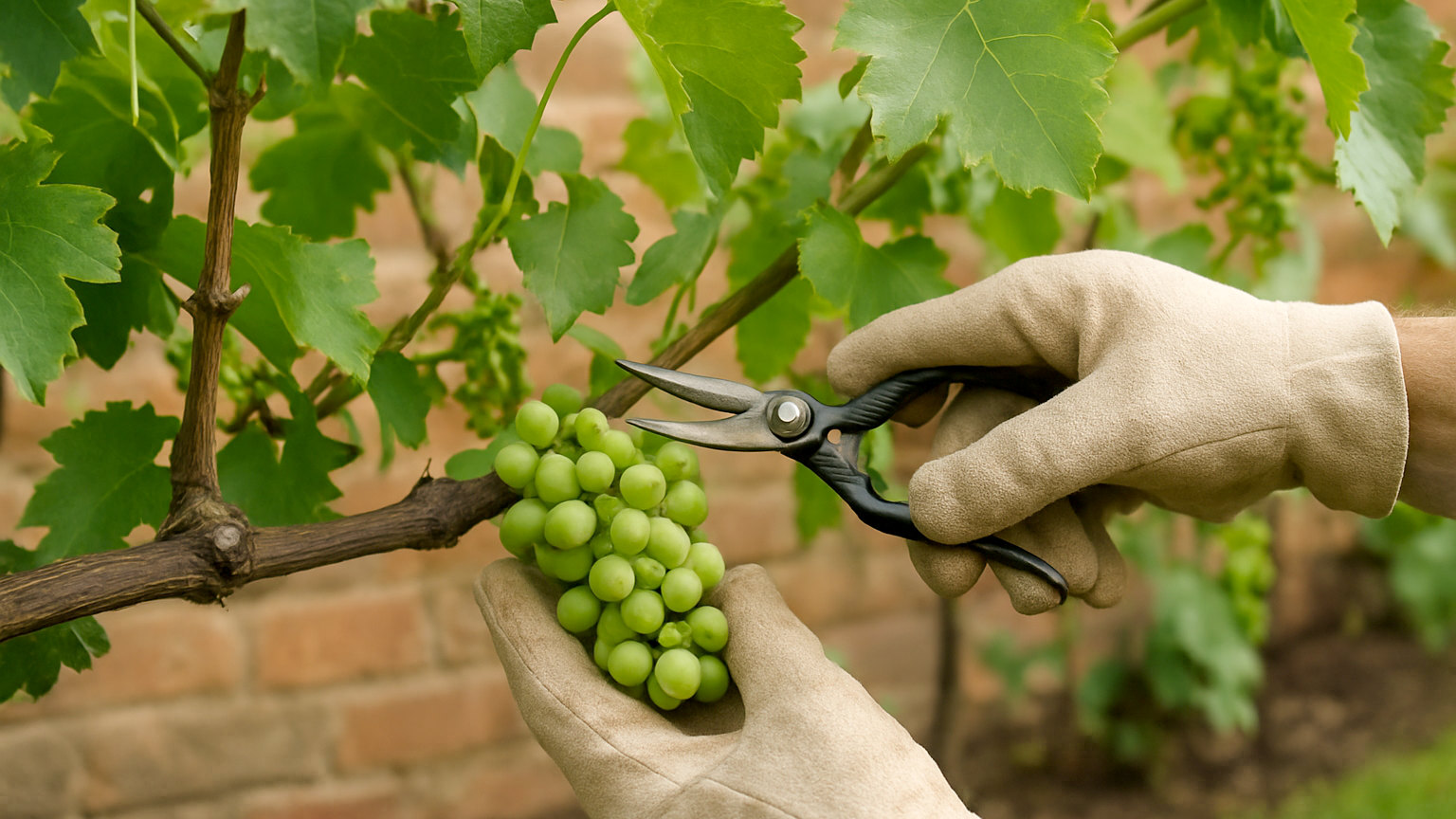
For dessert grapes, thin the individual berries within each bunch with long-nosed scissors once they are pea-sized, removing perhaps a third. This lets the remainder swell properly and improves airflow within the bunch, which reduces rot.
Do not handle the berries directly, since rubbing off the bloom spoils their appearance.
Airflow and mildew
Powdery mildew and downy mildew are the main problems, both encouraged by still humid air.
Remove leaves shading the bunches from midsummer so light and air reach them, which also helps ripening. Do not strip the vine, since the leaves are feeding it.
Keep the base clear of weeds, avoid overhead watering, and choose disease-resistant varieties where possible.
Feeding and watering
Apply sulphate of potash in late winter and mulch in spring. Avoid nitrogen, which produces leaf at the expense of fruit and softens growth.
Water during establishment and in prolonged drought, but an established vine on a wall generally needs little.
Frost
Frost is the other risk, since new growth in spring is tender. A late frost after the buds have broken can remove the whole crop, so a sheltered position matters as much as a sunny one.
Netting
Birds and wasps will take a ripening crop. Net the vine, or enclose individual bunches in muslin or perforated bags once they begin to colour, which also protects against wasps.
Greenhouse vines
Under glass the range of varieties widens considerably and ripening is far more reliable. The usual arrangement is to plant the vine outside the greenhouse and train the rod in through a gap at the base, so the roots stay in open ground while the fruit ripens under cover. Ventilation is critical, since a closed greenhouse produces mildew rapidly.
Harvesting
Grapes do not ripen after picking, so leave them until fully coloured and sweet. Taste rather than judging by colour, and cut the bunch with a short length of stem attached rather than pulling it away.


