
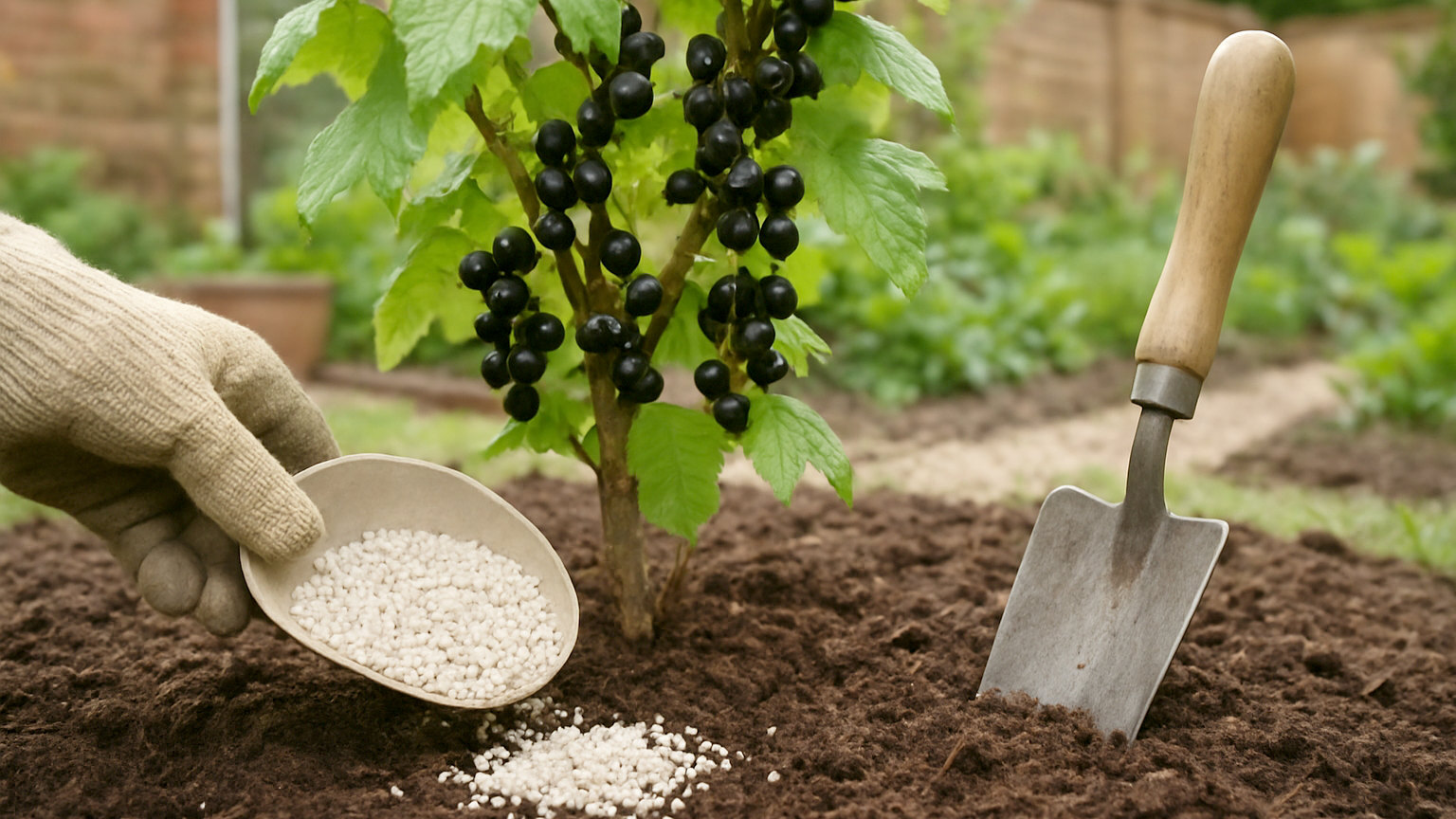
Soft fruit is shallow rooted, which shapes everything about how it is fed. Digging around the base damages the roots that matter, so almost all feeding is done from the surface and left to the worms.
Potash, not nitrogen
Potassium supports flowering, fruiting and disease resistance. Nitrogen produces leaves and soft growth.
Apply sulphate of potash in late winter, around February, spread over the root area and lightly worked into the surface or watered in. For most soft fruit this is the main feed of the year.
Excess nitrogen produces vigorous leafy bushes carrying little fruit, and that soft growth is exactly what mildew and aphids prefer.
The exceptions
Blackcurrants are hungrier than the rest and tolerate more nitrogen. They fruit on young wood, so vigorous new growth is what you want. A general fertiliser in spring alongside the potash suits them, and they respond well to heavy manuring.
Rhubarb is similar, being grown for its stems rather than fruit, and appreciates generous well-rotted manure.
Blueberries are the other exception, needing an ericaceous fertiliser rather than a general one. Ordinary feeds, bone meal and mushroom compost all raise the pH and cause the yellowing that blueberries are prone to.
Mulching does more than feeding
An annual mulch is worth more to soft fruit than any bagged fertiliser. Spread five to seven centimetres of garden compost or well-rotted manure over the root area in early spring, after rain when the soil is moist.
It conserves moisture in the top layer where the roots are, suppresses weeds that would otherwise compete, feeds slowly as it breaks down, and improves the soil year on year.
Keep it clear of the stems and crowns by a few centimetres, since material piled against wood causes rot.
For blueberries use composted pine bark, pine needles or ericaceous compost instead, which maintains acidity as it breaks down.
Do not dig around them
Currants, gooseberries, raspberries and blueberries all root in the top twenty centimetres or so. Forking or hoeing deeply around them severs those roots and, with raspberries, provokes suckering.
Hand weed, or hoe extremely shallowly, and rely on a thick mulch to keep weeds down instead. This is one of the few situations where a thick mulch genuinely replaces cultivation.
Watering
The critical period is while fruit is swelling, from flowering to picking. A dry spell then produces small hard berries and, on strawberries and currants, considerable fruit drop.
Water thoroughly and weekly rather than lightly and daily, aiming at the base rather than over the foliage, which spreads mildew and grey mould.
Newly planted bushes need watching through their first two seasons regardless of rainfall, since their roots are still confined to the original rootball and cannot reach moisture further out.
Recognising shortages
Brown scorching around the margins of older leaves, with the centre still green, is potassium shortage. It is common on light and chalky soils, and gooseberries are particularly prone. Sulphate of potash corrects it.
Yellowing between the veins on older leaves, veins staying green, is magnesium, common on sandy soil and after heavy rain. Epsom salts as a foliar spray or soil drench corrects it quickly.
Yellowing between the veins on the youngest leaves is iron, and on blueberries it means the pH has risen. Use sequestered iron as a short-term fix and address the water and compost.
Uniform pale yellowing with weak growth is nitrogen, and is the one shortage where a general feed is the answer.
Container-grown fruit
Compost is exhausted within about six weeks, so container soft fruit genuinely needs feeding. Use a high-potassium tomato feed weekly once fruit has set, and top dress with fresh compost each spring.
When to apply
Late winter is the main window, before growth starts, so the nutrients are available as the plant wakes. A second light application after fruiting helps bushes recover and build buds for next year, particularly on blackcurrants which have just had a third of their stems removed.
Blueberries and rhubarb follow the same timing, using ericaceous feed for the former and generous manure for the latter.
Do not feed after about August. Late nitrogen in particular produces soft growth going into winter, which is damaged by frost and admits disease.


