
Most seed needs nothing beyond compost, moisture and warmth. A minority have a hard coat or a built-in dormancy that has to be overcome first, and treating those correctly is the difference between a full tray and an empty one.
Soaking
Soaking softens a tough seed coat and speeds up water uptake, shortening germination time.
It genuinely helps with peas, broad beans, runner beans, beetroot, parsley, parsnip and sweetcorn. Soak in tepid water for a few hours, or overnight for the largest seed.
Do not soak for longer than about twenty-four hours. Beyond that the seed begins to drown, and rot follows. Sow immediately after soaking while the seed is still damp; do not let it dry out again.
Soaking is unnecessary and sometimes harmful for small seed, and for anything that germinates readily anyway.
Chipping and scarifying
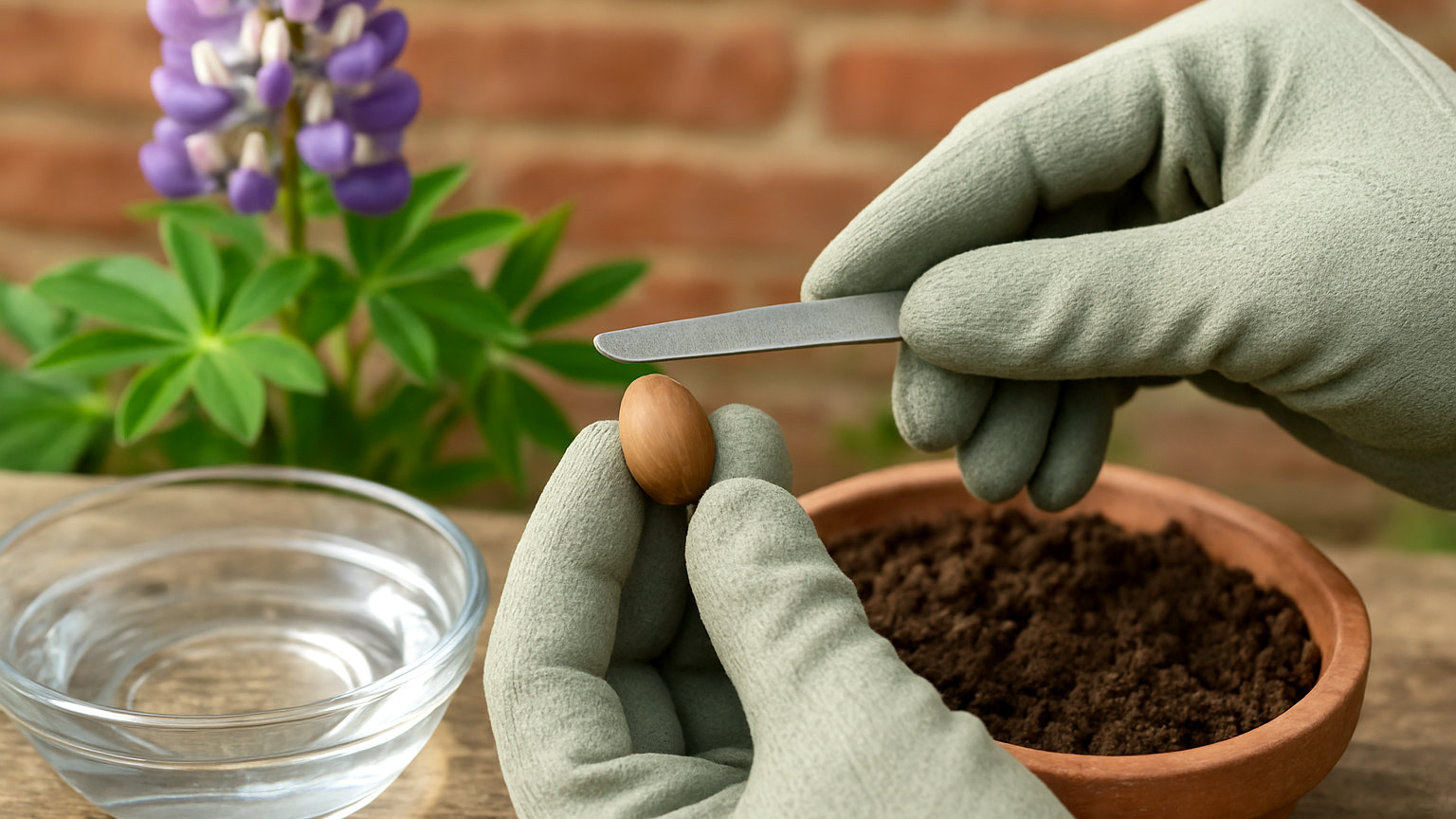
Some seeds have coats so hard that water cannot penetrate at all. Sweet peas, lupins, morning glory, canna and many hardy perennials fall here.
Chipping means nicking the coat with a sharp knife or a nail file on the side away from the eye, just enough to break through the outer layer without damaging the embryo inside. Alternatively, rub the seed between two sheets of sandpaper.
Only a small nick is needed. Cutting too deep destroys the seed.
For sweet peas, modern seed usually germinates well without treatment, and chipping is worth trying only if a previous batch has failed.
Cold stratification
Many hardy plants have seed that will not germinate until it has experienced a period of cold, which in nature prevents it sprouting in the autumn it falls and being killed by winter.
This applies to most trees and shrubs, many alpines, and a good number of hardy perennials including some primulas, aquilegias and hellebores.
The simplest method is to sow in pots in autumn and stand them outside in a sheltered spot over winter, covered with mesh against mice. Nature supplies the cold and germination follows in spring.
Artificially, mix the seed with damp vermiculite or sand in a labelled plastic bag and keep it in the fridge for four to twelve weeks depending on species, checking occasionally for early germination.
Warm then cold
A few species need a warm period followed by a cold one, sometimes over two winters. Some tree seed behaves this way, and sowing outside and simply leaving the pot for two years is the practical answer.
A pot that has produced nothing after one spring should not be thrown away until it has had a second.
Light requirements
Not a treatment as such, but the same category of thing. Some seed needs light to germinate and must be sown on the surface without covering: begonia, lobelia, foxglove and many fine-seeded flowers.
Others need darkness and must be covered properly. The packet will say, and covering a light-requiring seed is a common quiet failure.
Smoke and heat
A few species from fire-prone climates germinate in response to chemicals in smoke, and smoke primer discs are sold for them. This is a specialist requirement rather than anything most gardeners meet.
What not to bother with
Soaking ordinary vegetable seed such as lettuce, brassicas or carrots achieves nothing and makes tiny seed impossible to handle.
Chipping seed that does not need it damages it. Refrigerating tender seed such as tomatoes or chillies does no good at all, since they need warmth rather than cold.
Chitting, in the sense of sprouting potatoes before planting, is a different thing entirely and applies to tubers rather than true seed, despite the similar-sounding name.
When treatment does not help
If a sowing fails and the seed was pre-treated correctly, look elsewhere: dead seed, wrong temperature, drying out during germination, or sowing too deep. Pre-treatment solves dormancy, and it cannot rescue seed that is no longer alive.
Read the packet first
Any seed genuinely needing treatment will normally say so on the packet, along with the method and duration. Specialist suppliers of tree, shrub and perennial seed give fuller instructions than general vegetable packets, because their seed is far more likely to need it.
Where nothing is stated, assume none is needed, and treat the absence of instructions as information rather than an oversight.


