
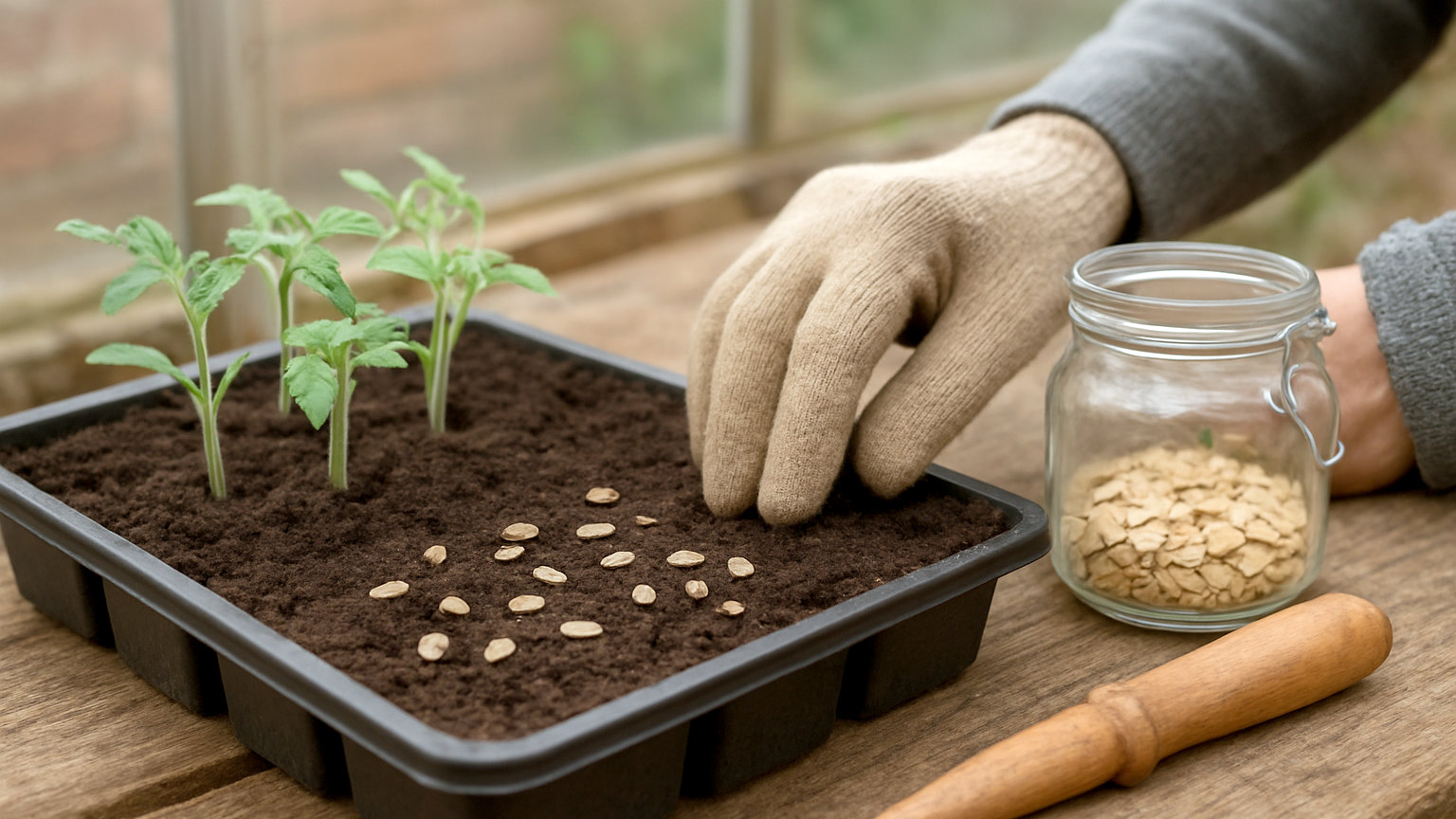
Seed does not last indefinitely, and it varies enormously by species. Sowing dead seed is one of the more frustrating failures in gardening because nothing appears and there is nothing to diagnose.
How long seed keeps
Stored properly, in cool dry dark conditions, these are reasonable expectations.
- One year - parsnip, and it is genuinely unreliable after that
- One to two years - onion, leek, chives, sweetcorn
- Two to three years - carrot, parsley, pepper, spinach, peas, beans
- Three to four years - lettuce, beetroot, chard, brassicas, celery
- Four to five years - tomato, aubergine, radish, turnip
- Five years or more - cucumber, courgette, squash, melon
Parsnip is the one to remember. Buy a fresh packet every year and do not use the remainder of last year's, since poor germination is far more often dead seed than anything you did wrong.
Storing it properly
The enemies are warmth, moisture and light, in that order.
Keep seed in a cool, dry, dark place at a steady temperature. A tin or a lidded box in an unheated room, a cupboard under the stairs or a garage that does not get damp all work. A greenhouse or a shed with wide temperature swings does not.
Keep it in its original packet, folded closed, inside an airtight container. Adding a sachet of silica gel, or a spoonful of dried rice in a twist of paper, absorbs any residual moisture.
A fridge is excellent provided the seed is genuinely dry and in an airtight container, since condensation on damp seed does more harm than the cold does good.
Label everything
Write the year on any packet you open. Half the problem with old seed is not knowing how old it is.
Packets carry a sow-by date and often a packed-for year. Both are conservative rather than absolute, and well-stored seed frequently germinates for a year or two beyond.
Testing before you sow
A germination test takes ten minutes and saves a wasted month.
Count out ten seeds and space them on damp kitchen paper. Fold it over, put it in a plastic bag or a lidded container, and keep it somewhere warm, around eighteen to twenty degrees. Check every few days and keep the paper damp but not wet.
After the normal germination period for that crop, count how many have sprouted. Seven or more out of ten and the seed is fine. Four to six and it is usable if you sow more thickly. Fewer than four and it is not worth the space.
Germinated seed from the test can often be planted carefully rather than wasted.
Signs of old or poor seed
Seed that is discoloured, shrivelled, dusty or smells musty is likely to be finished. Any sign of mould, or of small holes indicating weevils, means it should be discarded.
Very large seed such as beans and peas is worth checking individually, since a proportion may be damaged. Weevil holes are obvious once you know to look for them, and affected seed should be discarded rather than sown.
Sowing older seed
Rather than throwing away seed at the edge of viability, sow it more thickly to compensate for the reduced germination rate, and thin the seedlings that do appear.
Do this only where thick sowing is practical. For crops sown at wide stations, poor seed is more trouble than it saves.
Buying and quantities
Buy small packets of the fast-declining seed rather than large economy ones you cannot use in time. Sharing a packet with someone else is often the sensible answer for crops such as parsnip and leek, where a single packet contains far more than one garden can use in a year.
Keeping track of what you have
Sort the tin by sowing month rather than alphabetically, and go through it in January. It takes twenty minutes, tells you what to order, and prevents the common experience of buying a third packet of something you already have two of.
Swaps and libraries
Seed swaps and seed libraries are common in spring and are worth seeking out, though the same viability rules apply to anything you receive.
Ask how old swapped seed is and how it was stored. Well-kept seed of a good variety is a genuine gift; a decade-old packet found in a shed is not.


