
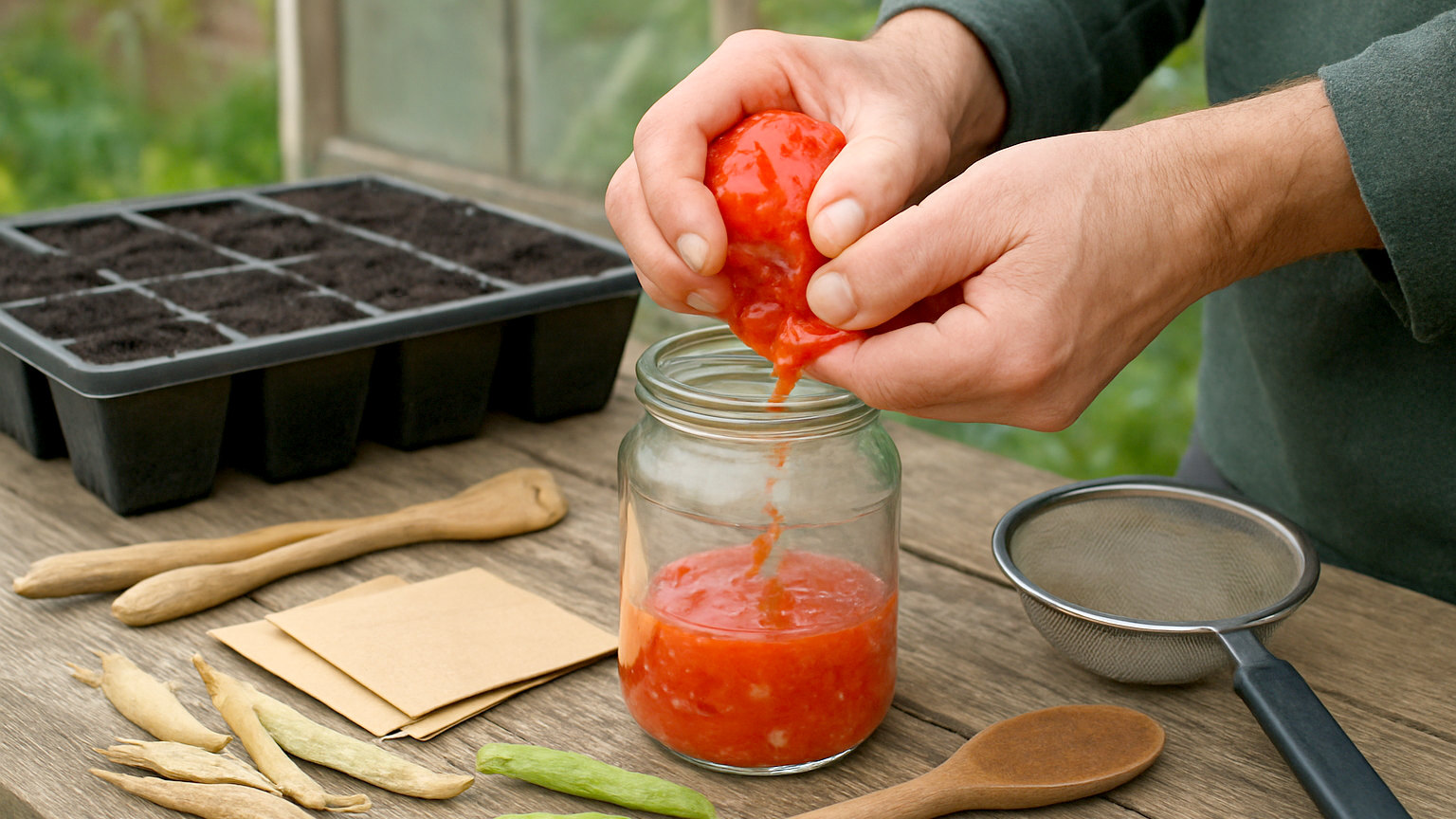
Saving seed costs nothing, keeps varieties going that commerce has dropped, and gradually adapts a variety to your own garden. Some crops are extremely easy and some are not worth attempting without space to isolate them.
Open-pollinated, not F1
F1 hybrid seed will not come true. An F1 is the first-generation cross of two carefully maintained parent lines, and seed saved from it produces a variable mixture of the grandparents, usually inferior to both.
Save seed only from open-pollinated varieties, which are named on the packet and produce offspring resembling the parent. Heritage and heirloom varieties are all open-pollinated.
Start with the self-pollinators
Crops that pollinate themselves before the flower opens rarely cross with anything, so seed comes true with no precautions.
- Tomatoes - the easiest of all
- Peas and French beans - reliably self-pollinating
- Lettuce - self-pollinating, and one plant gives thousands of seeds
- Chillies and peppers - mostly self-pollinating, though they cross a little
These four are where anyone should begin, and tomatoes in particular reward it, since a single fruit yields more seed than most households sow in a decade.
The ones that cross
Squash, courgettes, pumpkins, brassicas, beetroot, chard, onions, carrots and sweetcorn all cross readily with other varieties of the same species, sometimes over considerable distances.
A courgette grown near a pumpkin produces seed giving something that is neither. Brassicas are worse, since cabbage, kale, sprouts, broccoli and cauliflower are all the same species and cross with one another and with wild relatives.
Saving these properly needs isolation by distance, hand pollination with bagged flowers, or growing only one variety of that species. It is entirely doable and it is not a beginner's job.
Choosing the plants
Save from the best plants, not the leftovers. Choose vigorous, healthy, true-to-type plants with the characteristics you want, and mark them early so nobody harvests them.
Save from several plants rather than one, to keep some genetic diversity. Never save from a diseased plant, since a number of diseases are carried in the seed itself and will appear in the next generation.
Dry processing
For peas, beans, lettuce, brassicas and most flowers, leave the pods or heads on the plant until fully dry and brown.
Cut the whole head or pod, finish drying indoors somewhere airy, then shell or crush and separate the seed from the chaff by winnowing, tipping gently between two bowls in a light draught.
Beans and peas should rattle in the pod. If the seed dents when pressed with a fingernail, it needs longer.
Wet processing tomatoes
Tomato seed is coated in a gel that inhibits germination, and fermenting removes it.
Scoop the seed and pulp into a jar, add a little water and leave it somewhere warm for three or four days until a layer of mould forms on top. Then add more water, stir, and the good seed sinks while pulp and hollow seed float. Pour off the floating material, rinse the seed in a sieve and dry it on a plate.
Do not dry seed on kitchen paper, since it sticks fast and is almost impossible to remove afterwards. A ceramic plate or a fine sieve is better.
Drying and storing
Dry seed thoroughly somewhere warm and airy but out of direct sun, for at least a week or two. Seed stored damp goes mouldy and dies.
Store in paper envelopes inside an airtight container, somewhere cool, dry and dark, with a sachet of silica gel. Label every envelope with the variety and the year.
Biennials take two years
Why bother
Beyond the saving, seed from your own garden is adapted a little more each generation to your soil, your climate and your growing conditions. Over several years a saved line becomes noticeably better suited to the place than anything bought.
It also preserves varieties that have been dropped commercially, which is how most heritage vegetables have survived at all.
Biennials take two years
Carrots, parsnips, beetroot, onions, leeks and most brassicas flower in their second year, so seed saving means overwintering the plants rather than harvesting them. That is a longer commitment and another reason to start elsewhere.
They also need enough plants left to flower together for decent pollination, which in a small garden means giving over a bed for a full extra season.


