
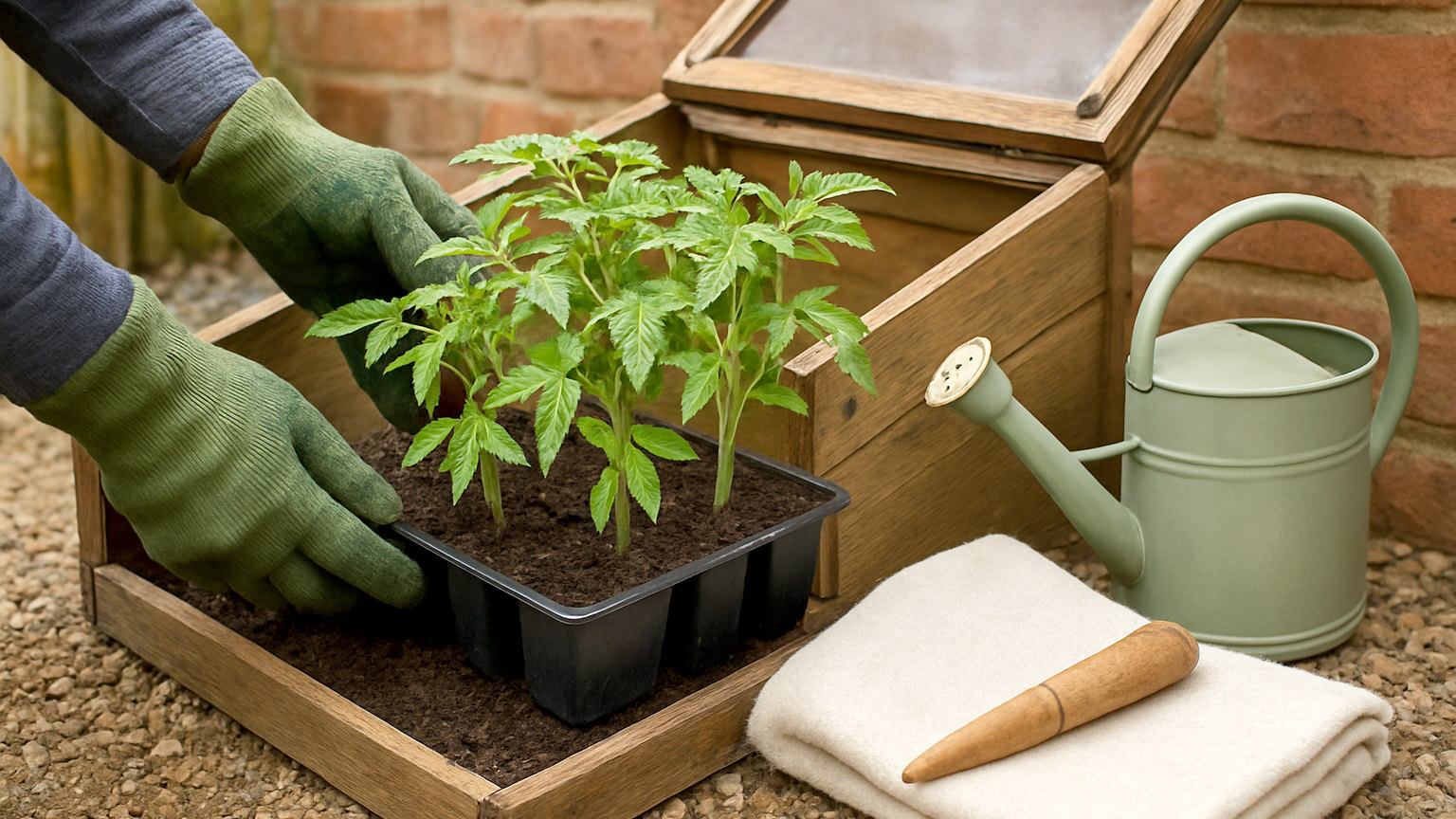
Hardening off is acclimatising indoor-raised plants to outdoor conditions before planting them out. It is the step most often skipped, usually because everything looks healthy and the weather seems fine, and it kills more plants than late frost does.
What it actually changes
A plant raised indoors has soft tissue, thin cuticles on the leaves, wide-open stomata and no experience of wind. Everything about it is adapted to a still, warm, humid, dimly lit environment.
Moved straight outside, it loses water through its leaves faster than the roots can supply it, and the foliage scorches, bleaches or shrivels within a day. Wind physically damages the soft stems. Direct sunlight burns leaves that have never had more than filtered light.
Over a fortnight of gradual exposure, the plant thickens its cuticles, adjusts its stomata, strengthens its stems and increases its sugar concentration, which improves cold tolerance. None of that happens quickly.
A workable schedule
Allow ten to fourteen days, starting about two weeks before you intend to plant out.
- Days 1 to 3 - outside in a sheltered shady spot for two or three hours, brought in each afternoon
- Days 4 to 6 - outside for most of the day, still sheltered, brought in at night
- Days 7 to 10 - full day outside including some direct sun, brought in at night
- Days 11 to 14 - left out overnight, with fleece over them if frost threatens
Then plant out, ideally on a dull still day or in the evening rather than in bright sun.
Using a cold frame
A cold frame makes the whole process simpler, since it is a matter of opening the lid progressively rather than carrying trays about.
Start with the lid propped open a little during the day and closed at night, increase the opening over the following week, then leave it open during the day, and finally leave it open at night too.
A makeshift frame from a stack of bricks and an old window works exactly as well as a bought one.
Substitutes if you have no frame
A sheltered spot against a house wall, out of wind and direct sun, with a sheet of horticultural fleece thrown over the plants, does the job.
A porch, an unheated greenhouse with the door progressively opened, or even a garage with the door up during the day all provide intermediate conditions.
What tells you it is going wrong
Bleached, silvery or scorched patches on leaves mean too much sun too quickly. Torn or bruised foliage means wind. Purpling and stalled growth means cold.
If any of these appear, retreat a stage for a few days rather than pressing on. Plants recover from a check if it is caught early.
Do not rush it
A fortnight of hardening off is repaid several times over in the speed at which plants establish.
A properly hardened plant carries on growing from the day it goes in. One planted straight from the windowsill sits still for two or three weeks while it recovers, and is often overtaken by something sown direct a fortnight later.
Which plants need it most
Everything raised indoors benefits, and tender plants need it most: tomatoes, courgettes, squash, beans, sweetcorn and most bedding.
Hardy plants raised under cover still need acclimatising to wind and light even though frost is not the concern.
Plants bought from a garden centre may or may not have been hardened off. Anything that has been standing outside on the forecourt for a fortnight is ready; anything brought out of a polytunnel that morning is not, and it is worth asking. Supermarket bedding in particular is usually straight from a heated glasshouse.
Frost dates
Bought plants and plug plants
Mail-order plugs arrive having spent days in a dark box and need particular care: pot them on immediately, keep them somewhere bright and sheltered, and let them recover for a week before beginning to harden off.
Frost dates
Tender plants go out only after the last frost date for your area, which varies by weeks across the country. Find your local average, keep fleece to hand, and be prepared to cover if a late frost is forecast.
A frost after planting out will kill tender plants outright, so a fortnight of caution at the end is worth more than a fortnight gained at the start.


