
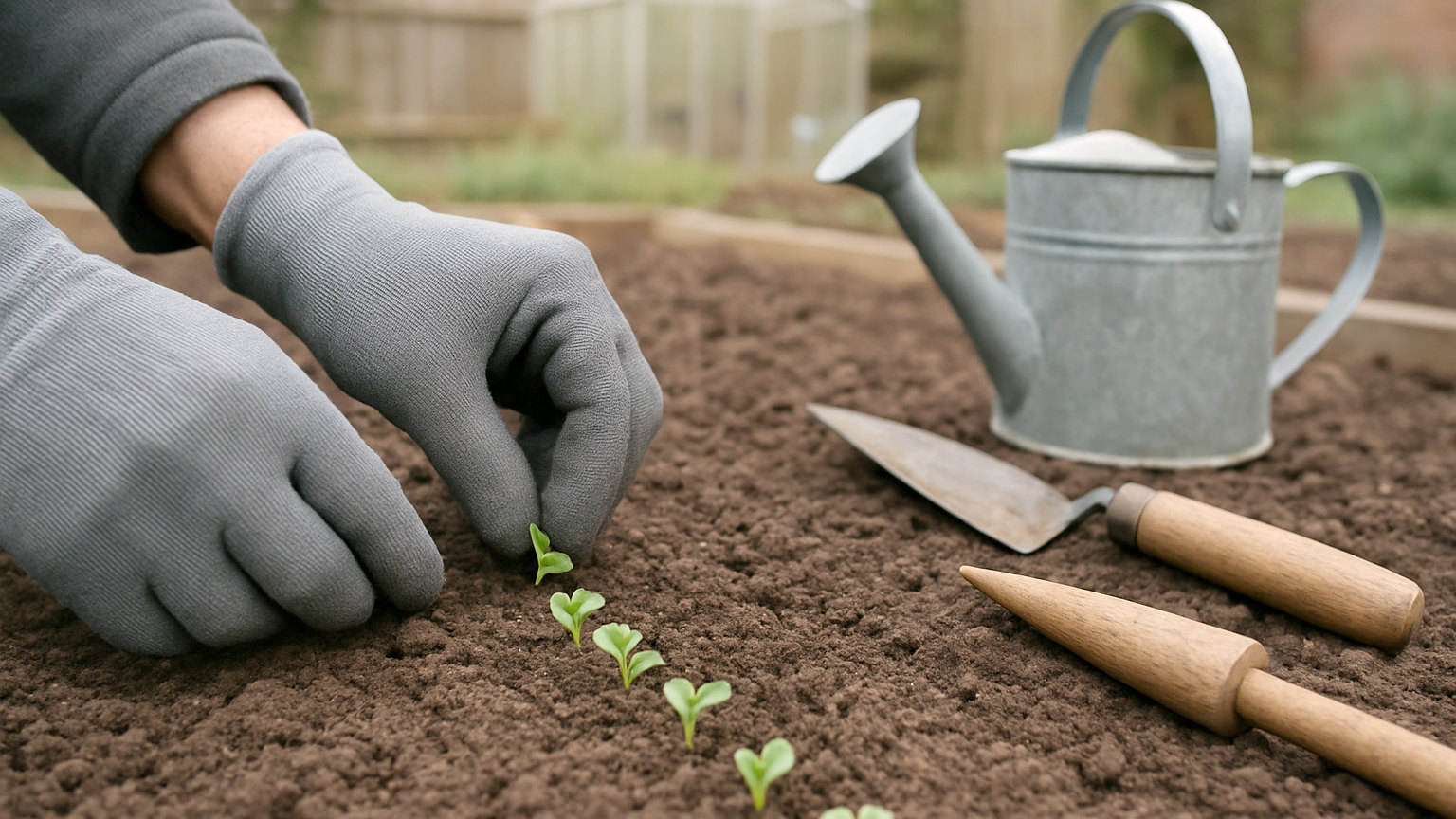
Sowing straight into the ground is simpler than raising plants under cover and fails more often, almost always for the same two reasons: the soil was too cold, or the drill was allowed to dry out. Both are avoidable.
Wait for the soil, not the calendar
Seed packets give a sowing window printed for the whole country, and the early end of it is optimistic for most gardens.
What decides germination is soil temperature. Most vegetable seed wants soil above about seven degrees, and warm-season crops want twelve or more. Cold wet soil causes seed to sit and rot rather than germinate.
A soil thermometer costs very little and removes the guesswork. The traditional test, sitting on the soil to judge whether it is warm enough, works on the same principle less precisely.
Warming a patch with a sheet of clear polythene or a cloche for a fortnight before sowing genuinely helps, and a sowing made two weeks later into warm ground usually overtakes an early one.
Preparing a tilth
A seedbed needs a fine crumbly surface, since small seed cannot push through clods.
Fork the bed over when the soil is neither wet nor bone dry, remove stones and weed roots, then rake in several directions until the surface is even and crumbly. Firm it lightly by treading or with the back of the rake, then rake once more.
Do not work soil when it is wet, particularly clay. It compacts and sets hard, and you will be fighting it for the rest of the season.
Sowing depth
The general rule is to cover a seed to roughly its own depth, or two to three times its diameter.
Large seeds such as beans, peas and squash go two to five centimetres deep. Medium seed such as beetroot and chard goes about two centimetres. Small seed such as carrots and lettuce goes about one centimetre. Very fine seed is pressed onto the surface and barely covered.
Sowing too deep is the commoner error and produces nothing at all.
Water the drill, not the surface
Draw the drill, water along the bottom of it, then sow into the damp soil and cover with dry soil.
This is the single most useful technique in direct sowing. Watering after sowing washes the seed about, compacts the surface and forms a crust that seedlings struggle through. Watering the drill first puts moisture exactly where the seed needs it and the dry covering acts as a mulch.
Keep the row damp until germination, which for some seed means weeks.
Sow thinly, and station sow
Thin sowing saves seed, saves thinning, and reduces the disturbance that attracts pests such as carrot fly.
Mixing fine seed with dry sand makes it easier to distribute evenly. For larger seed, station sowing works better: place two or three seeds every fifteen or twenty centimetres and thin to the strongest, rather than running seed along the whole drill.
Mark the row
Slow germinators such as parsnips take four weeks or more, and in the meantime you cannot tell the row from the weeds.
Sowing a few radish seeds along the same drill marks the line within days, lets you hoe confidently, and the radishes are pulled and eaten long before the main crop needs the space.
Label both ends of every row with the variety and the sowing date.
Thinning
Thin in stages once seedlings have their first true leaves, working towards the final spacing on the packet, which is not a suggestion.
Snip thinnings off at soil level with scissors rather than pulling, which disturbs the roots of the plants you are keeping. Remove the thinnings from the plot, especially with carrots.
Firm the soil back around the remaining plants and water afterwards.
Protection
What not to direct sow
Tender crops killed by frost, and anything needing a long season, are better started under cover: tomatoes, chillies, aubergines, courgettes, squash and sweetcorn. Slow expensive seed is also safer in modules, where you can watch it.
Protection
Fleece, cloches and mesh all help early sowings, warming the soil, keeping birds and cats off and excluding flying pests. Slugs will take seedlings overnight in damp weather, so check newly germinated rows regularly.


