
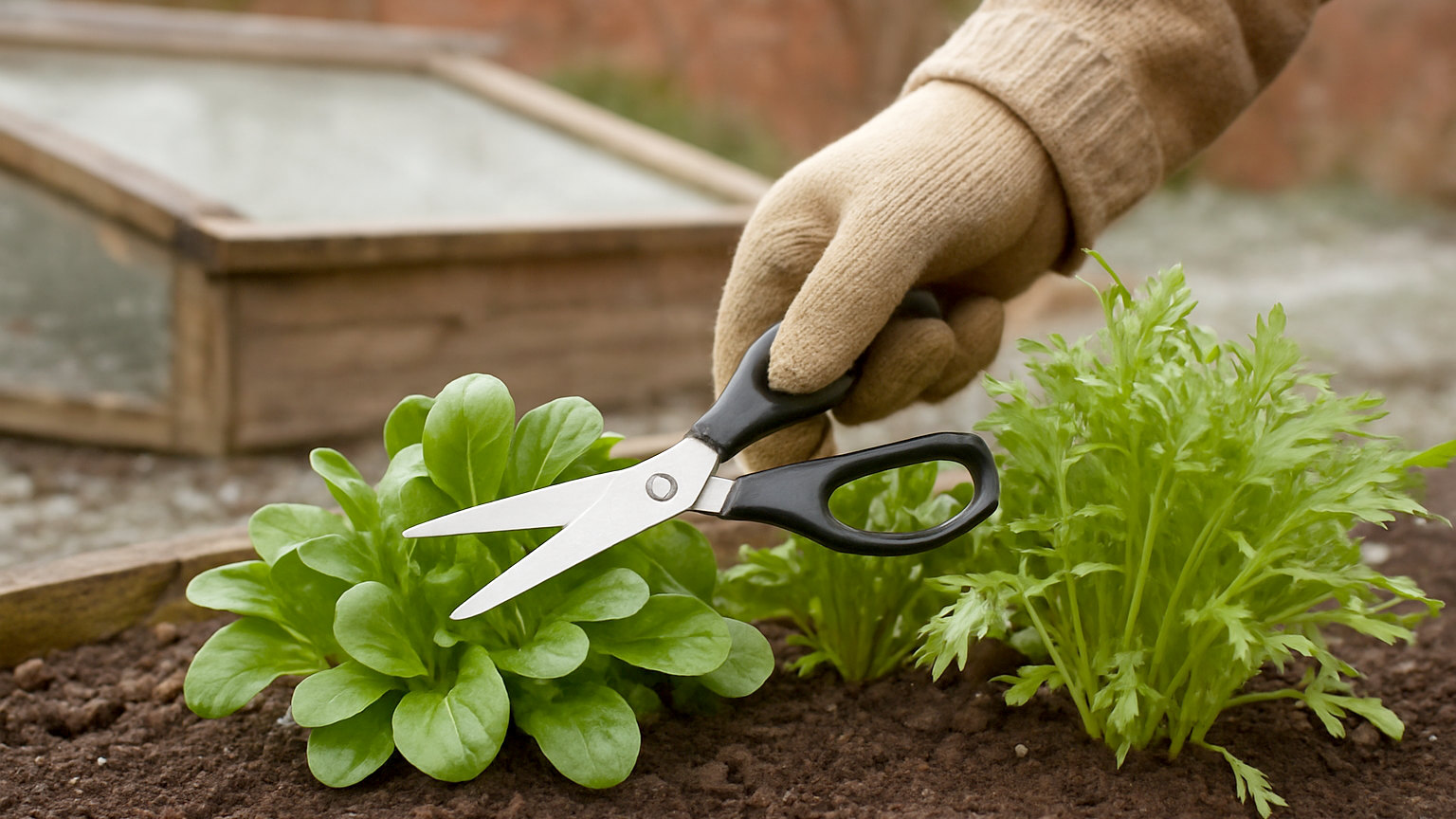
The vegetable garden in January has very little in it, and a bed of winter salad is one of the few things producing. The crops that manage it are hardy, slow-growing and mostly unfamiliar, and they need sowing in late summer while everything else is still cropping.
When to sow
Late August to the end of September is the window. This is the part people miss, because the garden is full and nobody is thinking about February.
Sown then, the plants make enough growth in the remaining warmth to establish before the light fails. Sow much later and they sit as tiny seedlings all winter without producing anything usable.
A second sowing in October under cover gives plants for early spring.
What to grow
Lamb's lettuce, also called corn salad or mâche, is the hardiest of the lot. Small rosettes of mild nutty leaves that stand hard frost without protection.
Land cress tastes very like watercress, is strongly flavoured and completely hardy. A few plants go a long way.
Winter purslane, or claytonia, has succulent heart-shaped leaves on edible stems, is mild and crops heavily. It self-seeds enthusiastically once introduced.
Mizuna and mibuna are Japanese greens with feathery or strap-shaped leaves, mildly mustardy, quick and productive.
Oriental mustards, including Red Giant and Green in Snow, are hot when mature and mild when young, and add colour to a winter bed.
Winter lettuce varieties such as Winter Density and Arctic King are hardy enough for a cloche or cold frame.
Rocket, particularly wild rocket, stands through most winters and is better flavoured in cold weather than in summer.
Sowing and spacing
Sow direct into prepared ground or into modules for transplanting, which suits a bed that is still occupied in August.
Sow thinly at about one centimetre deep in rows twenty to thirty centimetres apart. Thin to around ten to fifteen centimetres for most, more for the larger mustards.
Space them a little more generously than summer salad. Airflow matters considerably in winter, since damp crowded leaves rot.
Protection
Many of these will survive outside unprotected, but a covering improves the quality of the leaves enormously and keeps them clean.
A cloche, a low polytunnel, a cold frame or an unheated greenhouse all work. The purpose is to keep rain and wind off rather than to provide heat, and ventilation on mild days is important to prevent rot.
Fleece thrown over the bed on the coldest nights adds a couple of degrees.
Cut sparingly
Growth almost stops between late November and early February, because there is not enough light. A plant cut hard in December will not regrow until spring.
Pick a few outer leaves from each plant rather than cutting whole rows, and take less than you would in summer. Treat the bed as a store to draw on lightly rather than a crop to harvest.
Growth resumes in February and the same plants then produce strongly through March and April, which is often the most productive period of all.
Watering and pests
Water sparingly. Winter beds under cover still need occasional watering, but wet leaves and damp still air cause more losses than drought at this time of year. Water in the morning at the base.
Slugs remain active through mild winters and shelter under cloches, so check regularly. Pigeons will take unprotected leaves, so netting is worth having on anything grown in the open.
Remove yellowing and rotting leaves promptly, since they spread grey mould through a crowded bed.
Hardy herbs alongside
A few herbs keep going through winter and are worth including at the end of the bed. Parsley sown in August stands through the cold months and picks up strongly in spring. Chervil is genuinely hardy and prefers cool conditions. Coriander sown in September under cover produces leaves slowly through winter without the bolting that ruins summer sowings.
Sprouting and microgreens
If the garden has nothing at all, pea shoots and microgreens grown on a windowsill fill the gap. Dried marrowfat peas sown thickly in a tray of compost give tender shoots in a fortnight and will regrow once after cutting. Mustard, cress and radish microgreens are quicker still.
Letting them seed
Winter purslane, land cress and lamb's lettuce all self-seed readily. Leaving a few plants to flower in spring gives you seedlings appearing in the same bed the following autumn without any effort at all.


