
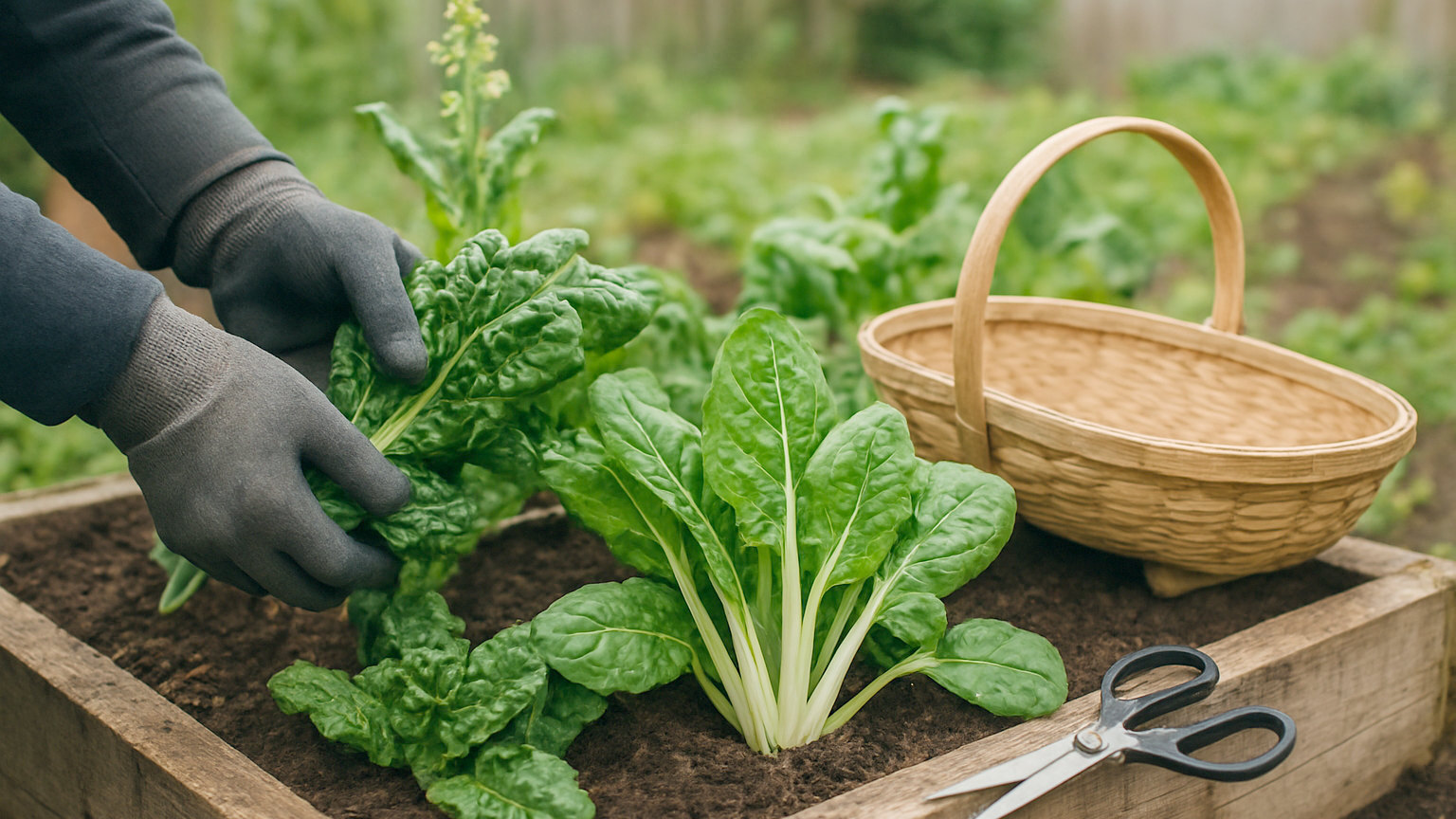
These are three related crops that solve the same problem at different times of year. True spinach is the best of them and the least reliable; perpetual spinach and chard are tougher, stand for months and will keep you supplied when spinach has given up.
The difference
True spinach has soft, tender, sweet leaves and is what most people want. It also bolts readily in warm weather and long days, often within weeks of being ready.
Perpetual spinach, sometimes called spinach beet, is really a leaf beet. The leaves are coarser and taste close enough to spinach for most purposes, and the plant stands for many months without bolting.
Swiss chard is the same family again, with thick colourful stems and large glossy leaves. The stems and leaves are usually cooked separately, since the stems take longer.
Sowing true spinach
Sow in the cooler parts of the year: March to May, and again from August to September. Skip midsummer sowings, which will bolt.
Sow direct at about two and a half centimetres deep, in rows thirty centimetres apart, thinning to around fifteen centimetres for full-size plants or leaving crowded for baby leaves.
It needs rich, moisture-retentive soil and consistent watering. Spinach that dries out bolts almost immediately, and it is the most water-sensitive of the three.
Sow every two or three weeks in spring for a continuous supply, and expect each sowing to last only a few weeks.
Sowing perpetual spinach and chard
Sow from April to July, at two and a half centimetres deep, in rows about forty-five centimetres apart. Thin to twenty-five to thirty centimetres for chard, which makes a substantial plant.
Both germinate readily, and the seed is a cluster like beetroot, so several seedlings appear from each and need thinning to one.
An April sowing crops from summer right through autumn and often into the following spring. A July sowing gives strong plants for autumn and winter picking.
Bolting
True spinach bolts in response to heat, dry roots, long days and any check in growth. There is no cure once a flower stem appears; the leaves turn bitter and the plant is finished.
Grow it in light shade in late spring, keep it consistently moist, mulch, and pick regularly rather than letting plants stand. Choose varieties described as bolt resistant for anything sown after March.
Perpetual spinach and chard will eventually bolt in their second year, usually in spring, which is when to pull them and resow.
Picking
Pick the outer leaves and leave the centre growing. This is what turns a single sowing into months of picking. Take a few leaves from each plant rather than stripping one bare.
Cut with scissors or snap the stalk cleanly at the base. Picking regularly keeps the plant producing and stops the leaves getting coarse.
Baby leaves for salad are cut across the row about three centimetres above soil level, leaving the crowns to regrow, giving three or four cuts.
Winter cropping
All three are reasonably hardy. Chard and perpetual spinach stand outside through most winters, growing slowly and picking up in February.
A cloche, a low tunnel or an unheated greenhouse extends the season considerably and keeps the leaves in better condition. Cut sparingly through the darkest weeks and let the plants recover.
Chard stems can be damaged by hard frost even when the plant survives, so a covering is worth having in a cold garden.
Using the stems
Chard stems are a separate vegetable and should not be thrown away. Cut them from the leaf, chop and cook them for several minutes before adding the leaves, which need only a moment. The coloured varieties lose some of their brightness on cooking, so use them raw or briefly steamed if the colour matters.
Perpetual spinach has thinner stems that can be cooked along with the leaves without separating.
Problems
Downy mildew shows as yellow patches on the upper leaf with grey fuzz beneath, and is worse in crowded damp conditions. Improve spacing and airflow and avoid overhead watering.
Leaf miner produces pale winding tunnels or blotches within the leaf. Pick off and bin affected leaves; the rest of the plant is unaffected.
Birds, particularly pigeons, will take chard and spinach in winter, so netting is worth having on a winter crop.


