
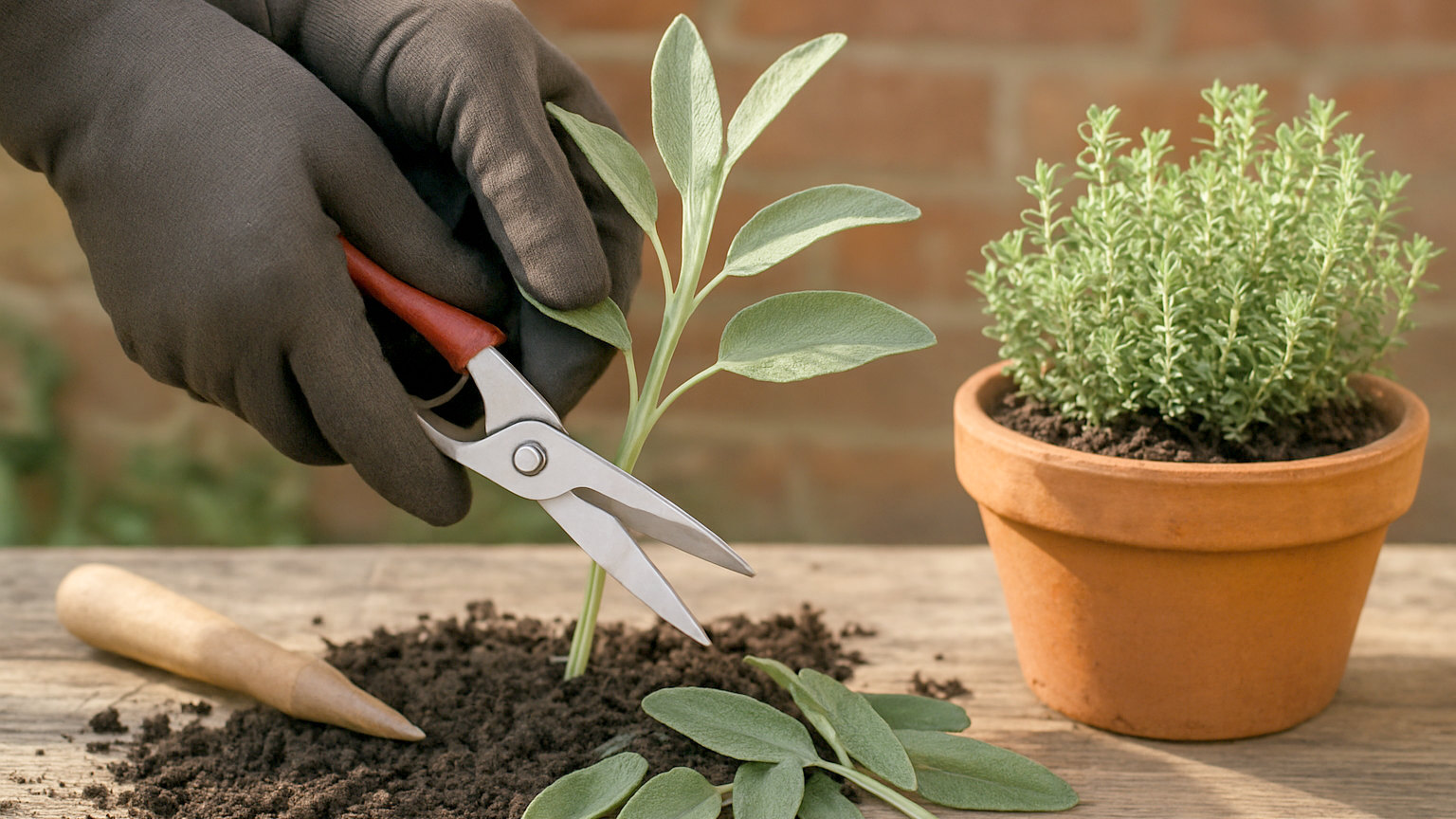
Thyme and sage are close cousins in cultivation terms: both are Mediterranean sub-shrubs wanting poor soil, sharp drainage and as much sun as you can give them. Both also go woody and unproductive after a few years and need replacing, which is normal rather than a failure.
Soil and drainage
Poor, gritty, free-draining soil is what these plants want. Rich ground produces lush growth with markedly less flavour, since the aromatic oils concentrate in plants growing hard.
Add plenty of horticultural grit to the planting position and plant slightly proud of the surrounding soil. Mulch with gravel rather than bark, keeping the crown dry.
On heavy clay, both are far more reliable in pots or a raised bed. Winter wet kills more of them than cold does.
Sun
Full sun, ideally six hours or more. In shade both become leggy and sparse, thyme in particular loses its compact habit, and the flavour suffers noticeably.
A south-facing spot at the front of a border, at the edge of a path or in a gravel garden suits them well.
Thyme in particular
Thyme is a low spreading plant, and there are two broad groups. Upright bushy types such as common thyme and lemon thyme are the ones for cooking. Creeping thymes are ground cover, good between paving and on a bank, and edible though less useful.
Plant twenty to thirty centimetres apart. Thyme dislikes competition and is easily smothered by neighbours, so keep the area around it clear.
It is drought tolerant once established and needs watering only in prolonged dry spells. In a pot it needs more attention, but should still be allowed to dry between waterings.
Sage in particular
Sage makes a larger, softer, grey-leaved shrub reaching perhaps sixty centimetres. Give it about forty-five centimetres of space.
Common green sage is the most useful for cooking and the hardiest. Purple, golden and variegated forms are more ornamental, slightly less hardy and milder in flavour.
Sage is prone to rotting at the base in wet winters, which makes the gravel mulch and raised planting particularly worthwhile.
The trim that keeps them going
Trim both after flowering, and never cut into old bare wood. Neither will reshoot reliably from bare stems, and a plant cut hard often dies.
Take off the spent flower stems and a little of the current season's growth, always leaving leaves below the cut. Doing this every year keeps a plant compact and delays the sprawling woody stage.
A light trim in spring to tidy winter damage is also worthwhile, again staying in green growth.
Replace them every few years
Thyme typically stays productive for three or four years and sage for four or five. After that the centre goes woody and bare and the plant sprawls open.
Rather than trying to renovate, take cuttings and replace. This is the accepted way to keep both herbs in the garden long term.
Sage can also be layered: peg a low branch down into the soil, leave it to root over a season, then sever and move it.
Cuttings
Take semi-ripe cuttings about eight to ten centimetres long in early to midsummer, from non-flowering shoots.
Strip the lower leaves, insert into gritty compost around the edge of a pot, water once and keep somewhere sheltered and bright but out of fierce sun. Most root within six to eight weeks.
Pot them on in autumn and plant out the following spring. Taking a few every year means you always have replacements coming.
Harvesting
Problems
Rosemary beetle, a metallic green and purple insect, eats the foliage of both and is dealt with by hand picking. Sage suffers from leaf spot and from capsid bug damage, which produces small ragged holes in young leaves. Neither is usually serious enough to treat.
Harvesting
Pick from both throughout the growing season, and from thyme in winter too, since it stays green. Flavour is strongest just before flowering and in the morning once the dew has dried.
Both dry well, unlike the soft herbs. Hang small bunches somewhere warm and airy out of direct sunlight, and strip the leaves into a jar once brittle.
Leave some flowers on both, as bees visit thyme and sage in large numbers and the flowers are among the better things you can offer them.


